Mobile Surveillance Units vs. Fixed Cameras: Which Is Right for Your Site?
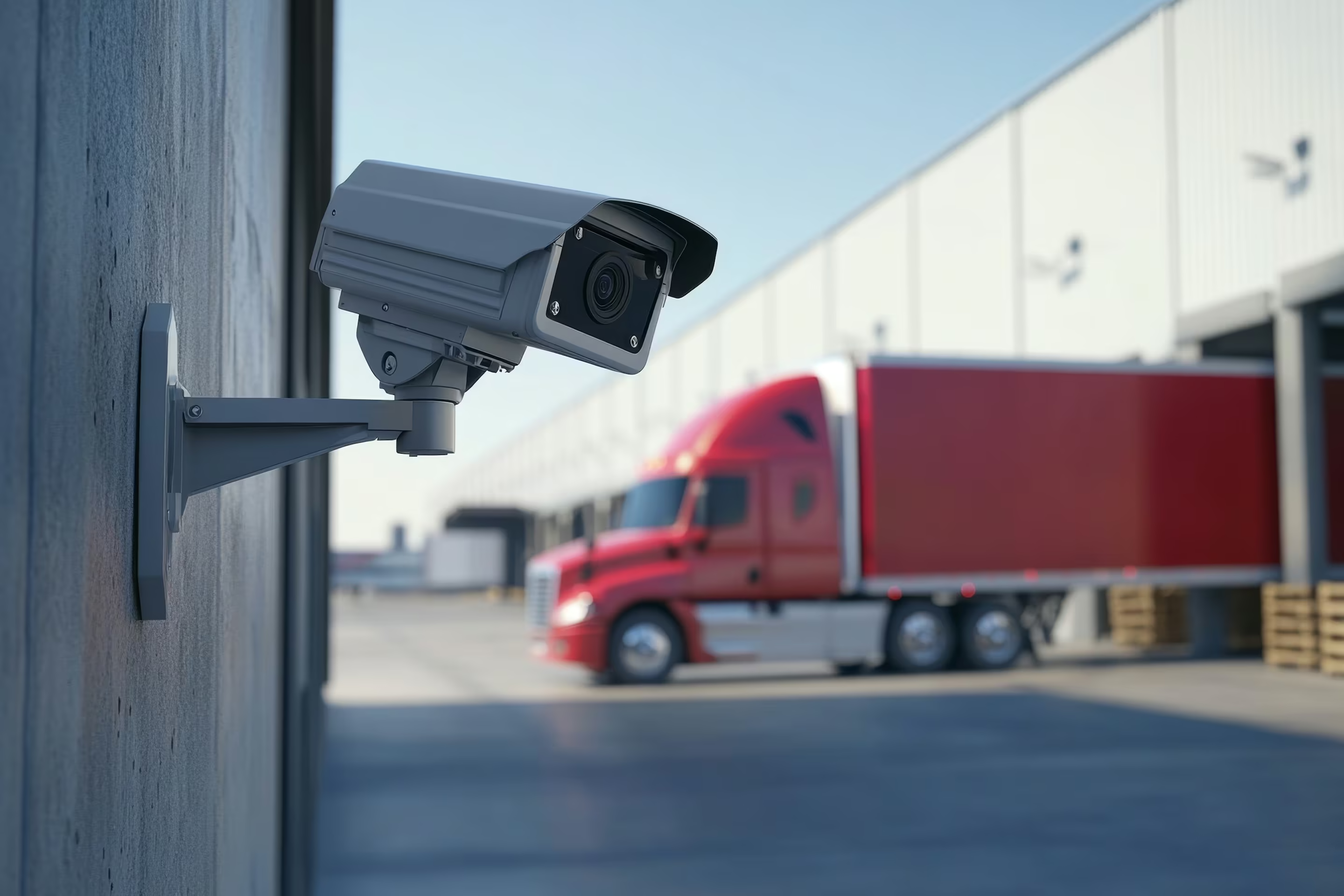
Choosing between mobile security units and fixed security cameras depends on your site's layout, infrastructure, timeline, and security needs. This guide compares the strengths of each solution, explains when a hybrid approach makes sense, and outlines key factors to consider so you can build a security strategy that protects your people, property, and operations.
Choosing the right surveillance system is one of the most important decisions an organization can make when protecting its people and property. Traditionally people have thought of security as fixed cameras, but mobile surveillance units have emerged as a flexible alternative that can be deployed quickly and moved as security needs evolve.
It can be difficult to know exactly which camera setup is the best for your site because there isn't a one-size-fits-all solution. The best choice depends on your site's layout, infrastructure, timeline, and most common risks. In this guide, we will compare mobile surveillance units vs fixed cameras, exploring the strengths of each and helping you decide the best setup for your business.
What Are Fixed Security Cameras?
Fixed security cameras are permanently installed systems that provide around-the-clock monitoring of a specific area. They're typically connected to a building's power and can be integrated with other security technologies.
Because they stay in one location, fixed cameras are a great fit for permanent facilities with consistent security needs. They're commonly used in office buildings, retail stores, schools, warehouses, and other commercial properties where long-term surveillance is a priority.
What Are Mobile Surveillance Units?
Mobile surveillance units are self-contained security systems that do not rely on permanent infrastructure. They are typically mounted on trailers or mobile towers and equipped with high-definition cameras, cloud connectivity, and AI-powered analytics that can detect potential threats and send real-time alerts.
Most mobile security units are solar-powered with battery backup. They are well-suited for places without electrical connections. Because they don't require extensive installation, these mobile systems can often be deployed in a matter of hours rather than the weeks or months it can take to install a fixed camera system.
Their flexibility makes mobile surveillance trailers a popular choice for construction sites, parking lots, vacant properties, critical infrastructure, and emergency response situations. Because they can be relocated as security needs change, organizations can protect new areas without investing in additional permanent infrastructure.
Comparing Mobile Surveillance Units vs Fixed Cameras
When deciding between mobile surveillance units vs fixed cameras, the right choice depends on the unique needs of your site. Both solutions provide valuable security benefits, but they are designed for different environments.
The table below highlights the key differences between these two approaches:
Neither option is universally better than the other. The best solution depends on factors such as how long a site will remain active, whether infrastructure is already in place, and how quickly security needs may change. In many cases, organizations can achieve the strongest protection by combining both—using fixed cameras for permanent coverage and mobile surveillance units where additional flexibility is needed.
When Mobile Surveillance Units Are the Better Choice
Mobile security solutions are designed for situations where security needs can change quickly or where installing permanent infrastructure isn't practical.
Temporary or Changing Sites
For locations that are constantly evolving, mobile surveillance units can protect new hotspots almost immediately. Construction sites, utility projects, and temporary job sites can move through different phases, making it difficult to predict where security coverage will be needed months down the road. These units can be relocated as the site changes.
Locations Without Existing Infrastructure
Many outdoor and remote locations lack the power and infrastructure needed for fixed camera systems. Mobile surveillance units are a self-contained solution that can be deployed in areas where traditional security systems may not be feasible.
Rapid Security Deployment
When security needs arise unexpectedly, speed matters. Whether responding to theft, vandalism, a natural disaster, or an emerging security concern, mobile surveillance units can provide immediate coverage.
Large Outdoor Areas
Mobile surveillance units are especially valuable for protecting expansive outdoor spaces where fixed cameras may not provide enough coverage. With elevated camera placement, wide viewing areas, AI-powered analytics, and remote monitoring capabilities, mobile units can help secure large spaces.
Security Needs That Change Over Time
For organizations managing multiple locations or evolving operations, flexibility is a major advantage. Mobile surveillance units can be moved between sites, added during periods of increased risk, or repositioned as priorities shift.
Ultimately, mobile surveillance units are best suited for environments where adaptability, speed, and coverage are top priorities. They give organizations the ability to deploy intelligent security wherever it is needed—without being limited by the constraints of a fixed installation.
When Fixed Cameras Are the Better Choice
Fixed cameras provide reliable, long-term security coverage in established locations. When a facility has predictable security needs and a consistent layout, a permanent camera system can provide dependable monitoring year after year.
Permanent Facilities
Fixed cameras are often the best choice for locations that will remain in place long term. Office buildings, retail stores, schools, warehouses, and manufacturing facilities typically benefit from cameras installed in strategic locations that provide continuous coverage of entrances, exits, workspaces, and other high-priority areas.
Indoor Security Needs
Many indoor environments are well-suited for fixed camera systems. Because cameras can be strategically positioned throughout a building, organizations can monitor areas such as hallways, lobbies, loading docks, production floors, and restricted areas with consistent coverage.
Locations With Predictable Layouts
When an organization's security priorities are unlikely to change, fixed cameras provide reliable coverage without the need for frequent adjustments. A camera system designed around a consistent facility layout can help ensure important areas remain monitored and security teams have access to historical video when investigations are needed.
Long-Term Security Investments
For organizations planning to protect the same location for many years, fixed security cameras can provide lasting value. Once installed, these systems create a permanent layer of security that supports daily operations, incident investigations, and ongoing safety efforts.
Fixed cameras are ideal for environments where stability and consistency are the priority. For permanent facilities with established security requirements, they provide a dependable foundation that can be enhanced with additional security technologies as needs evolve.
When a Hybrid Security Strategy Is the Best Choice
The best answer for many businesses may be a combination of the two setups. A hybrid security strategy combines the reliability of permanent camera systems with the flexibility of mobile security solutions. This creates a layered approach that can adapt to changing security needs.
A hybrid strategy is especially valuable for organizations managing large properties, multiple locations, or constantly evolving environments. By combining both technologies, security teams can create a more complete view of their site while maintaining the flexibility needed to respond to new challenges.
Consider a distribution center preparing for a busy holiday season. Fixed cameras provide continuous coverage inside the warehouse and at loading docks year-round. Meanwhile, mobile surveillance units can be moved to secure overflow parking lots, loading docks, or outdoor storage. Once peak season ends, the mobile units can be relocated to another site or stored until they're needed again.
Factors to Consider Before Choosing
Choosing between mobile surveillance units and fixed cameras starts with understanding your site's unique needs. Consider questions like:
- Is the site temporary or permanent?
- Do you already have power and network infrastructure available?
- How quickly do you need security coverage?
- Are your security needs likely to change over time?
It's also important to consider what you're protecting. A permanent facility may benefit from fixed cameras, while large outdoor areas, remote locations, or changing environments may require the flexibility of mobile surveillance units and outdoor security cameras. By evaluating your operations, timeline, and future needs, you can choose a security solution that provides the right level of protection today and scales for tomorrow.
Choose the Right Solution for Your Site—Not Just the Right Camera
The best security strategy starts with understanding your site's unique risks and operational requirements. Fixed cameras provide reliable, long-term protection, while mobile surveillance units offer unmatched flexibility.
For many organizations, the strongest solution combines both. LVT's mobile surveillance units are designed to complement existing security infrastructure with AI-powered analytics, remote monitoring, and rapid deployment. Contact our team to learn how we can help you design a security strategy that will keep your site safe and secure.
%20(1).avif)

%20(1).avif)
