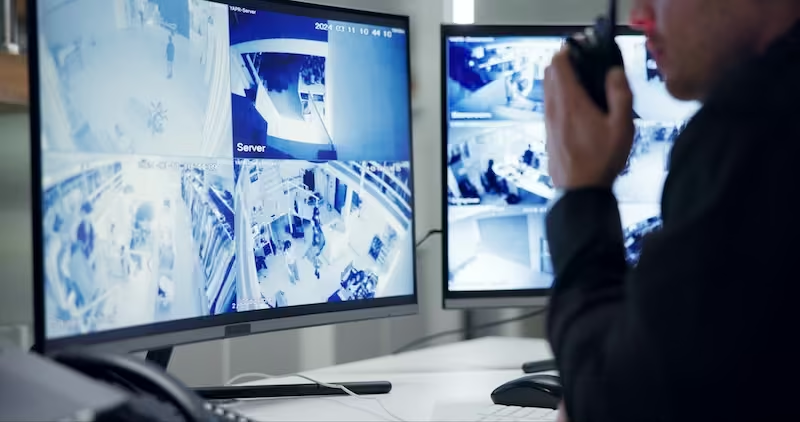
Gas Station and Convenience Store Security Camera Guide

Gas station surveillance systems cover key security risks, from theft and robbery inside the store to suspicious activity around fuel pumps and parking lots.
There are few places I tend to feel less comfortable at night than gas stations. You know the ones: they have a single, flickering bulb illuminating the fuel pumps, with darkness stretching out all around them. It just feels uncomfortable.
Darkness can change how we experience a space. A familiar road can feel disconcerting after dark, and a seemingly ordinary gas station can suddenly feel vulnerable.
For gas stations and convenience stores, that sense of vulnerability comes with real security concerns. We often equate security with locking something down. But what happens when the main purpose of the thing you’re trying to secure is to be open and accessible to the public?
That’s exactly the problem that gas stations and convenience stores face. They have to balance very real issues like violent crime, shoplifting, and more with their primary function: providing convenient access to customers.
This is where gas station surveillance systems come into play. Strategically placed security cameras can help deter crime, document incidents, and give security personnel better visibility into potential problems.
You can’t just pick any old camera and plug it in anywhere, though.
To help you set up your coverage, this guide covers common risks, camera selection, and strategies for monitoring both indoor and outdoor areas.
What Security Problems Do Gas Stations and Convenience Stores Face?
Security plans should be based on realistic risks and concerns.
While specific risks can be somewhat location-dependent, gas stations and convenience stores typically face the following challenges:
- Robbery and employee safety: Cash handling, late-night hours, and open access to the public can create opportunities for robbery and put employees at risk.
- Theft and fraud: This includes shoplifting, register-related incidents, fuel theft, and disputes over transactions.
- Parking lot incidents: Parking lots can be vulnerable to vehicle break-ins, suspicious activity, loitering, and confrontations.
- Limited visibility: No matter how vigilant employees are, they can’t constantly watch every pump, aisle, entrance, register, and parking space.
- Operational constraints: Keeping access open to customers makes it difficult to control who enters the property, and staffing every area with security personnel is impractical.
Addressing these risks requires a combination of security measures. Guidance from organizations such as the National Institute for Occupational Safety and Health (NIOSH) includes measures such as improving the physical environment, establishing workplace violence prevention procedures, and training employees.
Functional security cameras are another important part of that approach. Gas station and convenience store surveillance systems can help businesses monitor vulnerable areas while maintaining the open, convenient access their customers expect.
Where Should Gas Station Security Cameras Go?
The saying “if everything is special, nothing is” applies just as much to security cameras as anything else. It’s not possible or practical to have cameras covering every angle of every inch of the store. Gas station and convenience store surveillance cameras should be positioned where they will have the most impact.
These areas include:
- Registers and checkout counters: Capture transactions, cash handling, customer interactions, and potential theft.
- Entrances and exits: Record who enters and leaves, positioning cameras to capture useful views of faces.
- Store aisles and merchandise areas: Help document shoplifting, disputes, and suspicious activity.
- Fuel pumps and forecourts: Monitor pump activity, vehicle interactions, potential drive-offs, and incidents around the dispensers.
- Parking lots and property entrances: Capture traffic entering and exiting, as well as incidents away from the actual building.
- Back doors, delivery areas, and storage spaces: Cover employee access points and areas vulnerable to unauthorized entry.
Keep in mind that it isn’t just about the number of cameras you have. Camera angles, lighting, overlapping views, and image quality all affect how useful your footage will be.
What to Look for in a Gas Station Surveillance System
Not all cameras are created equal. If your cameras aren’t up to the task, you could end up with gaps in your coverage or footage that fails to capture the details you need.
When choosing your gas station surveillance system, consider the following features:
- Nighttime performance: Clear footage in low-light conditions is particularly important for overnight operations and parking areas.
- Useful identification: Appropriate resolution, positioning, and fields of view help cameras capture relevant details.
- Remote access and alerts: Authorized staff or security personnel should be able to review footage and respond to incidents without being on site.
- Intelligent video analytics: The ability to detect selected events or behaviors can bring potential problems to an operator’s attention.
- Recording and retention: Sufficient storage helps ensure footage remains available for investigating incidents.
Sometimes, a combination of security systems is necessary to meet a property’s needs. When that’s the case, look for solutions that can integrate with one another to simplify monitoring and provide a more complete picture of activity across a property.
Extend Parking Lot Coverage with Mobile Security Units
When most people think of security cameras, they tend to picture the traditional fixed cameras we’re so used to seeing. But fixed cameras aren’t the only option for monitoring a gas station’s exterior.
Mobile security units are self-contained units that combine surveillance cameras, pole mounts, a power source, and remote connectivity in a footprint smaller than a parking space. These outdoor security cameras offer flexible coverage, allowing you to easily adjust as needs change.
Mobile security units, like the LVT® Unit, can offer:
- Visible deterrence: A conspicuous camera-equipped unit tells visitors that parking lot activity is being monitored.
- Broader outdoor coverage: Position cameras to address blind spots or high-risk areas around pumps, parking spaces, and property access points.
- Faster awareness: Remote monitoring and configured alerts can help personnel identify incidents and respond more quickly.
- Proactive detection: AI-assisted features may flag selected behaviors or events for review before a situation escalates.
Effective gas station security requires coverage of both the store and the surrounding property. The right combination of camera types, placement, and intelligent monitoring can help businesses improve visibility, document incidents, and address potential security concerns.
Mobile security units offer proactive, visible deterrence to help address outdoor security gaps. Want to see how they could work for your property? Contact LVT for a demonstration today!