Mobile Surveillance Units: The Fastest Way to Harden a Target
Learn how mobile security units help organizations rapidly harden vulnerable sites, deter crime, and establish intelligent security.
Lately, I've found myself watching way too many resin and epoxy videos online. Artists mix white, blue, and clear epoxy, creating patterns that look like crashing ocean waves or the foamy edge of the surf. The resin moves, shifts, and changes shape with the slightest touch. Over the next several hours, the mixture cures into something solid and strong. This happens because of a chemical reaction between two different liquids mixed to create epoxy. Without each other, the patterns and art would slip away. Together they create something lasting.
Physical security isn't all that different. Security professionals use the term target hardening to describe the process of making a location more resistant to crime. Like epoxy, it isn't about changing the foundation—it's about adding the right element to strengthen what's already there. A construction site is still a construction site. A parking lot is still a parking lot. But by adding visible surveillance, intelligent detection, and proactive deterrence, that location becomes significantly harder to exploit.
In this article, we'll explore what target hardening means, why it has become a critical strategy for protecting vulnerable sites, and how mobile security units provide one of the fastest ways to strengthen security.
What Does It Mean to Harden a Target?
In security, target hardening is the process of making a location more difficult to attack. The goal is to reduce opportunities for crime by creating an environment where threats are easier to detect and harder to execute.
Effective target hardening is made up of multiple layers of protection: physical security measures, technology, and visible deterrence. A well-hardened location signals that someone is actively watching, increasing the perceived risk for criminals and making the site a less attractive target.
Visibility plays a critical role in this process. Security cameras, lighting, surveillance systems, and other deterrents remove the uncertainty criminals rely on. When combined with intelligent technology like AI-powered detection and real-time monitoring, these tools allow security teams to identify suspicious activity, respond faster, and prevent incidents.
Ultimately, successful target hardening is about prevention. Rather than simply capturing evidence after a theft, intrusion, or act of vandalism has already occurred, modern security strategies focus on stopping those events from happening in the first place.
Why Speed Matters in Physical Security
Time is the most valuable resource when it comes to security threats. A vulnerable location can’t wait weeks or months for security to be designed, installed, and activated. Every day and night without protection creates a gap for theft, vandalism, and safety issues.
Many security challenges develop with little warning. A construction site may become a target as valuable equipment arrives. A retail property may experience a sudden increase in crime. A utility or critical infrastructure site may require additional protection due to changing threat conditions. In each situation, organizations need a way to strengthen their defenses immediately.
Mobile security trailers provide a unique advantage; they can be deployed quickly to provide an immediate security presence. When threats can emerge overnight, the ability to harden a target in hours can make all the difference.
How Mobile Security Units Can Be Deployed Rapidly
When a site needs to be hardened quickly, the biggest advantage of a mobile security unit is that it doesn't require building a security system from the ground up. Instead, the system arrives and can be integrated seamlessly into an existing security setup.
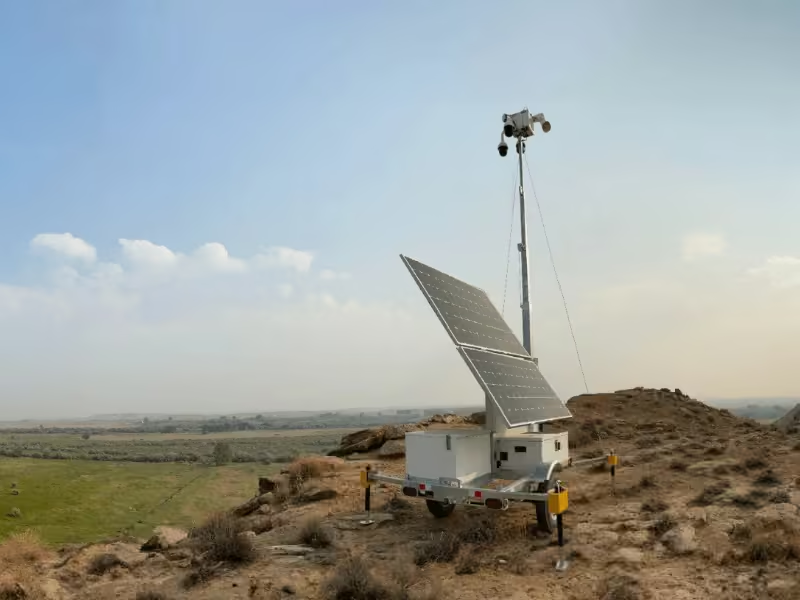
Mobile security units from LVT (LiveView Technologies) are designed as self-contained, solar-powered systems. Solar panels provide power during the day, while onboard battery storage keeps the system running when sunlight isn't available. Cellular connectivity eliminates the need for wired internet, and the units can be positioned where surveillance is needed without trenching, running cables, or connecting to a permanent power source.
That means deployment can be remarkably simple. A unit can be transported to a location, positioned to provide the desired coverage, and activated very quickly. Once deployed, organizations can begin monitoring vulnerable areas almost immediately. With deterrence features, AI-powered detection, and real-time alerts, the system can stop crime before it happens.
For organizations facing an immediate security challenge, that speed can be the difference between reacting to an incident and preventing one. Mobile security units give security teams a way to harden a target today while longer-term security plans are developed.
More Than Cameras: How Mobile Security Units Deter Crime
Effective target hardening requires creating enough visibility, uncertainty, and perceived risk to make criminals think twice before acting. There are a few key features every mobile security unit should have to support effective coverage and response.
A Visible Security Presence
The physical presence of a mobile security trailer can deter crime. Highly visible cameras and elevated towers signal that a location is being actively monitored. This removes the sense of anonymity that criminals often rely on. When someone approaching a property can immediately see that security is watching, the perceived risk of being detected increases.
AI-Powered Threat Detection
Modern mobile security units can also use AI-powered analytics to better distinguish between a genuine security threat and a false alarm. And they do it with more efficiency and less manpower. Rather than relying on someone to watch camera feeds continuously, AI can analyze activity across the site and alert security teams when something warrants attention. This helps security personnel focus on potential threats instead of spending their time sorting through routine activity and false alarms.
Remote Live Monitoring
When an alert is triggered, remote monitoring gives security personnel the ability to assess what is happening in real time. This allows your security plan to move past just investigating an incident after the fact. Receiving an alert when a threat is first detected means that you can intervene faster. And security threats aside, remote video surveillance also allows teams to check on a construction site's progress or a property's damage after a storm.
AI Talk Down
Sometimes, the most effective response is simply letting someone know they’ve been seen. AI-powered talk down can deliver live or automated voice warnings when suspicious activity is detected. A person attempting to enter a restricted area may reconsider when a speaker suddenly announces that they are being monitored.
Harden Your Site Before Criminals See the Opportunity
Just as epoxy transforms when the right components come together, a vulnerable site can become significantly stronger when the right security measures are put in place. Organizations can't always predict when a threat will emerge, but they can prepare to respond quickly when it does.
Mobile security units give security teams a fast, flexible way to harden vulnerable locations. When security can't wait, organizations need a solution that can move as quickly as the threat. LVT's mobile security trailers can help you harden vulnerable sites quickly. Whether you're securing a construction project, protecting critical infrastructure, or responding to an increase in crime, LVT can help you establish intelligent security where and when you need it.
Contact our team to learn how rapidly deployable security solutions can help protect your organization.


%20(1).avif)
