Winter and Holiday Shutdown Construction Site Security Checklist

Protect your construction site during winter shutdowns with this security checklist. Learn how to secure equipment, strengthen perimeter protection, monitor activity, and prevent holiday theft. Discover how LVT's mobile security units provide flexible surveillance, real-time alerts, and remote monitoring while crews are away.
Your crew heads home for the holidays. The equipment stays behind.
Construction site security gets harder when the people leave, and a winter shutdown can leave a site empty for days or weeks. TrueLook's 2026 State of Construction Site Security Report counted 2,639 confirmed break-ins at active U.S. construction sites in 2025, a 50% increase from the year before. More than 40% of them happened on weekends, with the riskiest hours from 11 PM to 3 AM. A holiday shutdown stretches those weekend conditions across the whole closure.
Even more, when a theft does occur, recovery is rare. A study of more than 15,000 incidents in the National Incident-Based Reporting System found that contractors lost about $6,000 per incident on average and recovered stolen items less than 7% of the time.
This checklist covers what to do before a shutdown, during it, and at reopening. Print it, assign an owner to each item, and put dates on every line so your team can head into the holiday break with a clear plan and return to a site that's ready to get back to work.
Why Winter Shutdowns Raise the Risk
During the winter, crews are smaller or gone, nights are long, and thieves know that sites sit unattended over the holidays. Security firm Amarok flags late November through early January as a major risk period.
Winter weather like sleet or snow adds its own problems. It can hide a break in the fence or block a camera's view.
Before Shutdown: Plan the Closure
Start planning and building your security at least a month out. Security providers get busy before the holidays. Work through these steps before the last day on site:
- Set the close and reopen dates, and share them with your security providers, subcontractors, and insurer.
- Review past thefts, attempts, and security audits at this site.
- Read your insurance policy for theft-prevention requirements. Some insurers wait 30 days after a theft before paying a claim.
- Book security providers and equipment now.
- Name one shutdown owner and one backup, with phone numbers that work around the clock.
Final Week: Secure the Assets
The final week is your last opportunity to secure equipment, remove easy targets, and document everything that will remain on site. Focus on reducing the amount of valuable property left exposed. This will make it more difficult for thieves to access or move what stays behind.
- Inventory everything on site, with photos and serial numbers. You will need it for the police report and insurance claim after a theft.
- Move high-value tools, materials, and small equipment off site or into locked storage.
- Pull copper and other metals that resell easily out of staging areas.
- Park heavy equipment inside the fence, away from the gate, and block the paths in and out.
- Remove keys, lock cabs, and immobilize machines wherever you can.
Perimeter: Close the Gaps
A fence is only as effective as its weakest point. Before shutdown, walk the entire perimeter and look for gaps, damaged sections, unsecured gates, and areas with poor visibility. Lock every gate, then tug each lock to confirm it holds. Make repairs, check locks, and clear anything, like snow or debris, that could give intruders an easy way in or obstruct security monitoring.
Detection: Choose Construction Site Security Cameras That Work in Winter
A fence tells you nothing when someone cuts it. But cameras and alerts can give you information the moment something suspicious arises. Before shutdown, make sure your cameras can handle the conditions and give your team reliable visibility into activity across the site. Ensure that:
- Cameras cover the gate, the highest-value assets, and the blind spots along the fence line.
- The system works in cold, snow, and low light.
- Power and connectivity will last through the entire shutdown.
- Video goes to the cloud, so footage survives damage or theft at the site.
- Alerts fire on after-hours entry, equipment movement, and unknown vehicles.
- A named person receives alerts and responds, including on holidays.
- You have tested the system by triggering an alert, pulling a clip, and checking system health.
During Shutdown: Check In
A closed site still needs active oversight. Review security alerts and system health daily, including weekends and holidays. Schedule in-person checks or patrols at regular intervals. Teams should also document unusual activity with dates and times, and inspect fences, gates, and camera views after major snowstorms. If a theft occurs, contact police and your insurer immediately and preserve all relevant footage.
At Reopening: Close the Loop
Once the holiday shutdown ends, take time to check the site before crews return. A quick inspection can help identify damage, missing equipment, or signs of intrusion before work gets underway again.
- Walk the site before crews arrive.
- Compare what is on site against your inventory.
- Review the footage and alert log for the whole shutdown.
- Note what worked and fix the gaps before the next closure.
Construction Site Security Solutions: What Fits a Shutdown
No single measure covers a shutdown. A strong plan combines physical barriers to slow intruders with surveillance that can detect suspicious activity and alert someone who can respond. Layer these features:
- Fencing, locks, and lighting delay thieves but cannot tell you anyone is there.
- Guards respond in person, but a guard can only be in one place at a time, and you pay for every night of the shutdown.
- Fixed cameras record well, but they need power and network connections that an active site may not have.
- Mobile surveillance units bring their own power and connectivity, move when the site changes, and send alerts to the appropriate people.
For a shutdown, the best combination is usually a secured perimeter plus monitored cameras.
How LVT Supports Construction Site Security Through Winter
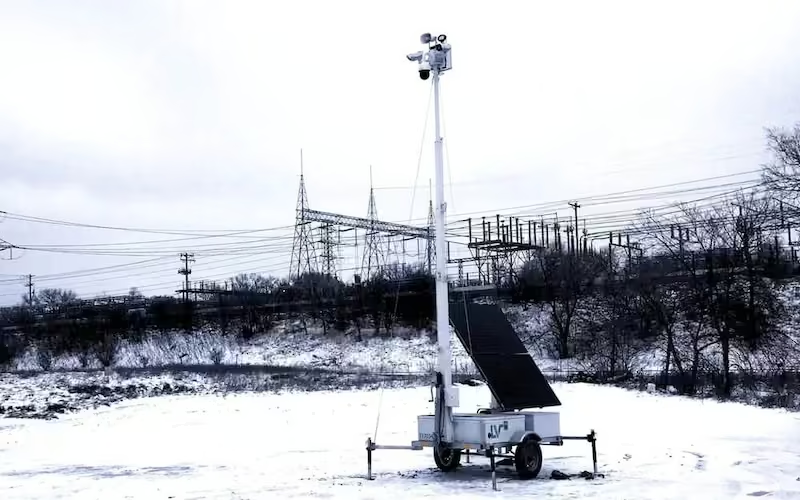
Winter shutdowns create unique security challenges. LVT (LiveView Technologies) helps address these challenges by pairing every LVT® Unit with the LVT® Platform, a cloud-based video management system. Together, they give security teams a way to monitor activity, respond to potential threats, and maintain visibility even when crews are away.
Here's what that looks like during a winter shutdown:
- Fast setup. Crews tow a unit behind a pickup and set it up in minutes.
- No external hookups. The solar-powered units do not need external plug-ins, wiring, or power sources.
- Built for weather. LVT builds its units to withstand heavy snow and heat.
- Low-light detection. Thermal imaging means you don’t need additional lighting to see at night.
- Alerts that fit the risk. Set alerts for entry after hours, equipment that moves, and blacklisted license plates.
- Two-way audio. Speak through the unit's speaker when someone enters.
- Cloud video storage. The platform archives video automatically, and the history tab lets you choose the time, cameras, and length of video you want.
- Works with what you have. Units integrate with your current security systems.
LVT systems are field-proven. Wohali Partners faced many of the same challenges that make winter construction security difficult: a remote jobsite, limited access to utilities, and a changing site layout. The team deployed LVT's solar-powered mobile surveillance units to establish coverage without relying on permanent power or network infrastructure. As construction progressed and the site's needs changed, they could reposition the units to maintain visibility across different areas of the property. The result was a flexible security solution that could adapt alongside the project.
The Bottom Line
Shutdown risk is predictable, so the plan can be too. Secure the assets, close the perimeter gaps, add monitored cameras, and check in on a schedule. Sign up for a demo with an LVT specialist at lvt.com and see if you qualify for a risk-free trial before your shutdown starts.