Organized Crime Has Entered the Chat
How Decentralized Global Networks and Cyber Tools are Reshaping the Criminal Underworld

Technology isn’t just helping the good guys. Around the world, criminals are using it to commit sophisticated crimes quicker and on a bigger scale than ever before.
Before advancements in technology, organized crime had to rely on a centralized presence, a strong man or group, and a physical structure. The groups would collect funds and regulate punishments in the flesh.
But now we live in a digitized world that removes the need for the physical structure and centralized organization. Now a group of criminals can have members on different sides of the globe, never see their victim, and still commit money-making crimes.
The case of one of these victims, an 18-year-old college-bound student, shows the devastating impact of this new age of organized crime. Brian, whose name has been changed to protect him and his family, fell victim to sextortion all because he started a text exchange with an unknown number. Sophia, the name the unknown number gave, convinced Brian to send nude photos and threatened to make them public unless he paid her an ever increasing amount of money. Brian ended up taking his own life, never realizing that “Sophia” was actually three men—one located in Los Angeles and two located in West Africa.
Similar to the group that attacked Brian, organized crime rings have members working together across the globe, often never even meeting their victims. While the actual crimes they commit may have been around for centuries, the methods have changed. And so have the methods of mitigation and investigation. Technology makes it easier for groups to commit crimes, employ freelancers or contract workers, and more, but it also makes it harder for law enforcement and prosecutors under current gang and organized crime statutes.
Defining the New Criminal Landscape
There are three types of cyber-oriented criminals.
- Cyber-dependent: These groups commit crimes only in cyber-space using a computer. They focus on viruses, spyware, Trojans, ransomware, and other illegal intrusions to exploit security vulnerabilities.
- Cyber-enabled: These criminals use computers to aid traditional crimes. This includes fraud, identity theft, extortion, child exploitation, and cyber laundering. These criminals also use AI tools to imitate voice, movement, and appearance to appear trustworthy.
- Cyber-assisted: These groups support their preexisting criminal activities with technology. They commit crimes like unlawful trafficking of illicit goods and services, medicines, controlled substances, and people.
The Crime That Reflects Digital Culmination
One crime that has spanned the digital and physical world is human trafficking. Similar to other organized crimes, human trafficking has changed with digitization. It used to be that victims were trafficked in person through a single person or pimp. But now human traffickers work in groups and are attacking people in their homes through social media and online chat forums.
Groups target victims, often young women, in digital neighborhoods from all walks of life, not just from socio and economically depressed areas. They look for those who are alone and begin digitally grooming them. Traffickers then use AI to make their lifestyle appear lavish and can even send rideshares to take their victims to the meet location. Once the girl is in the group’s “system” everything is done digitally. She is moved from location to location through rideshares, all bookings are managed online by faceless individuals, and all payments are now handled through cash apps, online payments, and crypto. In all likelihood, the girl will never meet the person who is the actual trafficker.
Technology has also changed the demographic of who is targeted. Men and boys are being lured into human trafficking based on the promises of economic freedom. Victims are targeted through social media platforms in their home countries and promised wealth and opportunity. But instead, they are smuggled into the U.S., stripped of their passports, trapped in squalor, and forced into manual labor with no chance to escape. Most of these victims will be herded into a van in the mornings, dropped off to sell products or perform manual labor, and then picked up at the end of the day with no idea who drives the vans.
Digital Infiltration of the Supply Chain
Crime is opportunistic and the supply chain has become a profitable target of digital-savvy thieves. Even though it deals with physical products, the supply chain and logistics rely heavily on digital support systems. Shipment data and inventories all live on digital platforms and criminals use this data to commit cargo theft. This isn’t prying open a trailer with a crowbar, or cutting a lock, now criminals use more sophisticated methods that blend digital with the physical world.
Cyber cargo theft uses deceptive strategies like computer-aided viruses and phishing emails to access a company’s system or online load boards which are online marketplaces where shippers and carriers find and book loads. Then once they’re in, the criminals manipulate the data to create shipping paperwork. The problem is only growing as companies are using AI to do an initial screen of cargo and drivers, giving hackers another opening to gather information or replace it with their information. Once that’s complete, they’ll show up with what looks like real paperwork and simply drive off with the shipment, no questions asked.
How Technology is Changing Police Investigations
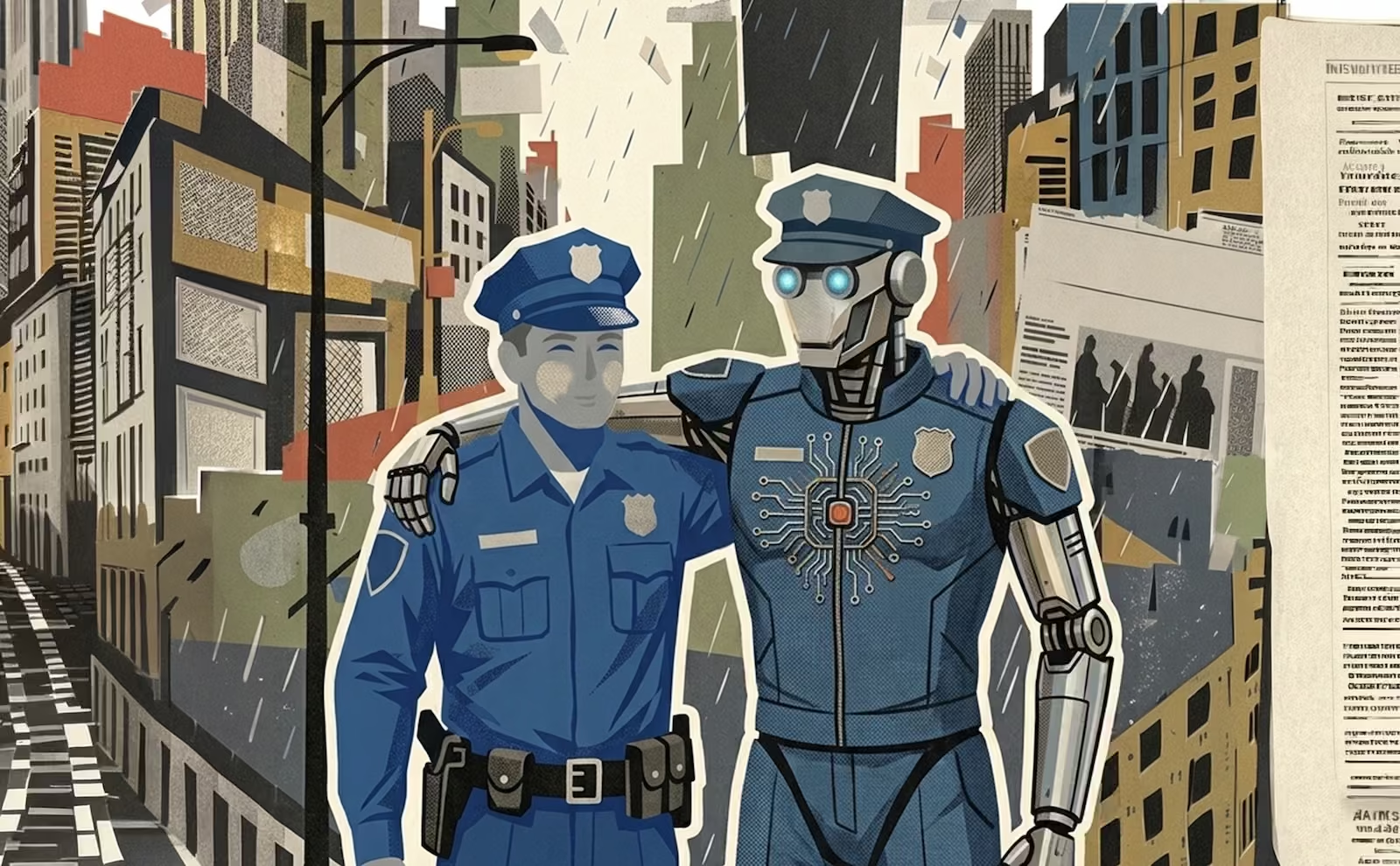
Technology is a force multiplier for criminal behavior and for law enforcement. Until recently there were few tools that law enforcement could use to investigate organized crime. Those that were available were labor intensive and time consuming. For example, wire or phone taps or searching through bank records. Often just to get access to these methods required planting an inside man who could pass intelligence to other officers.
Other methods involved roving on-call teams, strategic surveillance cameras, or even having an officer hiding in a tree calling out directions to their team parked a couple blocks away.
There was a time when investigators could use criminals’ Facebook or Instagram to gather internal communications from the group before criminals realized that they needed to cover their digital tracks. Platforms like Signal, WeChat, and WhatsApp are now the favorite hangouts for organized crime groups because it is encrypted and harder for law enforcement to access.
There are other resources that law enforcement can use to their advantage when they are used lawfully, including doorbell cameras, cellphones, and more. There is a proliferation of camera systems that collect evidence of how organized groups are collecting, who they’re associating with, and more.
The truth is law enforcement needs more force multipliers. About 46% of law enforcement agencies in the U.S. have fewer than 10 officers. Approximately 68% of law enforcement budgets go towards salaries while only 2.4% is spent on technology and communications.
As security systems continue to become more sophisticated, they’ll help law enforcement even more by not only recording evidence, but by using AI to help prevent crimes through identifying patterns and automating alerts and responses. This will transition police from being reactionary to being proactive.
Technological advancements also decrease human bottlenecks and increase reliability. People take time to analyze and act and they are fallible. They may not see everything. Humans are only as good as their presence and their ability to pay attention at the time of the event. But computers remove the fault inherent with being human and will allow officers to be where they need to be when they need to be there.
The Path Forward
Do police officers have the technology to eradicate organized crime, either physical or digital? The easy answer is no. But there are multiple realities that they have to deal with. First, law enforcement’s top priority is to stop immediate actions of violence in their communities. As long as this is the largest function of any police force, it will always be difficult to get the resources necessary to fight organized crime.
But what if there was a technology in cameras that could identify the same car showing up at the same time every morning? Or could use facial match (which still ensures privacy and is more reliable than facial recognition) and see the same criminal hitting multiple locations? The video could pull descriptors, information, and other documentation to assist security teams and law enforcement. Partners in the community will soon have this technology sitting in their parking lots.
That’s why there needs to be a public-private partnership between law enforcement, businesses, and their communities. When they work together, with the addition of better technology, there is an increased vigilance against organized crime and an increase in public safety.
Get the Latest Articles
Unlock exclusive insights from the world of intelligent site management and proactive security. Subscribe to ELEVATE to get our latest featured articles, expert interviews, and tactical insights delivered right to your inbox.