You Weren’t Raised in a Barn: Beefing Up Entry Points for Commercial Building Security
.avif)
Many security problems start at entry points like doors, windows, and loading docks. Improving commercial building security means making these areas easier to see and monitor so unauthorized access can be spotted quickly. When these steps are part of a total site security plan, businesses can protect the entire property more effectively.
Sometime during your childhood you likely heard your mother ask incredulously, “Were you raised in a barn?” whenever you left the door to anything open. Somehow failing to secure an entry point reduced you to metaphorical livestock.
But your mom wasn’t totally crazy—if you want to find a building’s weak spots, start by looking at the doors.
For businesses, it’s not just the front entrance. Side doors, emergency exits, loading docks, and windows that don’t quite latch right are all an Achilles’ heel. Any opening to the building is usually where most security problems begin because if they let in the good guys, they can let in the bad guys too.
To make matters worse, every building has predictable movement patterns. Employees enter through the same doors each day. Delivery drivers arrive at specific loading zones. Visitors check in through designated entrances. Unfortunately, thieves often spot these patterns too.
They watch where people come and go. They notice which doors remain unlocked during busy hours. They identify entrances that aren’t monitored closely.
In many cases, breaches don’t involve forced entry at all. Someone simply finds an unlocked door or window. That’s why security strategies are shifting toward something more comprehensive: total site security. Total site security is designed to protect the entire property as a connected ecosystem. But even within that bigger picture, entry points still matter most.
You Can’t Protect What You Can’t See
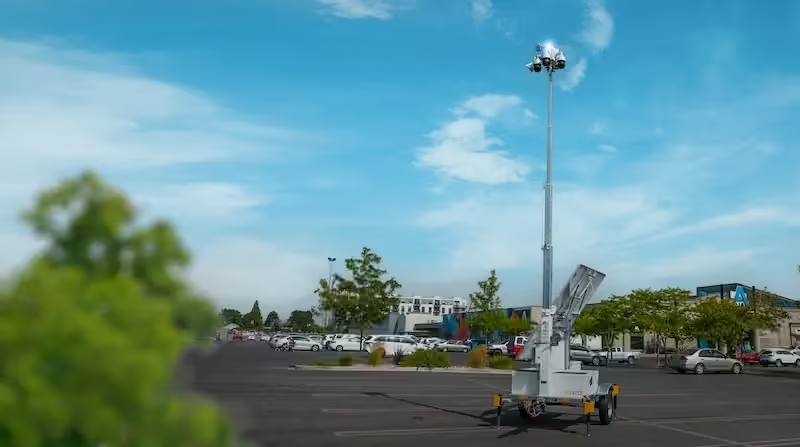
One of the simplest ways to strengthen entry points is by improving visibility. Cameras placed near doors, windows, and delivery areas make it easier to monitor who’s coming and going.
More importantly, cameras create accountability. When people know they’re being recorded, they’re far less likely to attempt any funny business. That alone can deter many would-be bad actors.
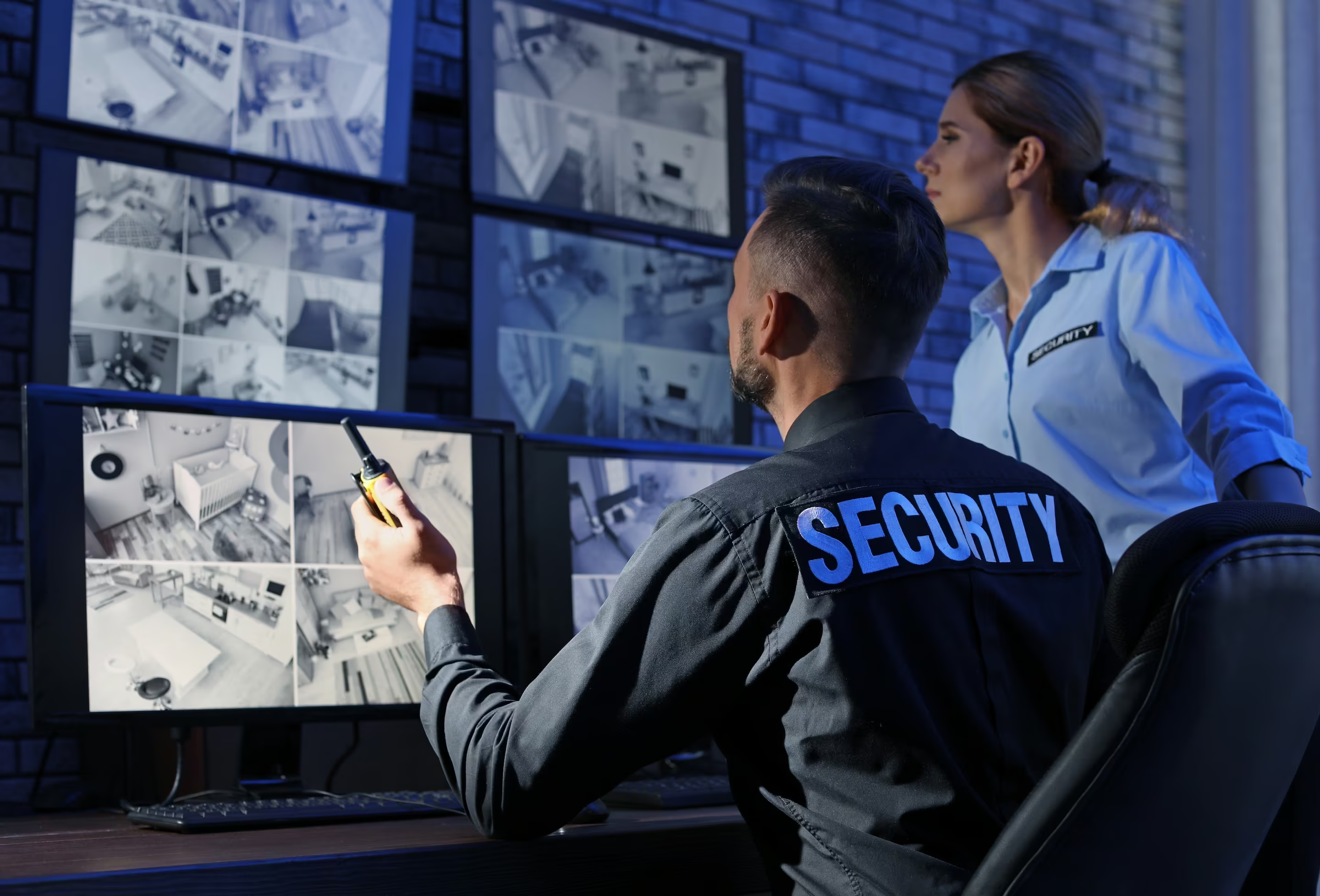
Recording video is helpful. Monitoring building activity in real time is even better. Through centralized security monitoring, organizations can watch multiple entrances simultaneously. Security teams receive alerts about unusual movement and can instantly review footage anytime, anywhere. Access control systems also help regulate who can enter specific areas using keycards, codes, or biometric credentials.
For example, if an employee’s keycard opens a door at 10:00 PM, security teams can immediately review camera footage to confirm who entered. If someone attempts to access a restricted door without authorization, the system can trigger an alert. This combination of identity verification and visual confirmation dramatically reduces security risks associated with unauthorized entry. It also provides evidence for investigations if an incident occurs.
Pay Special Attention to Loading Docks
Loading docks are among the busiest and most complex areas of many commercial buildings making them a common target for breaches. Trucks are coming and going. Doors open frequently. During busy hours, it’s easy for someone to slip inside unnoticed. Because of this, loading docks require special safeguards.
Cameras should cover the entire dock area, including approach lanes and storage zones. Access control systems can limit who is allowed through dock doors. Motion sensors can trigger alerts if activity occurs outside normal operating hours.
Equally important is security monitoring. When dock areas are actively monitored, suspicious behavior can be detected quickly. Someone lingering near equipment or attempting to access restricted areas instantly becomes visible, significantly reducing response times.
Train Your People to Recognize Security Risks
Technology and physical barriers can do a lot, but people remain one of the most important parts of any security strategy. Employees should understand the importance of keeping entry points secure. Propping open doors for convenience, sharing access credentials, or allowing unfamiliar individuals into restricted areas can lead to big issues.
Employees often serve as the first line of defense against security incidents. When they know what to watch for, they can alert security teams quickly. Combined with surveillance and monitoring systems, this awareness strengthens overall commercial building security.
Bring in The Professionals if Needed
But sometimes employees aren’t enough. Designing a strong security strategy can be complex, especially for large facilities or multi-location organizations. That’s why many companies work with video security experts who specialize in evaluating vulnerabilities and recommending effective solutions.
These teams are like professional baby-proofers, but for businesses. They conduct security assessments to identify weak points around entry areas, including doors, windows, and loading docks. Based on their findings, they can recommend the right combination of cameras, access control systems, lighting, and monitoring tools to create a cohesive plan.
You get stronger protection without disrupting day-to-day operations. A win-win!
A Smarter Approach to Entry Point Security
The reality is simple: most security incidents begin at an entry point. When all areas are properly secured, the entire building becomes a fortress that’s much, much harder to compromise. By combining physical deterrents, surveillance technology, access control systems, and security monitoring, organizations can create a layered defense that significantly reduces risk.
When these strategies are integrated into broader total site security plans, businesses gain something even more valuable than protection: visibility, awareness, and total confidence that every entrance—from the front door to the loading dock—is covered 24/7.
Because when entry points are protected, the rest of the building becomes much harder to breach. Listen to your mother, and don’t leave that barn door open!
Ready to up your commercial building security game? Contact LVT today for a free demo.
%20(1).avif)