What Is Situational Awareness and Why Does It Matter for Security?
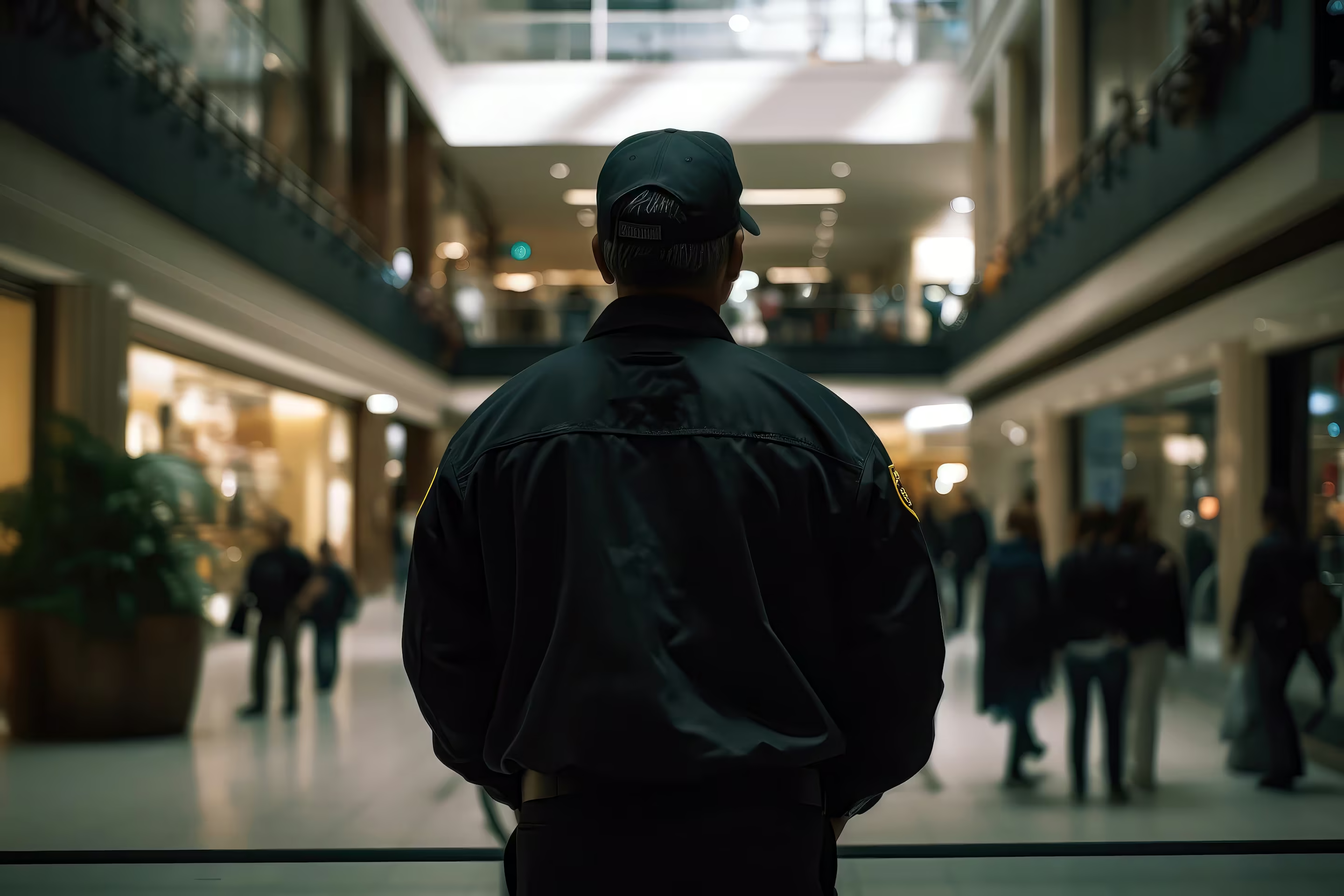
Situational awareness gives security teams the visibility and context needed to recognize important activity and make informed decisions. Cameras, AI-powered analytics, real-time alerts, remote monitoring, and active deterrence can work together to reduce information overload, extend coverage, and help teams respond before an incident becomes more serious.
When I was learning to drive, one of the first things my instructor taught me was that defensive driving is about more than following the rules of the road. Sure, everyone needs to signal before they change lanes, stop at stop signs, and follow the speed limit. But even when you are following all the rules—accidents still happen. My instructor explained that defensive driving is about paying attention to what is happening around you. Watch the car in the next lane, notice the biker up ahead, pay attention to the kids throwing the football on the sidewalk, check your mirrors, look several cars ahead instead of focusing only on what’s directly in front of you.
It felt a little stressful in the beginning, but I understood that the goal was to recognize a potential problem before it became an accident. Many years later, this kind of driving feels instinctual.
Security works much the same way. You can have cameras, alarms, access control, and security personnel in place, but if you don’t have a clear understanding of what’s happening across your site, it’s difficult to identify threats early or know how to respond.
That’s where situational awareness comes in. In a security context, situational awareness means having the visibility and context needed to prevent incidents before they happen. An organization needs to have an overview of the entire site, recognize what matters, and make informed decisions about what to do next.
Modern security systems can help bridge the awareness gaps by turning streams of video and other data into meaningful information. Security teams can stop crimes before they occur.
What Is Situational Awareness in Security?
Security systems designed with situational awareness in mind should be able to answer the basic who, what, when, and where of a site. This means: Who has access? Where should they be on a property? What type of activity is irregular and typical for the site? Where is high-stakes activity occurring?
A security camera can show you that someone is walking across a property, but the footage alone doesn't necessarily tell you whether that person is an employee arriving for a shift, a contractor working after hours, or someone who shouldn't be there. True situational awareness comes from having enough information and context to understand the difference—and determine whether action is needed.
A useful way to think about situational awareness is as a three-step process: perceive, understand, and act.
1. Perceive: Know What’s Happening
The first step is gathering information from the environment. Security cameras, sensors, access control systems, alarms, security personnel, and other technologies can all contribute to this picture.
The challenge is that modern sites can generate an enormous amount of information. Security teams may have dozens or even hundreds of cameras to monitor, along with alerts and other data streams. Simply having access to all that information doesn't mean a team can effectively keep track of it.
2. Understand: Put Activity Into Context
The next step is determining what that information actually means.
Is the person on camera supposed to be there? Is a vehicle entering a normal delivery area or a restricted zone? Is movement around a perimeter routine activity or something that requires investigation?
Context is what turns visibility into understanding. Technologies such as AI-powered video analytics can help identify relevant activity in hundreds of hours of video and bring important events to a security team's attention.
3. Act: Make an Informed Response
Once a team understands what is happening, it can determine how to respond.
That response could mean monitoring the situation, contacting someone on site, using an active deterrent, dispatching security personnel, or calling local law enforcement. In some cases, having better awareness may allow a team to intervene before a situation becomes more serious.
Situational awareness gives security teams the information and context they need to make the right decision at the right time.
What Gets in the Way of Situational Awareness?
When I was learning to drive, being told to “stay aware of your surroundings” was a lot harder in actual practice. I remember at first trying to balance watching the road ahead, checking my mirrors, looking for cyclists and pedestrians, reading signs, watching my speed all at the same time. It felt like the more I had to pay attention to, the easier it was to miss something.
Security teams face the same challenge—just at a much larger scale. There are a few key challenges that can stand against situational awareness:
- Too much video: A site can have hundreds of hours of video every day. Security teams can't watch every camera continuously.
- Too many alerts: Constant notifications can create alert fatigue that desensitizes teams to events that actually matter.
- Disconnected systems: Cameras, access control, alarms, and other tools may operate independently, meaning that things can slip through the gaps.
- Limited personnel: A small team may be responsible for a large or geographically dispersed site.
- Changing environments: Construction sites, outdoor storage, infrastructure, and other locations can change quickly.
- Lack of context: A camera may show an event without telling the operator whether it's expected or suspicious.
How Technology Creates Stronger Situational Awareness
That’s where modern security systems can make a significant difference for situational awareness. LiveView Technologies brings together cameras, AI-powered analytics, real-time alerts, remote monitoring, and active deterrence to help security teams see what’s happening across a site without having to manually process every piece of information themselves.
LVT’s AI-powered video analytics help cut through the noise. Instead of requiring someone to watch hours of footage or respond to every movement detected by a camera, AI can identify specific activity that matters. Agentic AI learns the patterns of your organization. It can detect when a person is entering a restricted area or a vehicle shows up at a loading dock outside of standard delivery times. This helps teams focus their attention where it’s actually needed.
Real-time alerts help teams know when to look. Rather than continuously monitoring every camera, security personnel can receive notifications when relevant events occur. That means an important event is less likely to get buried beneath the constant stream of routine activity.
LVT expands the reach of a security team with remote monitoring. This security solution helps to maintain awareness without anyone needing to be physically on site. This can be even more important on vast and remote sites. At a power plant, security doesn’t need to be driving miles around the site. Cameras connected to the cloud gives teams the ability to view anywhere on the site at any time.
Active deterrence adds another layer to situational awareness: the ability to act. When a potential threat is identified, security teams can use tools like remote audio, lights, or other deterrents to intervene in real time. Instead of simply recording what happened, the system can help organizations respond while an event is still unfolding.
And because LVT security solutions are designed to work across large, changing, and sometimes remote environments, security teams can maintain visibility even when traditional infrastructure is difficult to deploy. Solar power, cellular connectivity, mobile surveillance units, and flexible deployment options help bring security coverage to places where permanent systems may not be practical.
Together, these capabilities create something more valuable than a collection of cameras and alerts. They create a connected view of what’s happening across a site—helping security teams identify what matters, understand the situation, and decide what to do next.
In other words, technology helps turn visibility into situational awareness.
Situational Awareness Is the Foundation of Proactive Security
Situational awareness is the foundation of proactive security systems. The right technology can help security teams cut through the noise, identify what matters, add context, and respond while there’s still time to make a difference.
With intelligent video surveillance, AI-powered analytics, real-time alerts, and remote monitoring, LVT helps organizations turn visibility into actionable situational awareness—and build a more proactive approach to security. Visit lvt.com to see how you can build a total security suite designed with situational awareness in mind.
%20(1).avif)
%20(1).avif)
%20(1).avif)
