Understanding the Fundamentals of Supply Chain Security
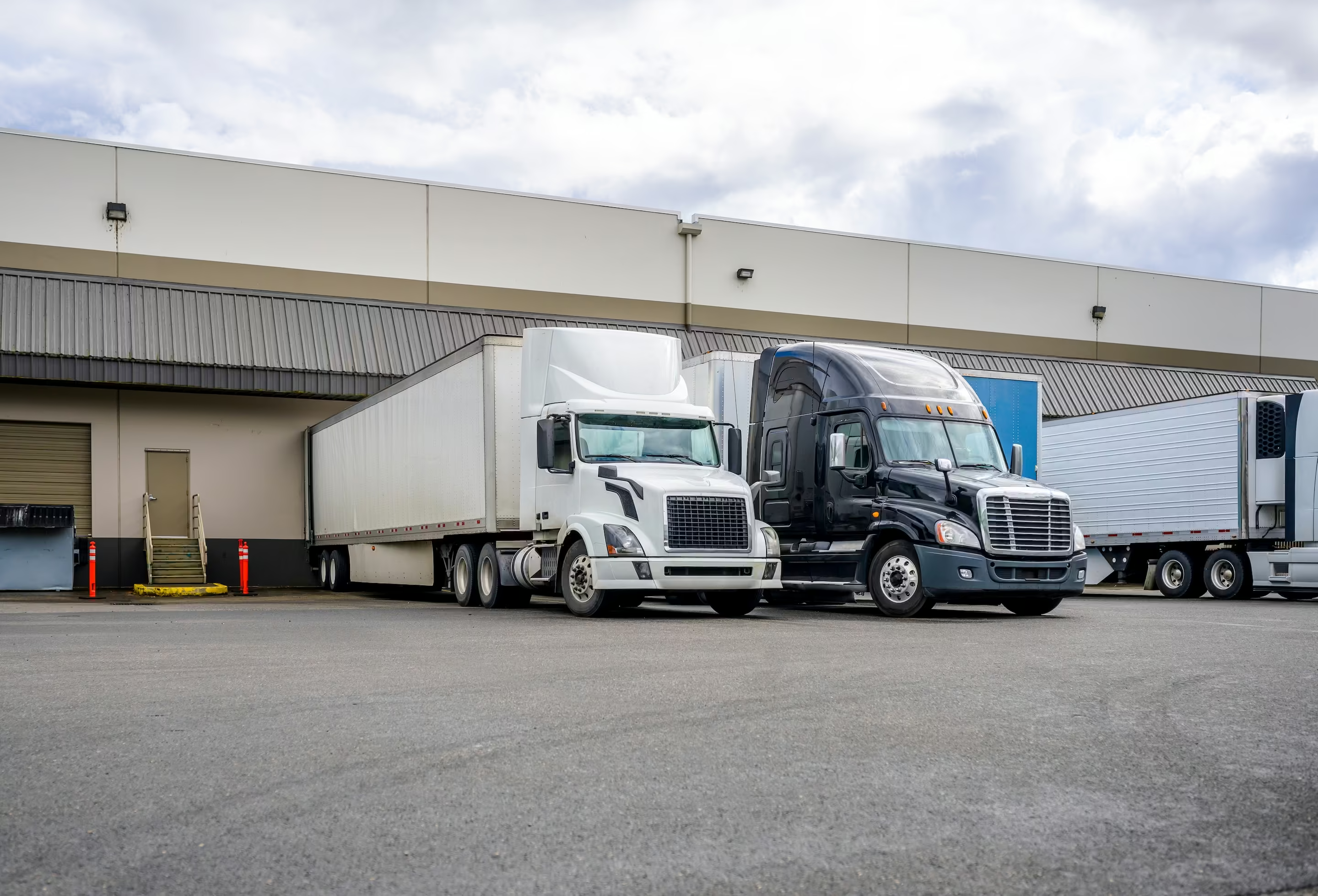
Supply chain security protects goods, facilities, and data at every stage—from sourcing to retail—by addressing physical risks, third-party exposure, and more.
What does $400,000 worth of lobster have in common with pallets of Dyson appliances, Nike shoes, and Wahl hair clippers?
It sounds like a cheap joke, but the topic is expensively serious.
Both the lobsters and the pallets of other goods were stolen at various points on the supply chain—and the two examples combined showcase the supply chain’s wide range of tempting targets.
The phrase “supply chain” encompasses a massive network: It includes all of the organizations, people, activities, information, and resources involved in converting raw materials to the final product in a customer’s hands.
While the basic concept of a supply chain has existed for centuries, today’s supply chains are more complex and expansive than ever before, spanning continents and involving vast vendor networks. This expansion has allowed the global economy to boom and gives companies countless options when it comes to the creation and sourcing of products.
But the growing complexities aren’t limited to the logistics themselves; they also apply to the security efforts attempting to safeguard these products from creation to delivery.
Supply chain security refers to the efforts to protect every aspect of the supply chain—including products, materials, facilities, data, systems, and people—from both physical and cyber threats.
Protecting the supply chain:
- Prevents disruptions to critical infrastructure and daily life
- Ensures product integrity
- Safeguards both data and company reputations
- Mitigates financial losses
Effective supply chain security starts with understanding where risks exist, who owns them, and what measures are necessary to reduce exposure at every stage.
Supply Chain Security Risks
Each component in product creation comes with its own set of security risks. To effectively guard against them, you have to first understand what these security issues are every step of the way.
Who is Responsible for Supply Chain Security?
With so many pieces involved in supply chain security, it’s impractical—not to mention impossible—for one company to take on every security aspect for the creation of every product.
Instead, effective supply chain security has to be a shared effort, built in to every link in the supply chain. This makes it critical, therefore, to ensure that each of those links are as strong as possible.
As Wendi Whitmore, Vice President of IBM Security X-Force, put it: “A supply chain is only as strong as its most vulnerable entity.”
The unavoidable reliance on third-party vendors necessitates clear communication, strict security standards, and strong visibility.
Core Components of Supply Chain Security
Every company’s supply chain is going to look different—sourcing and transporting lobsters is a very different process than producing Nike shoes, for example. But regardless of whether it deals with seafood or footwear, every supply chain security strategy should share essential key components.
Risk Assessment and Management
The first step in any security plan should be a thorough risk assessment. This creates a customized understanding of the realistic threats each aspect of your supply chain faces. Understanding your risks allows you to tailor your security strategy accordingly.
Key aspects:
- Proactively identify and assess both physical and cyber threats through risk assessments and vulnerability scans
- Build custom supply chain risk management strategies around assessment findings
- Pay special attention to third-party vendor risks
Processes and Response Plans
Secure operations by directly addressing vulnerabilities found in your risk assessment. Consider how to optimize processes to reduce additional risks, including through access control and encryption.
Because it’s impossible to stop or anticipate every security issue, it’s imperative to create customized incident response plans to speed recovery and minimize reputational damage. Each incident response plan needs to be regularly tested and practiced to ensure easy plan execution should the need arise.
Key aspects:
- Implement strong security processes, including access control, encryption, and multi-factor authentication
- Create and regularly practice incident response plans
- Regularly assess processes and response plans to ensure they are optimized for current needs and technology
Third Party Protection Measures
Third-party relationships are an essential part of the supply chain, but they also create some of the biggest security risk variables. According to a 2025 survey of 1,000+ respondents, 92% of respondents trust their suppliers to follow best practices, but only 66% regularly assess supplier risk, creating a concerning overconfidence gap.
You need to know who and what is in your supply chain on every level—even extending to software components—and know their risks and security measures to ensure your supply chain has no weak links.
Key aspects:
- Thoroughly vet potential vendors
- Implement strict security requirements for each third-party partner
- Communicate regularly about responsibilities and current security efforts; strive for full visibility into relevant business and security practices
Layered Security
Security is at its most effective when it consists of multiple layers at every level. This extends to both cybersecurity measures and physical security measures. The security measures needed will depend on which segment of the supply chain it’s meant to guard, though several components remain consistent across the supply chain, including careful access control and data handling measures, real-time monitoring, and strict chain-of-custody practices.
Cybersecurity measures:
- Moving from paper and fax to secure digital platforms
- Strong data encryption
- Identity and access management (IAM)
- Network segmentation and monitoring
- Secure software update and patch management
Physical security measures:
- Access control
- GPS tracking
- Surveillance cameras with advanced capabilities
- Mobile security units
- Lighting
- AI-powered incident response
Learn More About Supply Chain Security
Interested in learning more about supply chain security?
Learn more about:
- The strategies and challenges of securing the manufacturing supply chain
- Key challenges in manufacturing security and how to defend against them
- Manufacturing security best practices
- Understanding the factors behind freight theft and their solutions
- Ways to prevent thieves from disrupting the supply chain
- How warehouse security cameras protect your inventory and supply chain
- How AI is rewriting the rules of supply chain safety
- Optimizing camera surveillance for retail security
LVT can help you improve supply chain security every step of the way—from manufacturing to retail. Want to see for yourself? Contact LVT for a mobile security unit demonstration today.
.avif)


