Smarter Security: How Site Intelligence is Safeguarding Your Premises
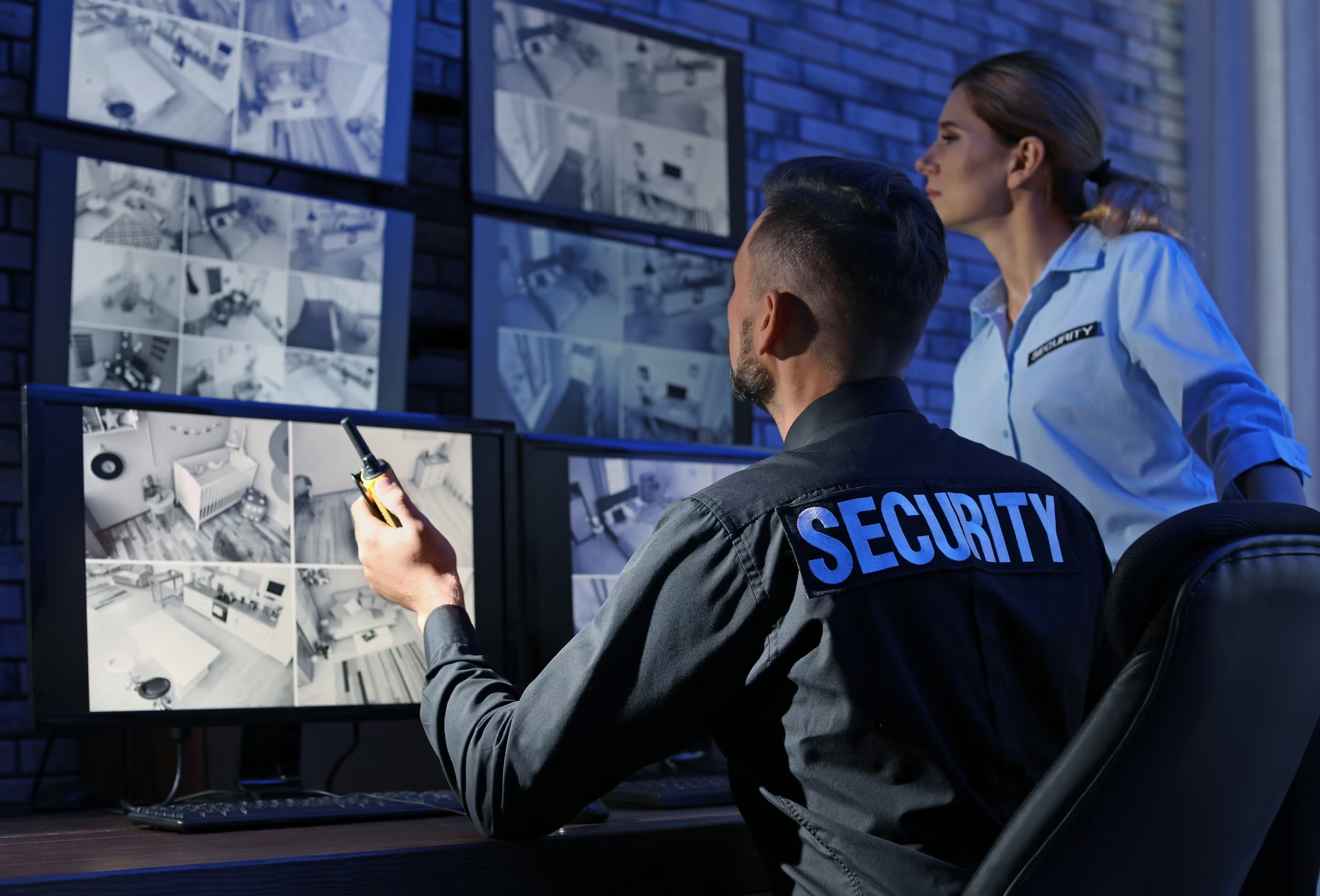
Intelligent site security connects cameras, analytics, and monitoring to turn security data into actionable insights that help organizations prevent threats.
A few years ago, I bought a fitness tracker that promised to help me “optimize my health.” Without me even paying attention, it collected data all day. Before bed, I had a record of every step I had taken, every calorie burned, my heart rate, and sleep quality. The information was interesting, but after a while I realized something slightly embarrassing: I wasn’t actually doing anything with it.
I knew when my sleep score was low, but I still stayed up too late. I saw days when my activity dropped, but my routine didn’t change. The tracker gathered plenty of data, but without interpretation—or action—it was just numbers accumulating in the background.
Security systems often surface a similar challenge.
Many organizations deploy cameras, alarms, and sensors that generate enormous amounts of information about what’s happening across their properties. But collecting data isn’t the same as understanding it. Without the ability to analyze patterns, identify risks, and respond in real time, security operations remain largely reactive.
Intelligent site security changes the equation. These solutions gather, process, and analyze security data across a property and turn raw information into actionable insight. This allows organizations to anticipate threats, respond faster, and make smarter security decisions.
What Is Intelligent Site Security?
Site intelligence is a more unified and holistic security approach that gathers and analyzes data across an entire property. Using AI-powered analytics, it converts that data into real-time, actionable insight. Instead of relying on isolated tools, site intelligence connects multiple systems so security teams can see what’s happening, understand patterns, and respond more effectively.
Several technologies work together to make this possible:
- Video surveillance systems that capture activity across the site
- AI-powered analytics that identify suspicious behavior and patterns
- Access control systems and sensors that detect movement and entry points
- Remote monitoring centers that verify and respond to incidents
- Integrated cloud platforms that store, organize, and share security data
When these systems operate together, they provide far more value than they would individually. The result is a coordinated security ecosystem that transforms scattered information into clear operational awareness.
The Limitations of Traditional Security Systems
Many organizations deploy security tools piece by piece. The cameras are one independent system, the alarms another, and access control operates separately. Each collects useful information, but without integration, the data remains fragmented. It doesn’t matter how good each piece is if they can’t communicate.
This creates a largely reactive security model. Teams spend time reviewing footage after incidents occur, responding to alarms that may or may not be real.
Over time, patterns begin to form: repeated thefts in the same area of a parking lot, unauthorized access after hours, or vandalism that consistently occurs during certain time windows. But when security data lives in separate systems, those connections are easy to miss.
Without analysis, information stays isolated, and potential security threats often go unnoticed. This is why modern strategies are shifting toward more intelligent, integrated systems.
The Core Components and Benefits of Intelligent Site Security
Site intelligence works by combining several, historically separate, technologies into a connected security ecosystem. Each piece gathers and interprets information differently, and together they provide data to detect threats early and respond effectively.
Advanced video analytics are often the first layer. AI-powered cameras can detect suspicious movement, perimeter breaches, loitering, unauthorized vehicles, or after-hours activity. Instead of simply recording events, these systems understand a site's threat landscape and analyze behavior. If needed, they can generate alerts when something unusual occurs. This allows security teams to identify—and stop—risks before incidents escalate.
Real-time monitoring and response adds another critical layer. For security ecosystems to be most effective, they need to let you know the moment a problem appears. Teams can review these in-the-moment alerts, verify whether a threat is legitimate, and intervene when necessary. Through tools like live voice-down warnings or protocols for law enforcement escalation, these systems can disrupt suspicious activity.
Behind the scenes, integrated cloud platforms bring all of these insights and features together—camera feeds, incident records, and remote access to footage from anywhere. Over time, the platform can even reveal patterns, helping security teams make more informed security decisions.
Finally, a security system that is mobile and flexible means that intelligence can be applied wherever risk appears. Rapidly deployable surveillance units allow organizations to secure evolving environments like construction sites, large parking areas, or temporary high-risk zones. If threats shift, coverage can move with them.
Together, these components transform security from a passive recording system into a proactive strategy. Organizations gain the ability to prevent incidents earlier, respond faster when threats occur, and use data to continuously improve how their properties are protected.
Real-World Applications Across Industries
Because site intelligence connects multiple security tools and analyzes activity across an entire property, it can adapt to a wide range of environments. From temporary worksites to large commercial campuses, the same intelligence-driven approach helps organizations detect risks earlier and respond more effectively.
Construction sites are a prime example. Expensive equipment, copper wiring, and building materials often sit unattended overnight, making sites a frequent target for theft. Intelligent site security can detect movement after hours, alert monitoring teams, and issue live voice warnings before suspects ever reach equipment. The same systems can also monitor perimeter access points, track vehicle entry, and keep watch over high-value materials staged for the next day’s work.
At commercial properties, risks can appear in shared spaces like parking lots and entryways. A property manager might notice that vehicles are repeatedly being broken into in the same section of a garage. With site intelligence, analytics can flag suspicious activity such as loitering between parked cars or individuals moving through the lot late at night.
For industrial facilities, the scale of operations creates unique challenges. Large distribution centers may have multiple vehicle gates, loading docks, and expansive perimeters that are difficult to monitor continuously. Site intelligence helps track vehicle movement, identify unauthorized access attempts, and monitor sensitive areas where inventory enters or exits the supply chain. Over time, the data can reveal patterns—such as recurring security gaps during certain shifts or areas where additional coverage may be needed.
Across all of these industries, the advantage is the same: security teams gain real-time visibility into what’s happening across their sites, allowing them to move from reacting to incidents to actively preventing them.
Turning Security Data into Security Strategy
Collecting information has never been the challenge. Cameras record activity, sensors trigger alerts, and security systems generate enormous amounts of data every day. But like a fitness tracker that gathers numbers without changing behavior, that information only becomes valuable when it’s interpreted and used to guide decisions.
Intelligent site security bridges that gap.
By combining advanced analytics, real-time monitoring, and flexible security design, organizations can transform scattered data into meaningful insight. The result is a smarter, more resilient approach to protecting people, property, and operations.
To see how intelligence-led security and real-time monitoring can help protect your people, assets, and property, schedule a demo here.


%20(1).avif)
