24/7 Construction Site Security Monitoring: What You Need to Know
.avif)
Protect your jobsite after hours with true 24/7 monitoring—real-time detection, active intervention, and scalable solutions that prevent loss.
Imagine that it is 6:02 in the evening and the last truck is leaving the construction site. The crew heads home. The lights go off.
But the materials are still there. The copper is still stacked. The equipment is still parked behind a chain-link fence.
And for the next 14 hours, your construction site sits unattended.
Construction doesn’t just pause at sunset— and neither do the risks. Theft, vandalism, and trespassing don’t wait for business hours. In fact, they prefer the opposite. According to industry estimates, construction theft alone costs the industry up to $1 billion annually, with the average incident totaling around $6,000 in losses— not counting project delays and insurance headaches.
Construction properties are most vulnerable after hours. The best way to combat this, is to have a system in place that can always be watching. But simply having cameras 24/7 isn’t enough. True 24/7 construction site security monitoring means real-time visibility, active intervention, and continuous oversight—whether that comes from on-site guards, remote monitoring professionals, or a hybrid approach powered by intelligent technology.
In this article, we’ll break down what continuous monitoring really looks like, the different methods available, and how to choose the right solution to protect your people, materials, and timeline.
Why 24/7 Monitoring Matters on Construction Sites
Construction sites are full of valuable assets—and full of opportunity for loss when no one is watching.
Theft and Equipment Loss
Heavy machinery, copper wiring, lumber, and tools are common security threats for construction sites. The rising prices of copper and other materials mean higher rewards for criminals. A single theft’s consequences go far beyond immediate monetary loss. It can also halt progress, delay subcontractors, and trigger costly insurance claims. When you factor in replacement costs and downtime, the financial impact compounds quickly.
Vandalism and Property Damage
Graffiti, arson, broken fencing, and damaged materials also disrupt workflows and strain budgets. Sometimes, even more damaging, it can hurt a developer’s reputation with stakeholders and the surrounding community.
Liability and Unauthorized Access
Trespassers can lead to serious liabilities. Injuries on-site can lead to legal repercussions,increased insurance rates, and compliance concerns, especially when safety standards and OSHA regulations are involved.
Timeline Protection
Every incident creates a ripple effect. Missed deliveries. Idle crews. Rescheduled inspections. Continuous monitoring helps prevent disruptions before they escalate, keeping your project on track and your timeline intact.
What “24/7 Monitoring” Really Means
Not all surveillance is created equal.
Many construction sites rely on passive recording with cameras that capture footage and store it for later review. This means that if something happens overnight it isn’t until someone discovers the damage the next morning and scrolls through hours of video, that a team can understand what happened. As far as recording, the system worked, but documentation isn’t prevention. And documentation doesn’t stop the financial and timeline impacts for a construction site. Some sources estimate that police solve crimes with after the fact footage less than 25% of the time. Construction sites require a different kind of security.
Active monitoring is different. It combines real-time detection with immediate intervention. Instead of reviewing footage after an incident, security teams are alerted the moment suspicious activity begins, meaning they can take action before theft, vandalism, or trespassing escalates.
True 24/7 monitoring includes:
- Live video feeds with continuous visibility across the site
- AI-powered analytics that distinguish real threats from harmless motion
- Real-time alerts sent the instant suspicious activity is detected
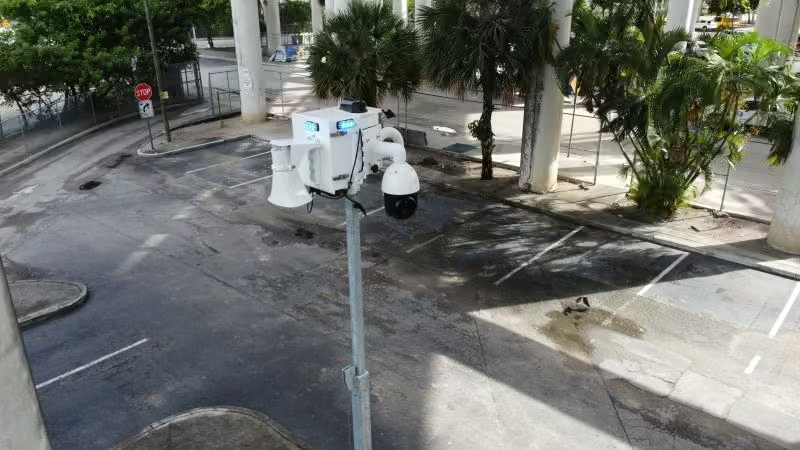
- Loudspeakers that can use audio intervention to warn intruders they’ve been identified
- Law enforcement dispatch coordination when escalation is necessary
This is the difference between forensic security and preventative security.
Forensic systems help you understand what happened. Preventative systems help ensure it doesn’t happen in the first place. On a construction site that difference matters.
Three Primary Models of Construction Site Monitoring
Not every jobsite is the same—and neither is every security strategy. The right approach depends on your risk level, budget, site size, and project duration. Here are three security strategy options, how they work, their benefits, and where they may fall short.
On-Site Security Guards
How it works:
Security personnel are stationed at entrances or patrol the property during off-hours, providing a visible physical presence.
Why companies choose it:
There’s no denying the power of a human presence. Guards can check credentials, monitor access points, and respond immediately if something happens. For high-traffic sites, they can also serve as a checkpoint for deliveries and vendors.
The limitations:
- Guard services are one of the most expensive long-term security options. Paying multiple people hourly and overtime wages adds up quickly, especially on a large, expansive jobsite.
- Fatigue, distraction, and human error are unavoidable realities. While someone may always be watching footage—people make mistakes. They get tired, zone out, take breaks. This means lapses in surveillance that can lead to costly incidents.
- A single guard can only be in one place at a time—leaving blind spots across large or multi-acre sites.
On-site guards can be effective, but they are often limited in scale and costly to maintain over the life of a project.
Remote Video Monitoring
How it works:
Cameras are deployed throughout the site and connected to a remote monitoring center. When AI-powered analytics detect suspicious activity, trained professionals assess the situation in real time and intervene— often using audio or dispatching authorities if necessary.
Why companies choose it:
Remote monitoring dramatically expands visibility. A strategically placed system can cover wide areas of a site simultaneously. This is something no single guard can do. It is also significantly more cost-effective than maintaining round-the-clock personnel.
The limitations:
- Effectiveness depends on reliable connectivity and power. No Wi-Fi or electricity means no security.
- Without intelligent analytics, teams may be overwhelmed with false alerts. Every tree branch movie or animals wandering around the jobsite will trigger an alert for review.
- Not all remote monitoring systems are built for temporary, rugged construction environments.
When done correctly, remote monitoring shifts security from passive recording to real-time prevention.
The Hybrid Security Approach
How it works:
This model combines physical guards with AI-powered remote monitoring systems. Technology handles wide-area surveillance and detection, while on-site personnel focus on access control systems, inspections, and threat responses.
Why it stands out:
A hybrid approach creates layered security—multiplying coverage without multiplying cost. Cameras don’t fatigue. Guards don’t have 360-degree vision. Together, they close the gaps.
Best suited for:
- Large, multi-phase developments
- Urban or high-risk environments
- Long-duration builds with evolving layouts
Hybrid models often reduce overall guard hours while increasing total site visibility—creating stronger deterrence with smarter resource allocation.
Choosing the Right Model
The goal isn’t simply to “have security.” It’s to have the right level of coverage for your site’s risk profile and budget.
For some projects, a guard at the gate may be sufficient. For others, scalable remote monitoring provides broader, more cost-effective protection. And for complex or high-value builds, a layered hybrid strategy delivers the most resilient defense.
The future of construction security isn’t about choosing between people and technology. It’s about combining visibility, intelligence, and intervention to protect your project around the clock.
Key Features to Look for in a 24/7 Monitoring Solution
Not all security systems are built for construction environments. A jobsite is temporary, constantly changing, and often lacks permanent infrastructure. The right solution must be flexible, intelligent, and designed specifically to prevent costly issues like equipment theft—not just record it.
When evaluating a 24/7 monitoring provider, look for these essential capabilities:
- Rapid Deployment
Construction timelines move fast and a security plan should too. A quality solution can be installed quickly without trenching, wiring, or permanent infrastructure—protecting your site from day one.
- Mobile Systems
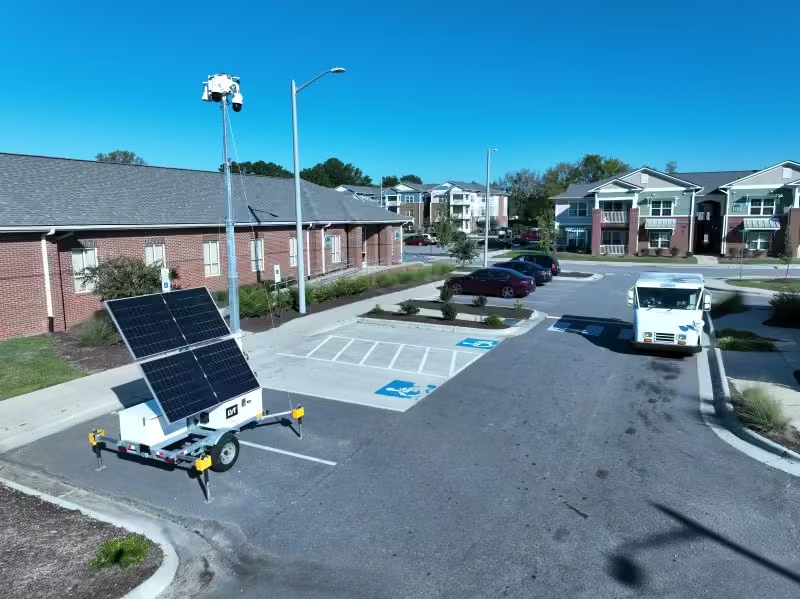
Your site layout will evolve as the project progresses. Security equipment should move with it. Mobile systems allow you to reposition coverage as materials shift, new phases begin, or risk areas change.
- AI-Based Threat Detection
Motion detection alone isn’t enough. Intelligent analytics distinguish between real threats and harmless activity —reducing false alarms while ensuring real incidents trigger immediate response.
- Cloud-Based Video Access
Being able to access construction security from anywhere can give a team peace of mind. Cloud access adds a layer of accountability to stakeholders and visibility to security teams without requiring on-site presence.
- Weather-Resistant, Rugged Hardware
Construction sites aren’t climate-controlled. Systems must withstand wind, dust, rain, and extreme temperatures without compromising performance.
- Self Sustaining
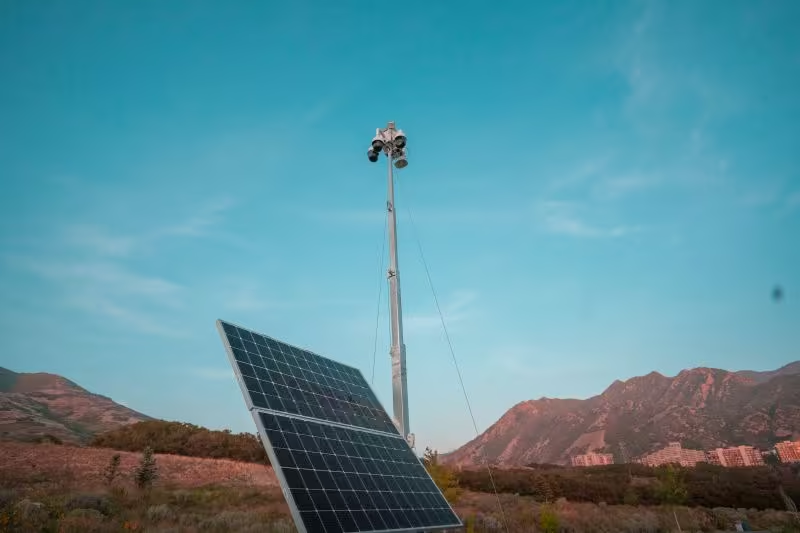
Sites often lack consistent utilities. Solar-powered systems with battery backup ensure uninterrupted protection —even in remote or early-phase developments.
How LVT Delivers Continuous Coverage
LiveView Technologies (LVT) designs mobile, solar-powered surveillance units specifically for dynamic construction environments. Rapidly deployable and easily relocatable, LVT systems are designed with AI-driven analytics to create real-time intervention—not passive recording.
With built-in audio deterrence, cloud-based access, and resilient hardware engineered for tough environments, LVT provides a flexible solution that grows with your project. Whether protecting a single build or multiple sites, contact us at lvt.com to design 24/7 construction site security.