Think Like Sam: The Secret to Smarter Big Box Retail Security
.avif)
Big-box stores face constant security risks with parking lots, sales floors, and supply chains. A strong big box retail security strategy uses layered protection, combining perimeter control, in-store monitoring, AI-driven insights, and rapid response. When everything works together, retailers gain better visibility, reduce loss, and protect their stores without disrupting the customer experience.
Sam Walton had a simple philosophy: treat people well and pay attention to the details nobody else notices. In the early days of Walmart, he was known for walking his stores constantly, talking to employees, observing how products moved, and how customers behaved. He knew what was happening in every corner of the store before it turned into a bigger problem.
That mindset shaped how Walmart approached operations—and security.
Walk into any big-box store today and you’ll still see that same complexity Walton was paying attention to. Wide aisles, high inventory, constant foot traffic, trucks moving in and out, employees restocking shelves while customers browse and check out. On the surface it all looks like a well-run machine, but behind the scenes, it’s a different story.
The large footprint and constant activity exposes big-box stores to a mix of potential threats from shoplifting and organized retail crime to break-ins and employee thefts. Effective security can’t rely on a single tool or tactic. Strong big box retail security requires a layered approach. One that covers the perimeter, monitors activity inside the store, uses smart technology to cut through the noise, and responds quickly when something goes wrong.
Start at the Edges
Parking lots, loading docks, side entrances, and delivery areas are often where problems begin. These locations tend to have lower visibility, allowing people to move about without drawing attention. For many big retailers, perimeter control is the first line of defense against bad actors. That includes:
- Clear camera coverage across parking lots and entrances
- Lighting that eliminates dark corners
- Controlled access to loading zones
- Monitoring of after-hours activity
When the perimeter is visible and actively monitored, it becomes much harder for someone to test the boundaries. For example, a person circling the lot multiple times stands out. A vehicle parked near a delivery entrance late at night gets flagged. Someone approaching a side door after hours is immediately noticed. Perimeter control sets the tone before anyone even steps inside the store.
Work Your Way Inside
Once someone is inside, the challenge changes. Large retail environments are difficult to monitor because of their size and layout. Long aisles, tall shelving, and heavy foot traffic create natural blind spots.
Historically, retailers have relied on a mix of methods to address in-store theft. Cameras, EAS tags, and floor associates all play a role. But for modern retail security, all these components need to work together. High-risk areas like electronics sections, high-value merchandise displays, and self-checkout zones especially need focused attention. And any behavior that doesn’t match normal shopping patterns should be flagged immediately.
But with such a big store and so many cameras to watch, it’s too much for human teams to monitor manually alone.
AI-Driven Monitoring
One of the biggest shifts in big box retail security is the use of AI-driven monitoring. Traditional camera systems record everything but understand nothing. They capture hours of footage, yes, but most of it never gets reviewed.
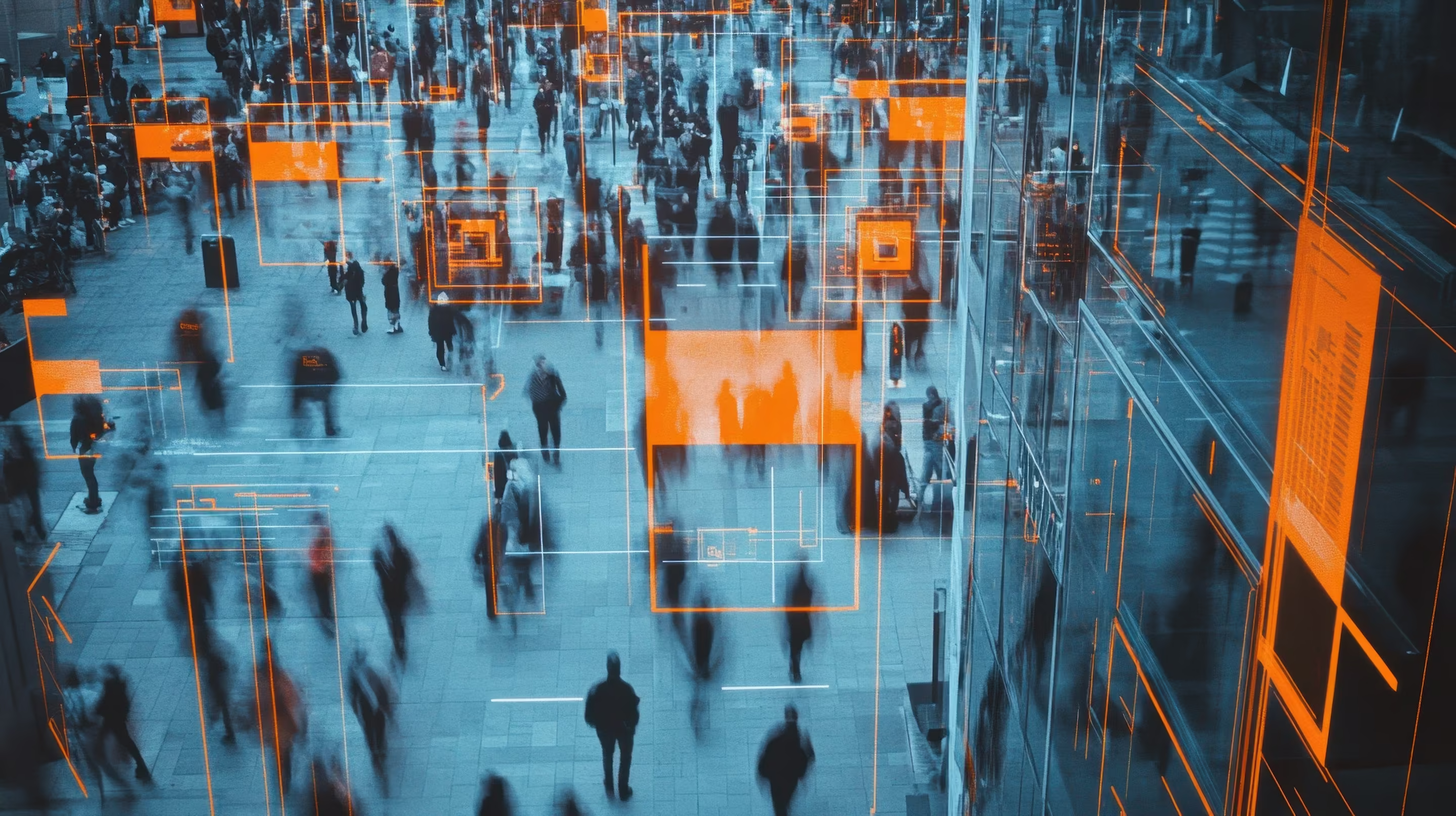
Instead of passively recording, modern AI systems analyze what they see in real time. They can distinguish between normal shopping behavior and activity that looks suspicious. They can also track movement patterns across different areas of the store and flag behavior that might indicate theft or other risks.
This reduces one of the biggest challenges in security: noise.
Without intelligent filtering, teams get overwhelmed by alerts and cameras capture more than anyone could ever review. With AI, the system narrows the focus, so only the events that truly matter get attention. This empowers human security teams to respond faster and with more confidence.
Supply Chains Create Unique Risks
Big-box retail depends on complex supply chains to stay stocked. Deliveries arrive daily. Inventory is unloaded, sorted, and restocked. Trucks move through loading docks and staging areas. And each of these steps creates opportunities for loss.
Unmonitored loading zones can lead to missing inventory and theft before products ever reach the sales floor. By tracking movement throughout the supply chain, however, retailers can identify where losses occur and take steps to prevent them with mobile security units. These self-contained units can move wherever you need them and keep up with the constant change.
Rapid Response Matters More Than Ever
Detection is important, but response is everything. In large retail environments, situations can get out of hand quickly. A shoplifting incident can turn into a confrontation. Employee theft can happen in minutes. And people being where they shouldn’t be can lead to significant loss if not caught immediately.
That’s why response protocols are essential to big box retail security. When a system detects unusual activity, the response should be immediate and clear. That might include:
- Notifying on-site staff
- Triggering alerts for security teams
- Providing real-time video for review
- Escalating to law enforcement if needed
The faster a situation is addressed, the less time for damage and loss to occur.
Connecting the Pieces
One of the biggest problems in traditional security setups is fragmentation. Cameras operate separately from access control systems. Monitoring tools don’t communicate with each other. Data is stored in different places. All of which create huge security gaps.
Effective big box retail security connects all these elements into a single system. Perimeter monitoring, in-store cameras, supply chain visibility, and response protocols should all work together. When they do, security teams get a complete picture of what’s happening.
And let’s not forget our human guards. Employees are often the first to notice unusual behavior. They interact with customers, observe movement patterns, and respond to situations in real time. Together with AI systems, they can track activity from the moment someone enters the parking lot to the moment they leave the store.
Scaling Across Multiple Locations
Most big-box retailers don’t operate a single store. Far from it. They manage dozens, sometimes hundreds or even thousands of locations across the nation and even internationally. For instance, Walmart has 4,500 stores in the U.S. alone (and that’s not even counting Sam’s Club locations). Target and The Home Depot each have 2,000 stores in the U.S., and Costco has nearly 650 locations nationwide.
Maintaining consistent retail security across all those sites is a challenge. Each location has its own layout, customer base, and risk profile.
But with centralized monitoring, security teams can oversee multiple locations from a single platform. They can review alerts, analyze trends, and ensure consistent standards across every store. This approach allows retailers to scale operations without jeopardizing employee or customer safety.
Data Turns Security Into Strategy
A lot of locations means a lot of security systems which means a LOT of data. When used correctly, that data becomes a powerful tool for taking a pulse on the organization’s overall security health. Retailers can instantly identify which locations experience the most incidents. They can track when theft is most likely to occur. They can see which areas of the store require more attention.
Instead of blindly guessing, businesses can focus resources where they’re needed most, improving both efficiency and effectiveness.
The Swiss Cheese Approach Wins Every Time
There’s no single solution that solves every security issue (wouldn’t that be nice!) Instead the most effective strategies combine multiple layers like the Swiss Cheese Model of Security. For example:
- Perimeter control picks up problems before they start
- Internal monitoring catches issues inside the store
- AI-driven systems reduce false alerts and improve accuracy
- Supply chain visibility prevents loss before products hit the floor
- Rapid response protocols address incidents quickly
Each layer supports the others. When one catches something, the rest reinforce it.
Security in large retail environments isn’t getting easier. Stores are bigger and threats more organized. At the same time, customers expect a smooth, comfortable shopping encounter.
Balancing these demands requires a layered approach. By focusing on visibility, integration, and speed, retailers can build systems that protect their assets without disrupting operations or the customer experience.
Sam would be proud.
Learn how you can take your big-box security to the next level by contacting LVT for a demo today!
%20(1).avif)