How to Evaluate a Security Technology Vendor: 10 Questions to Ask
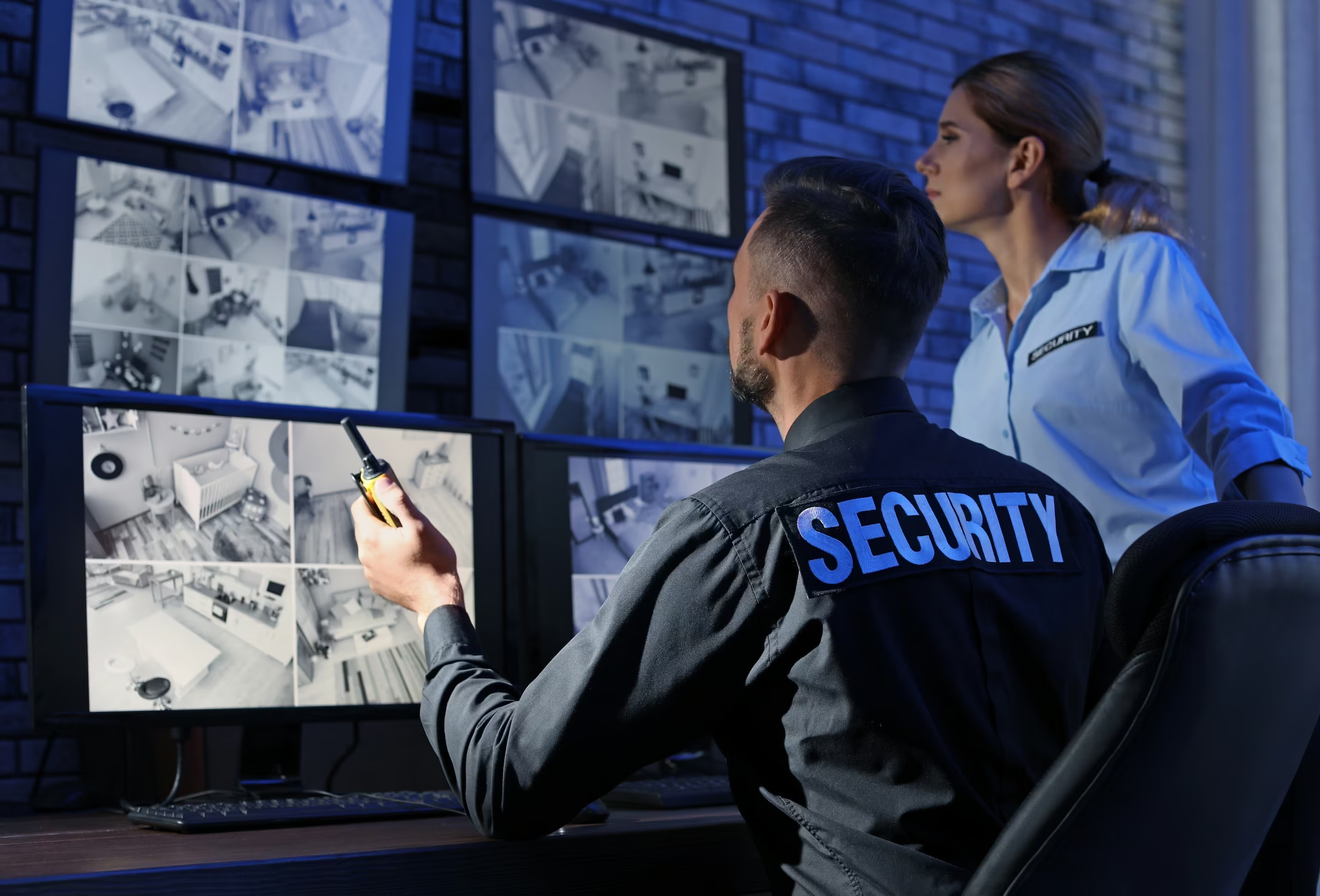
This guide outlines 10 questions to help you compare vendors based on automated response, integrations, deployment, intelligent site management, support, data security, scalability, proactive deterrence, and connectivity so you can find the right solution for your sites.
We’ve all been in a bakery feeling overwhelmed by the number of delicious pastries there are to choose from. The flaky croissant, the fresh-out-of-the-oven chocolate chip cookie that’s practically the size of your head, the chocolate eclair filled with silky, creamy chocolate… Surely there are no wrong options here, right?
Wrong. Maybe the croissant is two days old and stale. Maybe the bakery notoriously overcooks cookies. Maybe the chocolate eclair is actually a chocolate peanut butter eclair and you’re allergic to peanuts. Or maybe you can’t eat gluten and none of the above are feasible options!
Sorry for making you hungry, but this analogy is relevant to security technology. There are a lot of security vendors out there, and at first glance many of them seem good. But if you choose blindly, you risk ending up with something worse than a stale croissant: a security system that doesn't fit your site, budget, or needs.
Here are 10 security technology vendor evaluation questions to work through before you finalize any decisions.
Commercial Security System Evaluation Checklist
1. Does the System Respond to Threats Automatically, or Does It Depend on a Person?
Detecting a crime doesn’t stop it from happening. Ask potential vendors what happens when their systems identify a threat. Does it automatically trigger lights, alarms, or warnings on its own, or does someone watching a screen have to manually step in and trigger a deterrent—or worse, head to the site immediately to address the threat in person? A system that depends entirely on a person to respond is only as fast and reliable as whoever's on shift that day. You want a system that can take care of business during gaps in coverage or act as a force multiplier for stretched-thin teams.
2. Can It Integrate With Our Existing Setup?
Most businesses already have some combination of access control, alarm systems, or cameras in place and may not want to rebuild Rome in a day. Ask whether a new vendor's technology can integrate with your current commercial security systems, or whether you’ll need to rip everything out and start over. But beware—you also don’t want to end up with a piecemeal system that creates more problems than it's worth. In some cases, it may be worth starting fresh.
3. Is This a Comprehensive, Turnkey Solution, or Will We Need to Add More Tools Later?
In the same vein, some vendors offer a single piece of the puzzle, like cameras, and expect you to source monitoring, alerts, analytics, or deterrence separately from other providers. Others offer an all-in-one solution that covers detection, deterrence, monitoring, access control, and more. Be sure to fully understand the scope, capabilities, and features of any system before you sign the dotted line.
4. What Does Deployment and Installation Actually Look Like?
Some systems require permanent infrastructure, trenched cable, and weeks of installation, which often translates to time and money you don’t have. Ask about typical deployment timelines and what's required on your end in terms of setup. And because your needs will likely change over time, ask whether the vendor can move quickly if you need to add to your fleet down the road.
5. Will This Help Us Manage Risk Across Multiple Properties?
Managing multiple properties shouldn't mean logging into a different system for every site or scrolling through camera feeds hoping something jumps out. Ask whether the vendor's platform offers intelligent site management: does it flag when properties need attention in real time, surface patterns across locations, and help you prioritize where to focus? If all it does is give you more screens to watch, it may create more problems than it solves.
6. What Does Customer Support Look Like After the Sale?
A polished sales process doesn't guarantee good support once you're a customer. Ask what happens if something goes wrong or you have post-implementation questions. Is there a dedicated support team? What are typical response times? Ideally you won’t need much hand-holding after the solution is up and running, but knowing that you will get support if you do need it will provide peace of mind.
7. How Is Data Stored, Secured, and Who Owns It?
Your commercial security system acts as your eyes on site when you can’t be there. The more information it captures for you, the better. But that visibility comes with responsibility. Security footage may include faces, license plates, and the daily activity of employees and customers. That’s a lot of sensitive data. Before trusting a vendor with that information, understand who has access to it, where it is stored and for how long, and who can access it. Also, make sure you know what happens if you switch vendors—will you lose historical data you may need down the line?
8. Can the System Scale as Our Needs Change?
One security unit might work for you today, but will that be all you need a year down the line? What about five years from now? You need a solution that can scale with you over time. Ask whether a vendor's technology can scale with you, allowing you to add additional coverage or new features without requiring an entirely new system. And remember: scalability should work in both directions. If your footprint shrinks or your needs change, how easily can you remove or relocate units? You want a partner that’s in it with you for the long haul, whatever that looks like.
9. Does This Solution Enable a Proactive Security Approach, or Mostly Document Things?
Some systems are built purely to record what happened so you can review it later. Others are built to deter and interrupt an incident while it's happening. Would you rather clean up spilled milk, or stop the glass from falling and save yourself from all that mess? If it’s the latter, you’d probably also prefer a security system that comes equipped with real-time, proactive deterrence features. Ask what a proactive security approach actually looks like with their technology, and get specific: How quickly does the system detect security threats? Can it trigger lights or alarms on its own, or does a human have to do that manually? What happens if the deterrent does not work and the person does not leave?
10. How Is the System Powered and Connected?
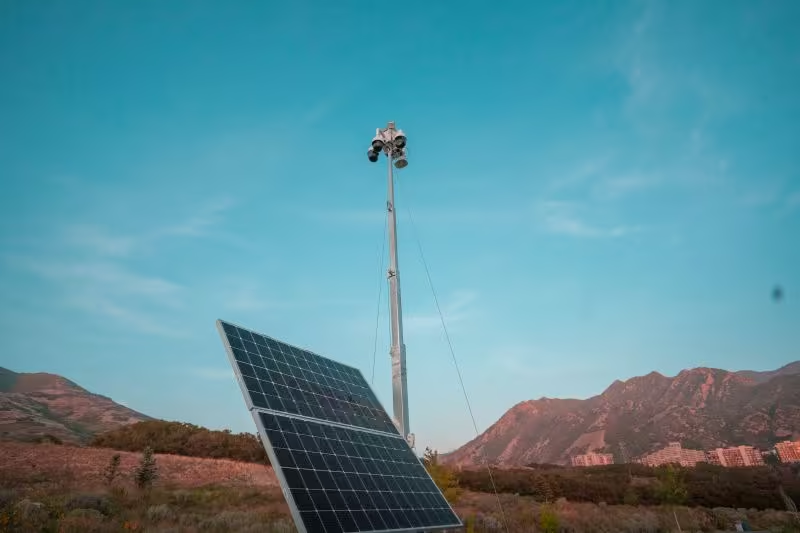
Not every site has reliable access to grid power or a hardwired internet connection. If you’re trying to secure a remote property and a system relies on grid access or Wi-Fi, you might be out of luck. Ask how the vendor's technology is powered and connected. If you want ultimate flexibility and a solution that can go just about anywhere, look for a solution that runs independently on solar and battery power with cellular connectivity.
LVT Passes The Security Technology Vendor Evaluation
If you’re looking for a security vendor that checks all the boxes, look no further. Here's how LVT holds up against some of the security technology vendor evaluation questions above:
- AI-powered threat response: Our security units can trigger lights, sounds, and automated warnings when suspicious behavior is detected.
- A comprehensive solution: Detection, deterrence, live monitoring, analytics, and more are all accessible from one centralized platform.
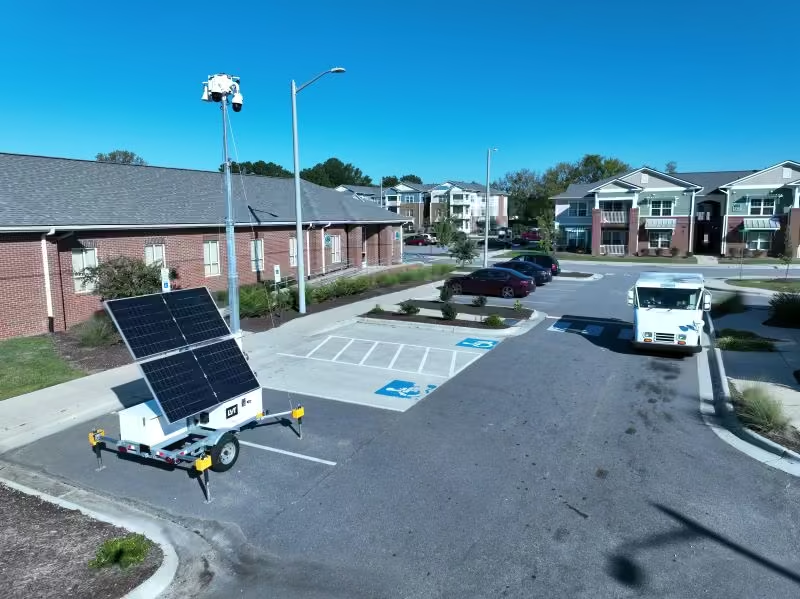
- Fast, flexible deployment: Our mobile units can be up and running at a new site quickly and don’t require trenched cable or permanent infrastructure.
- Intelligent site management: LVT brings surveillance, AI-powered threat detection, and remote monitoring together in one centralized platform so your team has complete visibility across every location and can turn alerts and site data into action.
- Data security: We take data security seriously, with clear policies on what's collected, how it's stored, and who has access.
- Built to scale with you: Whether you're adding one site or fifty, our solutions can scale up, down, or relocate as your needs change.
- Power and connectivity that go anywhere: Our solutions run on solar and battery power with cellular connectivity and backup smart generators.
Ask us how we can help you take your security operations to the next level.
%20(1)%20(5)%20(1).avif)
