Securing Remote Utility Sites: A Modern, Layered Defense

Secure critical infrastructure with a layered approach—combining mobile surveillance, real-time visibility, and physical perimeters to deter theft.
At a remote site in Martin County, Texas, roughly 500 barrels of oil disappear every week. That adds up to more than $1.7 million in annual losses at just one site. Some estimates put oil theft in Texas alone at over $1 billion. This is happening at remote sites across the country. Oil theft has evolved into a coordinated and highly profitable operation. Rising oil prices around the globe only make these targets more appealing. For bad actors, critical infrastructure is an ideal target: valuable product, limited oversight, low foot traffic, and few immediate consequences. It's like an ATM with no PIN required.
The problem is, most security strategies haven’t kept up. A fence and a padlock might slow someone down. But those features don’t see, they don’t alert, and they certainly don’t respond. Remote oil and gas sites are uniquely exposed. Protecting them requires more than a physical barrier. It requires layering intelligence over the perimeter.
Why Remote Sites Are High-Value Targets
High Reward, Low Risk
Remote oil and gas sites are the meeting of high-value assets and low barriers to entry. These locations are typically remote, quiet, and difficult to monitor. Valuable materials like crude oil, copper, fuel, and equipment can all be stolen, resold, or repurposed with little traceability. These materials are almost impossible to recover after they have left the site.
Built-In Vulnerabilities
The location of these spaces makes them incredibly vulnerable. They sit far from population centers, law enforcement, and even employees. That isolation creates gaps in coverage. At the same time, these environments are often huge, spanning pipelines, oil wells, storage tanks, and processing areas across vast terrain.
Many sites also lack reliable access to power or network connectivity, making it difficult to deploy security systems.
Then there’s the issue of visibility. With little to no lighting, these sites can become effectively invisible at night. For someone looking to avoid detection, it is the perfect target.
Operational Blind Spots
Even well-managed sites can struggle with security coverage. Personnel may only visit periodically, leaving long stretches of time when no one is physically there. Security, in many cases, relies on passive measures like fencing, locked gates, or signage—tools designed to deter, but not to detect or respond.
A Practical Guide to Securing Remote Utility Sites
It can be overwhelming to know where to start when it comes to security-critical infrastructure. The most effective approaches utilize a combination of physical security and modern security technology to provide 24/7 coverage and real-time response in any weather.
Start With Visibility
Security begins with awareness. If you can’t see what’s happening on-site, you can’t protect it. That sounds obvious, but in remote environments, it’s often the biggest gap.
Traditional security systems are designed to record incidents for later review. But forensic footage doesn’t stop theft in progress. What these sites need is real-time visibility: the ability to monitor activity as it happens and act on it immediately.
Coverage also matters. Remote sites are vast and can change almost daily. Effective visibility means thinking beyond a single vantage point and designing coverage that accounts for terrain, distance, and blind spots. Organizations should look for systems that have 360-degree cameras with higher resolutions.
Prioritize Power and Connectivity Independence
Remote sites rarely have network connectivity or access to power. That’s why security in these environments needs to be self-sustaining and operate independently from the power grid. Look for systems that use solar power and are also backed by batteries or generators. Connectivity should be just as resilient. The best systems for these sites will use cellular networks instead of hardwired internet.
Design for Detection—Day and Night
Remote sites become more vulnerable when the sun goes down. Detection capabilities need to work just as effectively at night as they do during the day. Thermal technology allows operators to detect heat signatures in complete darkness, ensuring visibility even in zero-light conditions. Long-range motion detection is equally critical, especially for large sites where activity may occur far from a central point.
Prioritize Weatherproof, Ruggedized Equipment
These sites are often exposed to the elements. Equipment is expected to perform through extreme heat, freezing temperatures, high winds, heavy rain, and blowing dust. Security systems need to be built with that reality in mind. Choosing ruggedized, weatherproof solutions ensures consistent performance regardless of conditions.
Build in Deterrence
Detection is only half the equation. You know your system is truly working when it stops crime from happening in the first place.
Visible security measures play a powerful role here. Clearly marked units, combined with lights, sirens, and audio warnings, send a message before an incident escalates.
This is the shift from reactive to proactive security: not just documenting events after the fact, but actively preventing them in real time.
Plan for Scalability and Flexibility
Remote sites are always changing. New wells come online, operations shift, and priorities change. Security needs to keep up. Mobile systems can be repositioned, expanded, or redeployed as the site evolves. Choosing a system that can move as easily as possible means that you will spend less time reconfiguring your setup and more time focusing on asset protection.
Adopt a Layered Approach
No single measure can fully secure a remote site. The most effective strategies combine multiple layers of protection that reinforce and support each other.
Critical infrastructure physical security should form the foundation. This includes perimeter fencing, gates, anti-climb features, and clear boundary markings. High-quality technology can fill physical security gaps to create an airtight system. Barriers slow intrusions. Surveillance detects and deters them. Together, they create a system that not only protects the site but also actively defends it.
Why LVT Is Built for Remote Environments
LVT (LiveView Technologies) mobile security units are designed to meet the challenges of securing remote utility sites. Here are a few features that make them uniquely suited to the job.
Built for Deployment Anywhere
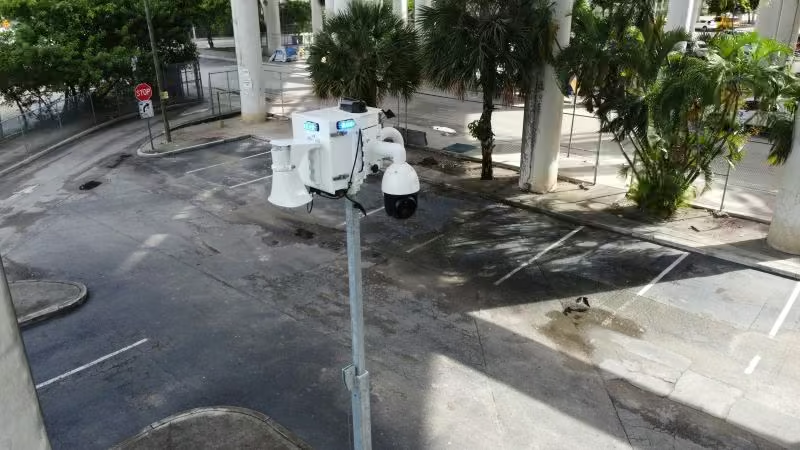
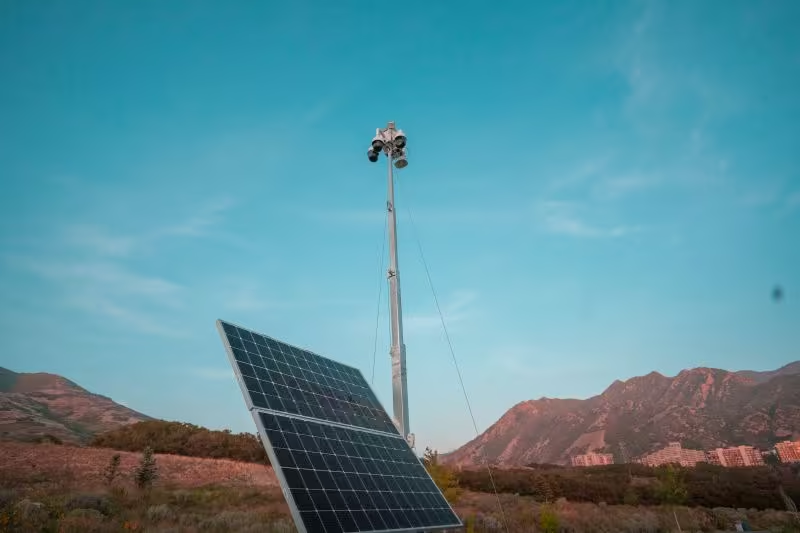
LVT® Units are fully self-contained and solar powered. Backup generators mean there’s no dependence on grid power or wired internet. With LVT, deployment isn’t limited by location. Whether it’s a remote well pad, a pipeline stretch, or a temporary staging area, LVT systems can be rapidly deployed and repositioned as site needs evolve.
Advanced Detection Capabilities
LVT systems are equipped with thermal imaging that can detect activity in complete darkness, through dust, and in any weather condition. Layered on top of that is AI-enabled analytics that help distinguish real threats from false alarms. With 360° and panoramic camera options, LVT provides comprehensive coverage across large, uneven terrain without leaving critical gaps.
Real-Time Response
Remote sites need security that can act and alert in the moment. LVT transforms security from passive recording into active prevention through real-time monitoring and alerts.
When an incident is detected, systems can trigger immediate deterrence features: flashing lights, sirens, and speakers that allow operators to intervene in the moment. Instead of reviewing footage after the fact, teams can stop incidents before they escalate.
LVT and Enel Green Energy: Scaling Security Across Remote Sites
Enel Green Energy faced a challenge that’s common across remote utility operations: how do you secure a massive footprint in remote areas without breaking the budget? With more than 100 sites across North America—many in low-connectivity environments—traditional security approaches couldn’t keep up.
By deploying LVT’s mobile, solar-powered security units, Enel established real-time visibility across its sites without depending on grid power or wired networks. Thermal imaging enabled consistent detection after dark, while AI-driven alerts helped teams focus on real threats.
The results were immediate and measurable. Intrusions were stopped before escalating into losses. Remote monitoring reduced the need for on-site personnel, lowering operational costs while expanding coverage. Beyond security, live visibility also improved operational decision-making. LVT allowed teams to monitor site conditions, verify activity, and respond to risks like severe weather without putting crews in harm’s way.
For Enel, this wasn’t just added security—it was a force multiplier. By layering mobile surveillance over existing physical security perimeters, they transformed scattered, vulnerable sites into connected, actively managed environments.
Securing What Others Can’t See
Remote oil and gas sites will always come with challenges. Distance, exposure, and limited infrastructure aren’t going away. But vulnerability doesn’t have to come with them.
The reality is, the old model of security—fences, locks, and periodic checks—was never designed for the scale or sophistication of today’s threats. As theft becomes more coordinated and opportunistic, protection has to evolve just as quickly.
A modern approach starts with visibility, builds through resilience, and succeeds through layers. To see how a layered, mobile-first approach can strengthen your remote site security, contact us today for a demo.
%20(1).avif)