How to Prevent Property Crime in the Summer Months

Crime increases in summer with more time away and longer days. Learn six practical ways to reduce risk with solar-powered security cameras and more.
Thirteen years ago, the movie Frozen debuted Olaf, a small, sentient snowman obsessed with the idea of summer. Blissfully unaware of the effect of heat on ice, Olaf is fixated on the promise of vibrant colors and idyllic getaways.
Vacation season, swimming, outdoor parties—the appeal of the summer season is strong even if you aren’t a fun-loving snowman.
Unfortunately, much like Olaf’s blind spot for the inherent danger the hot summer sun poses to him, most people don’t realize that crime rates tend to swell right alongside the temperature, often by percentages in the double digits. Property crime is particularly likely to increase as the weather warms and the days lengthen.
This does not, however, mean your business is doomed to experience those same crime increases. You may not have a magical ice queen to bestow warm-weather protection, but you can fortify your defenses with a strong security strategy that includes tools like solar-powered security cameras.
While the seasonal spike in property crime can feel unsettling, it is largely driven by identifiable and addressable factors. Understanding those factors is the foundation for building practical, effective prevention strategies.
Why Does Property Crime Increase in the Summer?
It would be nice to assume criminal activity takes a vacation with the rest of the world, but the numbers show that that’s not generally the case. Multiple factors play into it, but first, it might be helpful to define what actually counts as property crime: Property crime essentially covers any crime in which someone’s property is stolen and/or destroyed without force or threat of violence.
Property crime includes:
- Larceny-theft, when property is stolen
- Burglary, which encompasses the unlawful entry of a building with the intention of committing a crime
- Motor-vehicle theft, when a vehicle is stolen (though this is the one type of property crime that is actually more likely to spike with cold instead of heat)
- Arson, which involves the destruction of property by fire
- Vandalism, which encompasses the more general destruction or damage of property
The tendency for property crime to increase in summer months (which is explored more fully in this article) can be tied to the following:
- Hotter weather, as summer spikes are more noticeable in regions with sharp seasonal contrasts between cold winters and hot summers
- Extended daylight hours, as property crimes are more likely to occur in daylight and summer expands that window
- School break, as teenage boys are most statistically likely to be responsible for vandalism
- Vacation travel, since more people are away from home and tourist activity creates both opportunity and distraction
- Peak building and development season, as active construction sites create exposed, high-value targets for theft and damage
While these trends help explain the summer spike, they also point directly to where prevention efforts are most effective.
6 Ways to Reduce Summer Property Crime
Security is often associated with dramatic moments: sirens, alerts, and criminals fleeing mid-burglary. In reality, the strongest security systems prevent those moments from happening in the first place by discouraging attempts altogether.
Reducing property crime risk in the summer is largely about removing opportunities and increasing visibility. The strategies below focus on practical, proven measures that make properties harder to target and less attractive to offenders.
Create a Strong Perimeter
Perimeter security is the first layer of defense for any property. It sets the tone for the security message your business sends—for better or worse.
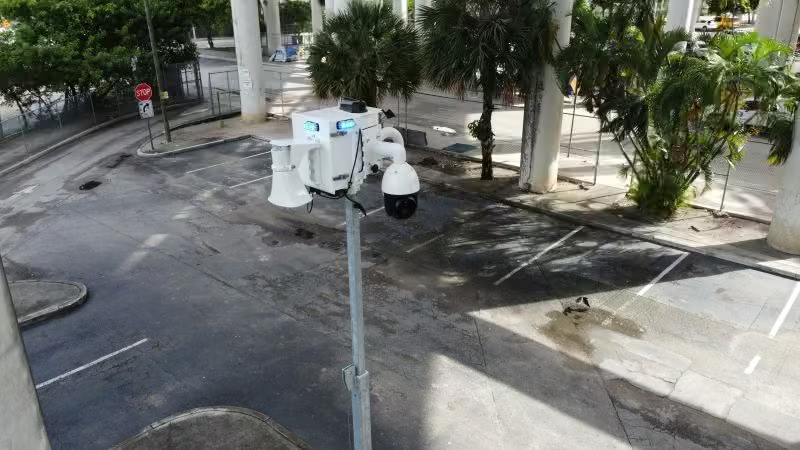
Fencing and access control can provide physical barriers against crime, but solar-powered security cameras with built-in advanced deterrence features also reinforce strong, clear boundaries.
Use Visible Security Methods
Many criminals are opportunists constantly on the lookout for an easy mark. Using clearly visible security methods sends the message that this property is precisely the opposite.
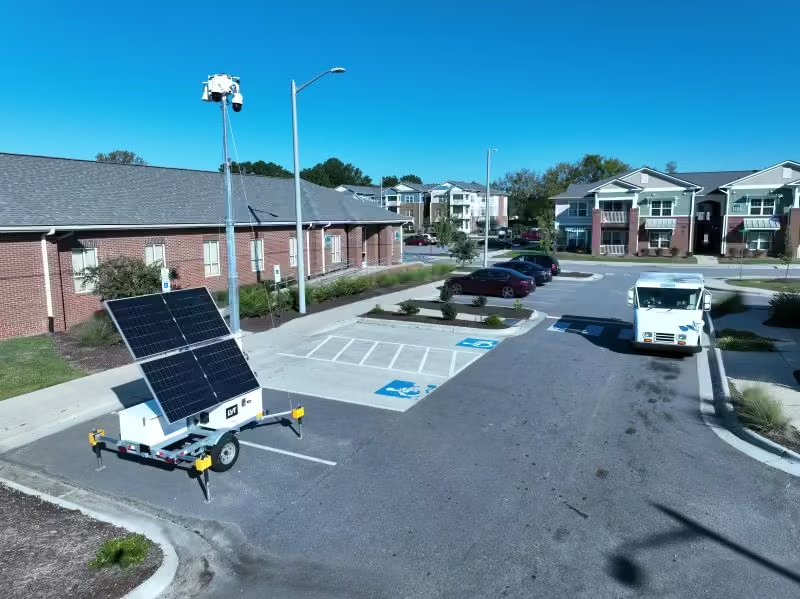
The best highly visible security components deter criminals while bolstering feelings of safety for everyone else. Mobile security units, for example, have been proven to lower crime rates while increasing the feelings of safety and security for both visitors and employees.
Implement Crime Prevention through Environmental Design (CPTED)
This is basically the inverse of the previous point. Instead of ensuring that the would-be criminals see the anti-theft system, you want the criminals themselves to feel seen and exposed.
Crime Prevention through Environmental Design (CPTED) uses the space itself as the deterring factor. This includes:
- Bright lighting throughout
- Landscaping and layout with clear sightlines
- Light-colored paint
- Surfaces that aren’t conducive to climbing or graffiti
Secure Buildings Inside and Out
Building security can be as basic as simple locks and as complex as facial-recognition access control. While the specifics will depend on the business type and location, the key principles of securing businesses remain the same:
- Maintain clear, consistent security protocols
- Avoid skipping procedures for convenience (e.g., propping open locked doors)
- Restrict access to non-public areas
- Use anti-theft device practices and procedures (such as emptying registers and leaving them open after hours)
- Keep valuables out of sight from windows and exits
- Place cameras at all entry and exit points
Involve the Community
While it’s easy to fixate on what you can do to keep your business safe, it’s important to realize that crime prevention is stronger when shared across the community. Treating it as a shared responsibility can improve visibility, speed responses, and reduce crime opportunities.
Ways businesses and communities can work together to prevent crime:
- Share and report suspicious activity with neighboring businesses
- Support youth programs (mentorship, recreation, summer activities) that reduce risk factors for negative behavior
- Look for and communicate patterns like repeated vandalism or break-ins
- Coordinate with local law enforcement to improve reporting accuracy and response effectiveness
Immediately Address Issues
No matter what prevention methods you implement, something will go wrong eventually. Vandals might deface walls, solar panels might get blocked, a robber might make a mess.
A timely response to negative events can make all the difference, helping to keep issues from compounding.
- Clean up vandalism as soon as it happens
- Regularly test and maintain systems
- Address any gaps in security that allowed criminals through
- Add security measures as needed
Taken together, these strategies form a layered approach to reducing summer property crime, and LVT mobile security units with solar-powered security cameras fit naturally within that framework.
Request a demo to see how a mobile security unit could support these measures on your property.