Motion Detection in Security and How to Combat Alert Fatigue
Learn how AI-powered motion detection security cameras reduce alert fatigue by filtering false alarms and prioritizing real security threats
I set up the email app on my phone to send me a notification whenever I get a message. After a few weeks, I noticed that I wasn’t even reacting to the chime my phone made when a new email came in. The steady stream of promotional messages, calendar alerts, and emails blended into the background noise. More often than not, whatever notification appeared wasn’t important enough for me to read. A few times though, I have missed something that actually mattered.
It wasn't that I didn't care about the alert. It was that I'd been trained to assume most alerts weren't worth checking. This is the danger of alert fatigue. When people are exposed to too many unimportant notifications, they become desensitized. Important alerts get lost in a sea of unimportant ones.
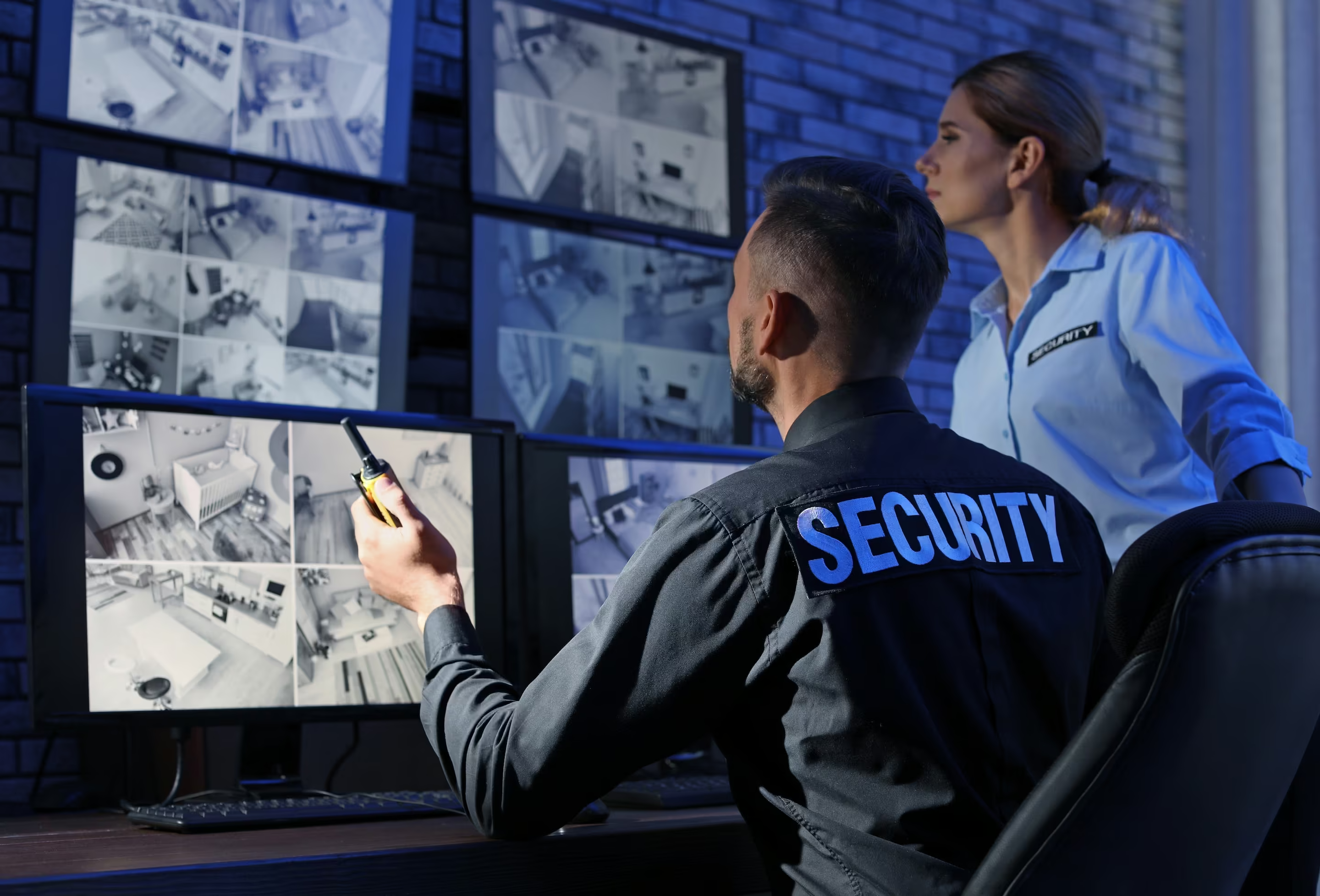
The same phenomenon often happens in security. Traditional motion sensor security cameras generate an alert from every movement—a passing car, weather, or an animal. When security teams are forced to sort through constant false alerts, they are learning that the alerts aren’t inherently valuable. Over time, operators may become slower to respond, or worse, overlook a legitimate threat entirely.
The best security for your organization needs to focus on alerts that actually matter. By combining AI-powered detection, intelligent filtering, and automated deterrence, organizations can reduce alert fatigue and help security personnel focus on the events that truly matter.
Tip 1: Use AI-Powered Threat Detection Instead of Basic Motion Detection
The first step in reducing alert fatigue is limiting the number of alerts sent in the first place.
Most motion detection security cameras are designed to identify any movement within a camera's field of view. But this method doesn’t use context to determine if that movement actually represents a security threat. A passing vehicle, a wandering animal, or a tree branch moving in the wind can all trigger the same alert as an unauthorized person entering a restricted area.
Using a system that is powered by AI can change this. Artificial intelligence provides the understanding and context to only send alerts that matter. Rather than simply detecting motion, they analyze what is causing the motion. Advanced analytics can distinguish between people, vehicles, and animals, and recognize activity occurring in designated zones. The system can then apply rules based on factors such as time of day, location, and behavior.
Agentic AI can also learn the patterns of your business. Over time, it knows that you have a delivery that comes in every Monday morning, or by using person detection, the system learns that an employee always takes out the trash 10 minutes before closing. The system recognizes those patterns as normal and will not progress to a security alert.
By filtering out irrelevant activity before an alert is ever created, AI-powered threat detection helps organizations reduce notifications and improve operator trust in their security systems. This will allow teams to respond more efficiently when legitimate threats emerge.
Tip 2: Create Smart Detection Zones
To get the most out of motion detection security, teams should designate which areas are the highest priority.
Many security cameras are positioned to maximize visibility. They are meant to capture large sections of a property all at once. But when it comes to motion detection, not every area visible to the camera carries the same level of risk. Roads, sidewalks, neighboring properties, and public spaces often contain constant activity that has little relevance to site security. If every movement within these areas triggers an alert, operators can quickly become overwhelmed by notifications.
Smart detection zones help solve this problem by allowing organizations to define exactly where security events should be monitored. This allows security teams to focus alerts on the locations that matter most.
Depending on the environment, these high-priority areas might include:
- Construction equipment storage areas
- Building entrances and exits after hours
- Loading docks and delivery areas
- Other restricted areas
This targeted approach helps ensure that alerts are generated when activity occurs in locations where theft, trespassing, or unauthorized access is most likely to occur.
Tip 3: Add Automated Deterrence Before Human Intervention
One of the most effective ways to reduce alert fatigue is to prevent incidents from progressing beyond the detection stage.
AI-powered systems can go beyond just identifying suspicious activity. They can respond to it. When a potential threat is detected, automated deterrence features can immediately engage, creating a visible and audible presence that lets individuals know they have been seen and that their actions are being monitored.
These responses may include flashing strobe lights, pre-recorded warning messages, live or AI-generated talk-down announcements. By confronting unwanted activity in real time, organizations can often discourage trespassers before a human operator ever needs to become involved.
This creates an important filtering effect. Many low-level incidents are resolved automatically, reducing the number of situations that require active monitoring or intervention. When fewer benign events make it through the system, every alert becomes more meaningful.
Tip 4: Regularly Review and Optimize Alert Settings
Security environments are constantly changing. Construction sites move through different phases, facilities add new equipment or access points, and daily traffic patterns evolve. As these conditions change, alert settings can start creating unnecessary noise.
For example, a detection zone that was highly effective during the early stages of a construction project may become less useful once equipment is relocated. Similarly, seasonal changes, increased vehicle traffic, or modifications to a site's layout can introduce new sources of false alarms that weren't present when the system was originally configured.
To keep alert volume manageable and ensure operators continue receiving relevant motion notifications, organizations should regularly review and refine their security settings. This process may include evaluating:
- Detection zones
- Sensitivity settings
- Alert schedules
- Escalation procedures
- AI classification and filtering rules
Think of alert settings as a living part of your security strategy rather than a one-time setup. Organizations that periodically assess and adjust their system are going to have higher-quality alerts and reduce operator fatigue.
The Future of Motion Detection Security Cameras Is Intelligent Threat Detection
Adaptive and intelligent motion detection is what will allow organizations to stay on top of security without burning out security teams. Operators need a system that can distinguish between routine events and legitimate threats. By combining AI-powered analytics, smart detection zones, automated deterrence, and ongoing system optimization, organizations can dramatically reduce alert fatigue while improving overall situational awareness.
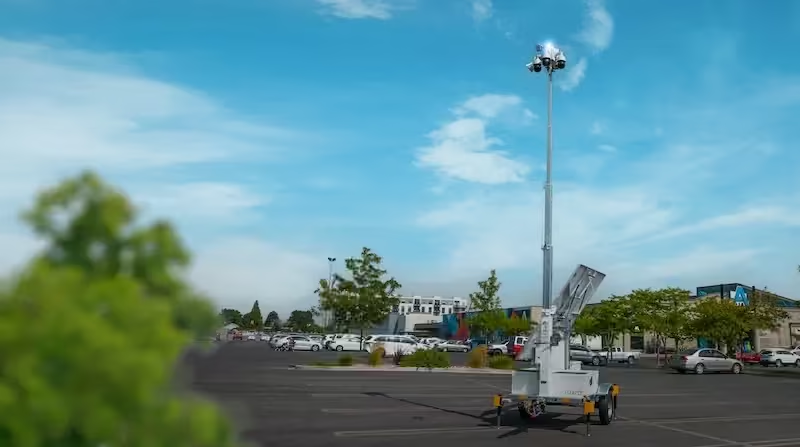
At LVT, we've built our security solutions to be intelligent and responsive. LVT's mobile surveillance units combine the most important tools to help organizations reduce unnecessary alerts and improve response effectiveness. The result is a security solution designed to detect, deter, and document threats without overwhelming operators with constant noise.
Ready to reduce alert fatigue and make every alert count? Visit LVT.com to learn how LVT helps organizations deploy smarter security that prioritizes real threats, improves operational efficiency, and delivers greater peace of mind.
%20(1).avif)
%20(1).avif)