How to Build a Layered Security Strategy for Large Properties
Effective total site security combines physical barriers, access control, surveillance, AI-powered monitoring, and adaptable security solutions.
A security system has four main jobs: deter, detect, delay, and defend. A single security measure on its own—no matter how good that measure might be at its job—can’t catch everything every time. Large properties, with their additional access points, space to monitor, and longer response times, amplify this problem in every way.
In order to be as effective as possible, total site security needs to be layered, with different measures working in harmony to ensure full coverage—and to pick up the slack should any one measure fail at any point.
Building a layered security strategy for a large property requires a measured approach that combines planning, adaptable technology, and regular review.
What Makes Large Properties More Difficult to Secure
The term “large” is relative. What might be considered massive in one industry might be considered small for another. With that in mind, we’re defining “large property” as any property where the amount of land, distance, layout, or number of assets creates security challenges that wouldn’t exist on a compact site.
This can extend to construction sites, industrial facilities, shipping yards, infrastructure sites, large commercial properties, and more.
No matter the industry, larger properties typically come with:
- More ground to cover
- More entry points and vulnerabilities
- More assets and activity to monitor
- Changing site conditions
These conditions make it more difficult and expensive to implement traditional approaches such as infrastructure-dependent systems and patrolling security guards.
6 Key Aspects of Layered Security for Large Properties
Effective total site security is still achievable on large properties, but it requires a targeted strategy that addresses six key aspects:
1. Property-Specific Assessment
Security priorities should determine where technology and personnel are deployed—not the other way around. Since every property is different, it’s crucial to start with a property-specific security assessment.
Identify:
- What needs protection
- Normal traffic and activity patterns
- Vulnerable points
- Previous problems with this specific site or area
A solid security plan should consider the property as it is now and how needs may change in the future in order to save time, money, and frustration down the road. Once you’ve identified your specific vulnerabilities and needs, you can prioritize implementing the appropriate combination of security solutions.
2. Perimeter Protection and Access Control
A property’s perimeter is its natural first layer of security (or demonstration of its lack of security). Physical barriers such as fencing and gates help to deter, delay, and channel movement, while tech-based solutions help to detect and deflect problems as they arise.
Access control solutions combine the physical barriers and the tech-based security, helping to determine who can enter and where they can go. Permanent access-control infrastructures, while effective, often come with a hefty price tag and long installation timelines. Mobile access control solutions, such as LVT’s GuardGate, can help control access at locations that change or where permanent installations are impractical. GuardGate requires no infrastructure and can be up and running the day it’s delivered.
3. Property-Wide Surveillance
Surveillance cameras are one of the most powerful tools available in total site security. Cameras can provide real-time visibility across strategic sections of the property on demand, a feat that would have been impossible just a few short decades ago. This visibility enables timely verification or dismissal of potential threats as well as significantly increased situational awareness.
It’s not enough to simply place some cameras around the property and hope it does the job. Cameras should be placed using a well-thought-out coverage strategy, targeting:
- Perimeter
- Entrances and exits
- High-value assets
- Buildings
- Vulnerable areas
- Traffic routes
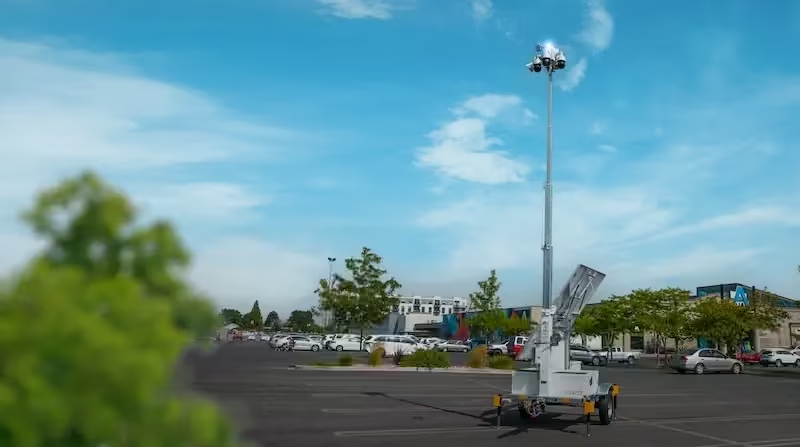
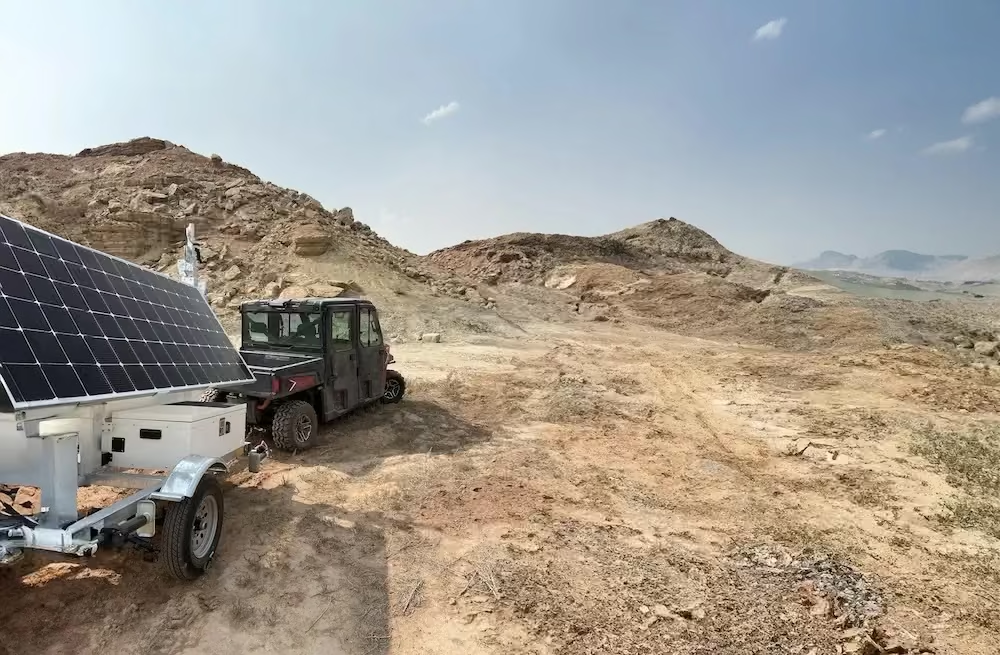
Large properties can make infrastructure more difficult and costly, so self-powered options like mobile surveillance units provide coverage without the infrastructure needs. Mobile security units, like the LVT Unit, come complete with elevated camera masts, solar panels, and a cellular connection. These units can be deployed quickly and adjusted as needed.
Even with a mobile security unit’s flexibility, the layout of large properties can create difficult-to-cover areas. For situations like these—especially if the blind spots are caused by buildings—solutions like Live Unit Surround can fill the gaps. Live Unit Surround consists of smaller camera units connected to a central hub, providing coverage around corners and other hard-to-see areas.
4. Intelligent Monitoring and Deterrence
While security camera systems give you the ability to see all across a property at once, large properties generate too much video and activity for people to watch continuously—let alone simultaneously.
Instead of expecting personnel to manually monitor every camera feed, AI-powered monitoring can help identify potentially relevant activity for review.
Intelligent monitoring can help:
- Detect activity
- Identify potential threats
- Prioritize alerts
- Reduce mundane workload for human personnel
When paired with the right technology, these systems can even issue specific deterrence responses like custom talk-down messages and targeted spotlights.
5. Response Planning
While the security solutions of today are impressive, the technology doesn’t completely replace the need for human involvement.
It’s important to define in advance:
- Who receives alerts
- Who evaluates them
- Who responds
- When law enforcement should be contacted
- What personnel should do in response to incidents
The technology, especially when enhanced with artificial intelligence, can spot problems sooner, but a defined response process is essential for making the most of that improved timing.
6. Adaptability
Most large properties are far from static. Construction progresses, equipment moves, traffic patterns change, and through it all, new vulnerabilities emerge.
It’s essential to regularly reassess your security strategy to ensure it still meets your needs. This is particularly true of properties that tend to see a lot of change in a short window of time. Security solutions should match the property’s flexibility needs, which is why mobile solutions like the LVT Unit and GuardGate are so well suited to temporary sites or locations prone to reconfiguration.
Whether a site is temporary or permanent, its security strategy should be ready to adapt as its needs evolve. LVT’s mobile security solutions are designed to provide flexible surveillance, access control, and deterrence where traditional infrastructure may fall short. Contact LVT today to schedule a demo and learn more about how LVT can help you on your way to total site security.
%20(1).avif)
%20(1).avif)