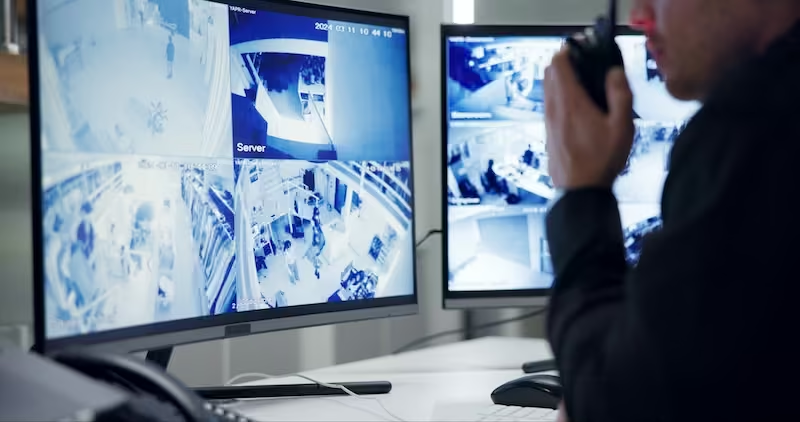
Live Video Monitoring: How to Choose a Provider

Choosing a security camera monitoring service? Learn what to ask providers about live monitoring, AI detection, response procedures, false alarms, and pricing, plus red flags to watch for before signing a contract.
“We monitor your property 24/7” sounds like a simple promise. A great one, even! But not all monitoring services are equal. Do trained operators watch your site, verify what they see, and act before a trespasser does serious damage? Or does the system simply send you an alert at 2 AM. and wish you luck? One of those sounds like a game changer while the other sounds like a stressful and inconvenient budget eater.
Security camera monitoring services vary widely in what they offer, and those differences can mean the difference between thwarting a thief and losing thousands of dollars in stolen equipment.
So how do you know which service is right for your business? In this blog post we’ll cover which questions to ask and the warning signs to watch for when comparing vendors.
6 Questions to Ask a Security Camera Monitoring Service
1. Who Watches My Cameras and When?
Many providers tout 24/7 monitoring services, but again, not all monitoring is the same. Some services have human operators actively watching live camera feeds, while others use AI to continuously analyze footage and alert operators when suspicious activity is detected. Be sure to ask:
- Who or what is monitoring your cameras
- What triggers a human response
- Whether suspicious activity is verified before you're notified
2. What Happens When Something Looks Wrong?
If something goes wrong on your lot, you don’t want your monitoring service provider to say, “Well that sucks, guess we’ll let the owner know.” You want them to immediately verify what’s happening and, if needed, stop it from happening. Ask providers:
- How suspicious activity is detected
- Who decides what happens next
- How long it generally takes from alert to action
3. How Do You Keep False Alerts Down?
Swaying trees, stray cats, and passing headlights can all trigger an alert, and even the most dedicated security guard will start skimming if they’re constantly fielding false alarms. Ask how the provider filters routine movement and whether it uses AI to tell people and vehicles from animals and shadows.
4. Who Are the Operators, and Who Checks Their Work?
Ask how the provider trains its monitoring operators and whether its monitoring center meets any independent certification standards. Look for credentials like:
- UL 827: A standard for central station alarm services, including requirements for monitoring center operations and reliability.
- UL 827B: Additional requirements specifically for video monitoring services.
- TMA Five Diamond designation: Recognizes monitoring centers where all operators have completed TMA's required training and certification program.
5. What Happens If a Camera Goes Offline?
A camera that loses power or its connection isn’t doing you any good. And the longer it stays offline, the longer you’re left vulnerable. Ask how (and if) the provider detects outages, who gets notified, how fast, and what coverage looks like while the camera is down.
6. Who Owns My Footage?
Ask how long the provider stores video, who can access it, and whether you can export clips without a fee. Confirm that your footage remains yours if you switch providers, since you may need it for an insurance claim or a police report weeks or months later.
Red Flags to Avoid
- A price with no questions. A provider that quotes before asking about your site, camera count, and hours is guessing.
- Vague response promises. “We’ll notify you” probably means they’ll send you an alert and leave the response to you.
- Guarantees of zero crime. Monitoring reduces risk, and a provider that promises to eliminate it is probably saying something they can’t guarantee just to get you to sign a contract.
- Long contracts with fees to leave. Multi-year terms and auto-renewal lock you in before you’ve seen results, so ask for a trial first.
- Footage and equipment that stay behind. If your video or hardware stays with the provider when you leave, switching gets expensive.
How LVT Helps Businesses Like Yours
LVT (LiveView Technologies) helps businesses monitor large properties and respond to potential threats without requiring security personnel to watch camera feeds around the clock. Our mobile security units can be deployed quickly and repositioned as your security needs change, which makes them a great fit for properties with limited infrastructure or evolving coverage requirements.
Our systems use AI-powered analytics to detect suspicious activity and trigger alerts, and can even activate deterrents like flashing lights and personalized loudspeaker warnings to discourage wrongdoers.
For businesses interested in third-party live video surveillance, we offer alert response services, connecting you with professional monitoring operators who review alerts and follow established response procedures.
If you're comparing security camera monitoring services and want to see how LVT could support your team, schedule a demo today.