Intelligent Site Management vs Traditional Security Systems
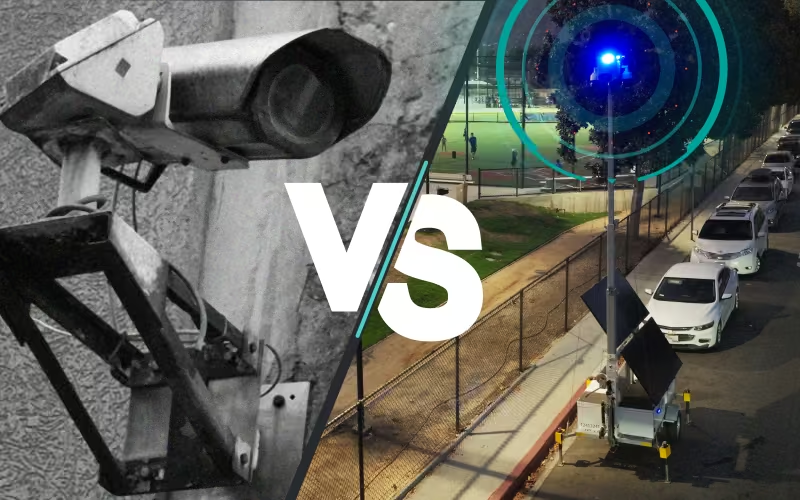
This article compares traditional security systems with intelligent site security solutions. It explores the pros and cons of each, addresses common concerns about upgrading, and explains how intelligent site management can improve efficiency, reduce risk, and free up personnel for higher-value tasks.
I’m a big believer in working smarter, not harder. Why print out a map when I could just use the GPS on my phone? Or wash every dish by hand when a dishwasher does the same job? Working smarter isn’t just more convenient; it allows me to get more done. By not wasting time on menial busywork, I free up more time and brainpower for everything else on my seemingly never-ending to-do list.
The same logic applies to security. When teams aren’t stuck reviewing footage, responding to false alarms, or physically patrolling sites, they’ve got more bandwidth to do the one thing even the most advanced security solutions can’t: be human. They can make real-time judgment calls in nuanced situations. They can connect with people, spot things that feel off, and build the kind of relationships that lead to safer environments.
In this article, we’ll explain the difference between traditional security systems and intelligent site security solutions, and why making the switch is the best way to protect your people, property, and peace of mind.
What Are Traditional Security Solutions?
Traditional security solutions are the conventional methods teams have relied on for decades to protect facilities and assets. Common examples of traditional security include:
- Physical barriers like locks, fences, gates, and security doors
- Fixed CCTV cameras that record footage to local storage devices
- On-site security guards who patrol properties and monitor control rooms
- Motion sensors that detect movement in specific areas
Pros of Traditional Security Systems
- They’re already in place. Many facilities already have traditional systems installed, so sticking with them feels easier than overhauling everything.
- They act as a visual deterrent. Fences, gates, and visible cameras are enough to deter some would-be bad actors.
- They may be sufficient for some projects, events, or organizations. If you're securing a small, single access point in a low-crime area, one fixed camera might do the job.
- They have a proven track record. These methods have been protecting facilities for decades, which gives many decision makers high confidence in them.
Cons of Traditional Security Systems
- They’re rigid. Hardwired cameras or fences are difficult (or sometimes impossible) to move. If your needs change, you’re left with blind spots and may need to invest in additional solutions.
- They require costly infrastructure. Traditional systems often mean trenching, drilling, and hardwiring, all of which take time, disrupt operations, and cost money.
- They’re siloed. Traditional systems rarely communicate with each other, which leaves personnel juggling multiple tools and manually correlating information from different sources.
- They result in reactive security programs. Most traditional systems are built to alert you after something happens. You realize something went wrong when footage is reviewed—not when you still have a chance to prevent the incident. This means your team spends a lot of time playing catch-up.
What Are Intelligent Site Security Solutions?
Luckily, there is a “smarter, not harder” way to approach security. Intelligent site security solutions make it easy for you to detect, deter, and respond to threats in real time. Key components of intelligent security systems include:
- AI-powered video analytics that identify specific unwanted behaviors, recognize patterns, and differentiate between people, vehicles, animals, and other objects.
- Cloud-based platforms that centralize monitoring and control across multiple sites from any location.
- Automated alert systems that notify relevant personnel immediately when threats are detected.
- Predictive analytics that identify vulnerabilities and security gaps before incidents occur.
- Remote management keeps personnel out of unsafe situations without sacrificing coverage or response times.
Pros of Intelligent Site Security Solutions
- They provide real-time insights and automation. Intelligent systems interpret what is happening and can trigger automated responses—like personalized loudspeaker warnings or flashing lights—instantly.
- They free up your personnel. With smart alerts and automated monitoring, teams aren’t stuck staring at camera feeds all day. Instead, they can focus on tasks that require human judgment.
- They’re adaptable. Intelligent systems can be scaled, repositioned, or reconfigured as your needs evolve.
- They unify your data and capabilities. Intelligent, cloud-based platforms bring everything into one dashboard, so teams don’t waste time toggling between disconnected systems.
- They make your data work harder. AI-powered security analytics show you trends, patterns, and opportunities to strengthen your security posture.
- They make it easy to find the footage you need. Forensic search features allow you to find specific moments using keywords like “man in a blue hoodie,” instead of watching hours of footage to figure out what happened and when.
Common Roadblocks to Implementing Intelligent Site Security Solutions
Upgrading to intelligent site security solutions will feel like a big change, especially if your organization has relied on the same system for years. It’s not uncommon to have questions or hesitations—particularly around cost, complexity, or compatibility.
One of the biggest assumptions is that upgrading will mean ripping everything out and starting from scratch. In reality, many intelligent platforms will work with your existing infrastructure. You may be able to keep existing equipment and build around it, phasing in smarter tools over time without disrupting operations.
There’s also the fear that these systems will be overly complicated or require deep technical knowledge. But most intelligent site management platforms are being built with intuitive interfaces, so whether you’re a security professional or a business owner who needs to check in on a site, it won’t feel like a steep learning curve.
And of course, there’s the upfront investment. But when you look at the total cost of ownership, intelligent systems will come out ahead. They will reduce the need for on-site personnel, cut down on false alarms, expand bandwidth, and help prevent costly incidents. Those savings add up fast.


%20(1).avif)
