The Hidden Costs of Reactive Security (and How to Fix Them)

Reactive security may seem less expensive at first, but the hidden costs of theft, downtime, repairs, insurance claims, and lost productivity quickly add up. A proactive security strategy delivers a better long-term return by preventing incidents before they happen with AI-powered monitoring, mobile surveillance, and active deterrence. The best security investment isn't the one that helps you recover faster—it's the one that keeps the incident from happening in the first place.
Imagine your roof starts leaking, so you grab a bucket every time it rains. Eventually you’ll get pretty good at moving the bucket around. You might even buy a second bucket. Or…you could just fix the roof.
For some reason, many businesses treat security like the bucket. Something gets stolen? Add another camera. Someone breaks a window? Hire a guard for a few weeks. Equipment disappears? Install a fence.
It’s a cycle of reacting AFTER the damage has already been done, which is expensive. Very expensive.
While reactive security programs may appear cheaper because you only spend money after an incident occurs, the real costs often crop up later. Every theft, act of vandalism, or trespass creates a snowball effect, so much so that stopping crime is almost always cheaper than cleaning up after it.
A proactive security strategy prevents incidents before they happen, saving you time, money, and energy.
The Invoice You Never See
When businesses calculate the damage after an incident, they usually start with whatever was stolen. Those costs are easy to measure because they come with invoices.
The hidden costs are much harder to quantify. For example:
- How much productivity was lost while security operations were put on hold for cleanup?
- How many hours did managers spend dealing with insurance companies?
- How much overtime did employees work to recover?
- How much business was lost while customers waited?
Those costs rarely show up under “security” on a budget sheet, which is dangerous because they’re often much larger than the original loss. As a result, reactive security becomes a silent drain on an organization’s budget year after year.
The Domino Effect of One Incident
Security incidents rarely stay isolated. Imagine someone steals copper wiring from a construction site. The copper itself might only be worth a few hundred dollars, but now electricians have to be called, walls need to be reopened, inspections get delayed, subcontractors are rescheduled, and the project completion date gets pushed farther and farther back.
Suddenly a small theft has become a five-figure problem.
The same thing happens in retail. One organized theft leads to inventory shortages. Shelves sit empty and customers leave disappointed. Employees spend hours completing reports instead of helping shoppers.
The original crime lasts minutes. Its consequences can last weeks.
Prevention Changes the Economics
One of the biggest advantages of a proactive security strategy is that it changes where money gets spent. Instead of paying for repairs, you invest in deterrence. Instead of paying insurance deductibles, you reduce claims.
Even preventing a handful of major incidents each year can produce significant returns. And prevention is easy with modern security technology. Security has come a long way from grainy footage recorded onto VHS tapes. Today’s systems not only watch, but act.
AI-assisted analytics, remote monitoring, automated alerts, and active deterrence identify suspicious activity before it becomes a serious problem. Rather than discovering theft or vandalism the next morning, businesses can respond to events in real-time.
Flexibility Matters
One challenge with traditional security infrastructure is permanence. Construction sites move, storage yards change, parking lots expand. Permanent systems don’t always keep up.
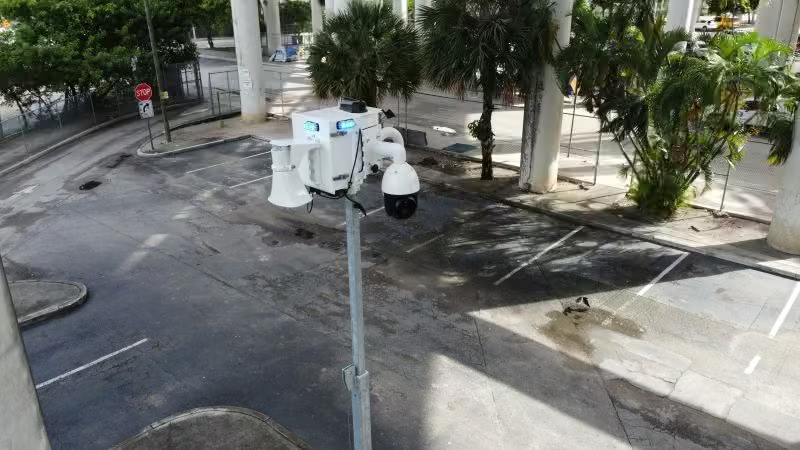
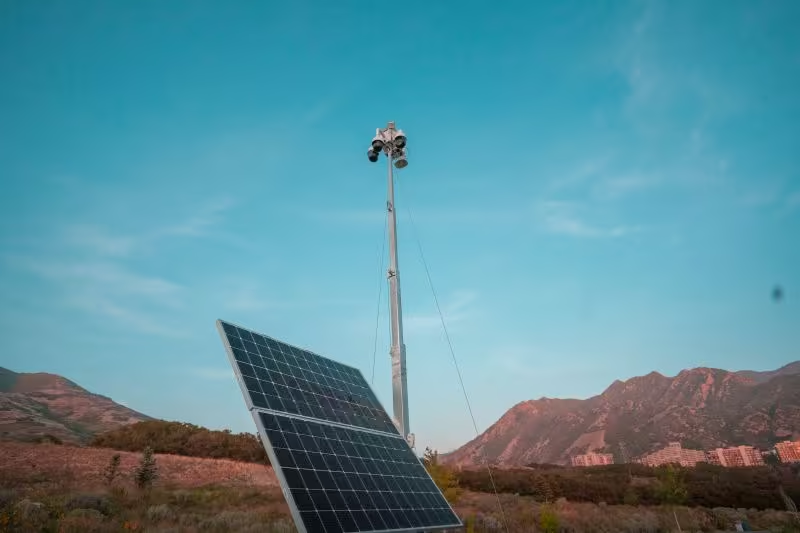
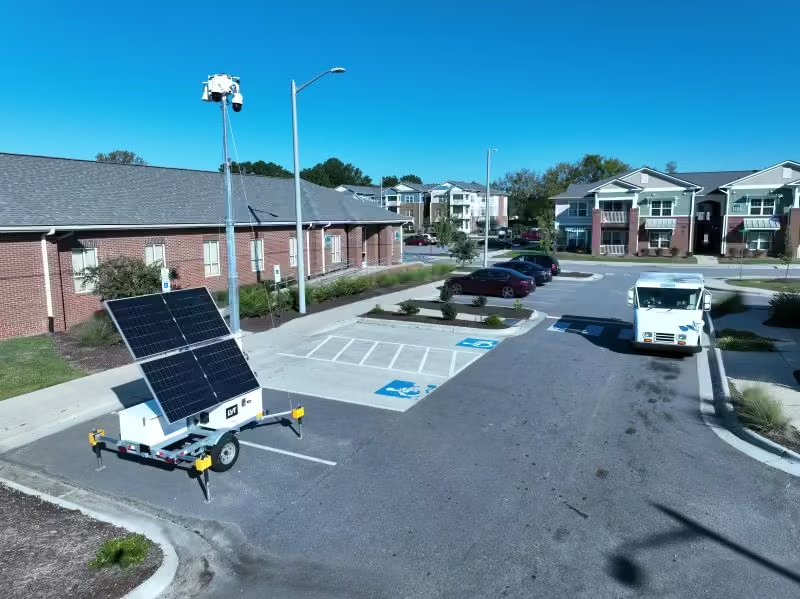
Self-powered and portable, solar security cameras mounted on mobile surveillance units can be deployed almost anywhere without trenching utilities or waiting months for construction.
When a site’s risk changes, the cameras move with it. And since cameras can always see, every suspicious activity is caught. Patterns begin to appear.
- Which entrances experience the most activity?
- What time do incidents typically occur?
- Which properties require additional attention?
Instead of guessing where security threats exist, leaders make decisions using actual evidence. Resources become more targeted, budgets more efficient, and security is strategic rather than reactive.
The Best Security Investment Is the One You Never Need
It might sound strange, but the best security systems are often the least noticeable because they prevent incidents before anyone realizes there was a problem.
Employees arrive safely. Equipment stays where it belongs. Projects remain on schedule. Customers continue shopping without interruption. That’s what success looks like.
Nobody celebrates the break-in that never happened, but businesses certainly benefit from it. Organizations that rely on reactive security programs find themselves paying the same costs over and over again.
Repairs > Insurance > Downtime > Stress > Repeat
Those expenses quietly accumulate until reactive security becomes far more expensive than prevention ever would have been. A thoughtful proactive security strategy breaks the cycle.
By combining modern technology, remote monitoring, mobile surveillance, AI-powered analytics, and active deterrence, businesses can reduce risk before incidents occur instead of scrambling afterward.
The cheapest security incident isn’t the one you solve quickly; it’s the one that never happens in the first place.
See how you can take your security from reactive to a proactive security approach by contacting LVT for a free demo today.