How Much Does a Security Guard Cost in 2026? A Guide to Remote Monitoring

Compare security guard costs in 2026 with remote monitoring and discover how LVT helps businesses extend coverage, reduce labor costs, and protect more locations.
Security is one of those expenses that can look manageable until you start doing the math. A security guard working an overnight shift is often the first idea for protecting a property, but when you multiply that hourly rate across multiple shifts, locations, and 365 days a year, the cost adds up quickly.
In 2026, businesses are weighing those labor costs against another option: remote security monitoring. With remote monitoring, organizations can extend security coverage through live video, AI-powered detection, and real-time intervention without staffing every location around the clock.
So how much do security guards actually cost in 2026, and how does that compare with remote monitoring? Let's break down the numbers, the factors that influence the price of each option, and what businesses should consider when deciding where to invest in security.
How Much Does a Security Guard Cost in 2026?
The cost of hiring a security guard varies depending on the level of coverage required, location, and whether an organization hires guards directly or contracts with a security company. In 2026, businesses can generally expect to pay anywhere from $20–100 an hour for a security guard.
Those hourly rates add up quickly when businesses need coverage every day, overnight, or across multiple locations.
How Much Does a Security Guard Cost Per Year?
Hourly rates are only one factor in the annual cost of hiring security guards. The total cost also depends on how many hours of coverage a business needs.
Consider what one unarmed security post might cost at the estimated contract rates:
The difference is significant. A single 24/7 security post requires 168 hours of coverage each week, or 8,736 hours annually. That's the equivalent of more than four full-time positions, before accounting for additional coverage needed for holidays, absences, and scheduling gaps.
A company that needs overnight coverage at several facilities could spend hundreds of thousands of dollars annually on security staffing alone.
The Hidden Costs of Hiring Security Guards
There are also less obvious costs associated with scheduling, training, and managing a security team. Here are a few expenses businesses should factor into their security budgets.
- Benefits and employment costs: Businesses that employ guards directly must account for payroll taxes, workers' compensation, health insurance, paid time off, and other benefits. Even when working with a security contractor, these expenses are generally built into the hourly service rate.
- Training and certifications: Security personnel need appropriate training to handle emergencies, recognize suspicious activity, and follow your site protocols.
- Overtime and shift coverage: Businesses must maintain enough personnel to cover absences, holidays, and scheduling gaps. Around-the-clock coverage can also create overtime expenses when staffing is tight.
- Supervision and administration: Managing a security team takes time and resources. Scheduling shifts, coordinating personnel, documenting incidents, overseeing performance, and managing contracts all add administrative work.
- Turnover and recruitment: Security staffing can involve ongoing recruitment, onboarding, background checks, and training as employees leave and new personnel come on board. High turnover can create additional costs and make it harder to maintain consistent coverage.
These expenses don't necessarily make security guards the wrong investment, but they do make it worth exploring other options. For businesses that need around-the-clock visibility, not every security need requires someone physically on-site. Remote security monitoring offers an alternative.
How Much Does Remote Security Monitoring Cost?
Remote security monitoring offers businesses another way to protect their properties. It involves a combination of cameras, intelligent detection technology, and remote monitoring alerts to identify and respond to potential security threats.
But how much does it cost?
Unlike security guard services, remote monitoring doesn't have one standard hourly rate. Pricing varies based on the equipment, monitoring services, property size, and level of coverage a business needs. Some providers charge monthly fees per camera or location, while others offer bundled equipment, software, and monitoring through a service agreement.
What Affects the Cost of Remote Security Monitoring?
Several factors influence the cost of a remote monitoring solution:
- Equipment and camera coverage: The number and type of cameras, their placement, resolution, and field of view all affect the cost. A large industrial property may require more equipment than a small parking lot security setup.
- AI-powered detection: Intelligent video analytics can identify suspicious activity before it becomes a crime or theft. More advanced detection capabilities may influence the overall service cost.
- Connectivity and power: Cameras need reliable power and network access to transmit video. Locations without existing infrastructure may require cellular connectivity, solar power, or other off-grid capabilities.
- Installation and maintenance: Traditional fixed-camera systems may require professional installation, cabling, and ongoing maintenance, including equipment upkeep, software updates, and monthly service agreements.
- Coverage requirements: Businesses may need continuous monitoring, after-hours monitoring, or event-based alerts depending on their security priorities.
Security Guards vs. Remote Monitoring: A Cost Comparison
Comparing the cost of security guards with remote monitoring isn't exactly straightforward. One is primarily a labor expense, while the other involves equipment, technology, and ongoing service costs. To understand which option makes more financial sense, businesses need to look at the full cost of coverage.
Here's how the two approaches compare:
How LVT's Mobile Security Solutions Extend Coverage
Remote monitoring can be a cost-effective alternative to traditional security staffing. Mobile security can protect large properties, oversee multiple locations, or maintain coverage outside normal operating hours without expanding manpower.
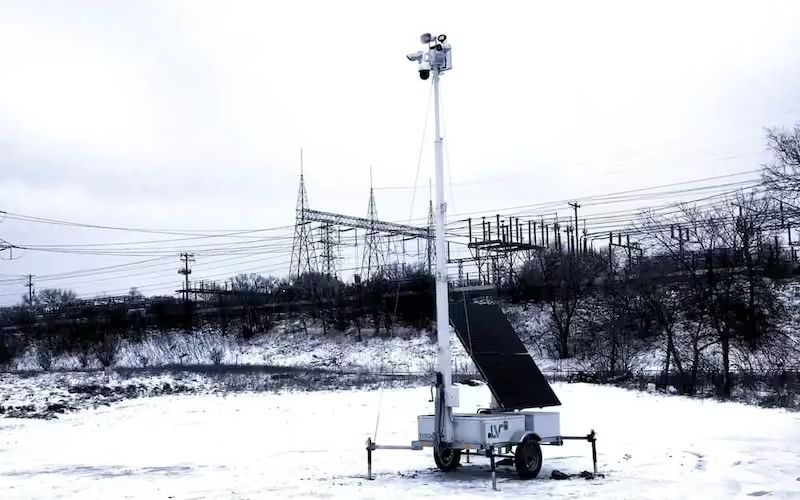
For businesses looking to manage security costs without sacrificing coverage, LVT (LiveView Technologies) offers an alternative to traditional security infrastructure and staffing. LVT combines mobile security units with a cloud-based video management platform to help organizations monitor properties, identify potential threats, and respond to suspicious activity remotely.
Rather than relying on a guard to patrol every area or remain stationed at every access point, businesses can use LVT to extend visibility across their properties. Here's how:
- Deploy coverage without permanent infrastructure: LVT's mobile security units use solar power and cellular connectivity, meaning they can go almost anywhere. Units can be deployed quickly at construction sites, parking lots, industrial facilities, and other vulnerable areas.
- Monitor multiple locations from one platform: The LVT® Platform provides centralized visibility across properties, giving security teams access to live video, alerts, and recorded events through a single cloud-based system.
- Detect and respond to potential threats: AI-powered detection helps identify suspicious activity and bring relevant events to security teams' attention. Combined with live video, deterrent lighting, and two-way audio, LVT gives teams tools to assess activity and intervene remotely before a situation escalates.
- Simplify maintenance and ongoing management: LVT's managed service model helps reduce the operational burden of maintaining security equipment. Solar power and cellular connectivity eliminate many traditional infrastructure requirements, while equipment support and maintenance help keep units operational.
- Scale coverage as security needs change: Unlike permanently installed camera systems, LVT's mobile units can be relocated to meet changing security needs across a variety of industries, from construction sites to parking lots.
A More Flexible Approach to Security
LVT isn't necessarily a replacement for every on-site security role. Guards remain valuable when businesses need physical access control, customer assistance, or an immediate on-site response. But not every security task requires someone physically present.
By combining mobile surveillance, intelligent detection, and remote intervention, LVT helps businesses extend the reach of their existing security teams. Organizations can maintain visibility across more areas, respond to potential threats, and make strategic decisions about where on-site personnel are needed.
For businesses balancing security requirements with rising labor costs, that flexibility can make a meaningful difference.
Ready to get more from your security investment? Visit LVT.com to see how we can help your organization build a more flexible, cost-effective security strategy.