Comparing Reliable Construction Site Security Systems
%20(1).avif)
Effective construction site security requires more than basic measures. Compare guards, fixed cameras, and mobile units by cost, flexibility, and real-world performance.
Temporary, remote, and exposed, construction sites pose a unique challenge from a security standpoint.
With no pre-existing infrastructure to tap into, no doors to lock, and entirely too many fencible tools and materials on site, it’s crucial to find a construction site security solution that actually works.
While there are a number of basic security measures construction companies can take to deter potential thieves, nothing quite beats eyes on the site. But what’s the best way to go about obtaining an actionable visual?
We’ve taken three top contenders for construction site monitoring—security guards, fixed security cameras, and mobile security units—and analyzed them by cost, effectiveness, and flexibility to help you determine which solution is best for your site.
Cost
Choosing to forgo a security system entirely might look like the cheapest option of all—but there’s a strong likelihood that the reality is precisely the opposite. Left defenseless, construction sites are much more likely to experience theft and vandalism, the costs of which add up all too quickly.
The cost of construction site theft and vandalism:
- Equipment and materials averaging $6,000 per incident
- Timeline delays
- Employee wages to redo damaged work
- Dissatisfied customers
- Reputational damage
Of the three options for construction site monitoring, security guards are easily the most expensive. Each guard costs an average of $18–19 an hour for pay alone—and the better guards often come with higher salaries. Then factor in their uniforms, equipment, and benefits. Then multiply all of that several times over if you want a constant presence on your property as the average workweek is 40 hours out of the 168 actual hours in a week. For a 24/7 presence of a guard, the total easily exceeds $10,000 monthly.
On the opposite end of the spectrum, fixed security cameras are often touted as a cheaper option—with an important caveat: This more permanent solution comes with hefty installation costs. While this is sometimes overlooked as a “one-time” cost, the temporary nature of construction sites mean this cost would need to be factored in for every new jobsite. Fixed cameras could potentially be built in as part of the completed project if it’s a business under construction, but chances are high that the placement needs for construction site security are different than the placement needs of the business as it gets up and running, making it less of a viable option. Adding to that is the fact that quality monitoring software and platforms often come with a monthly fee anyway.
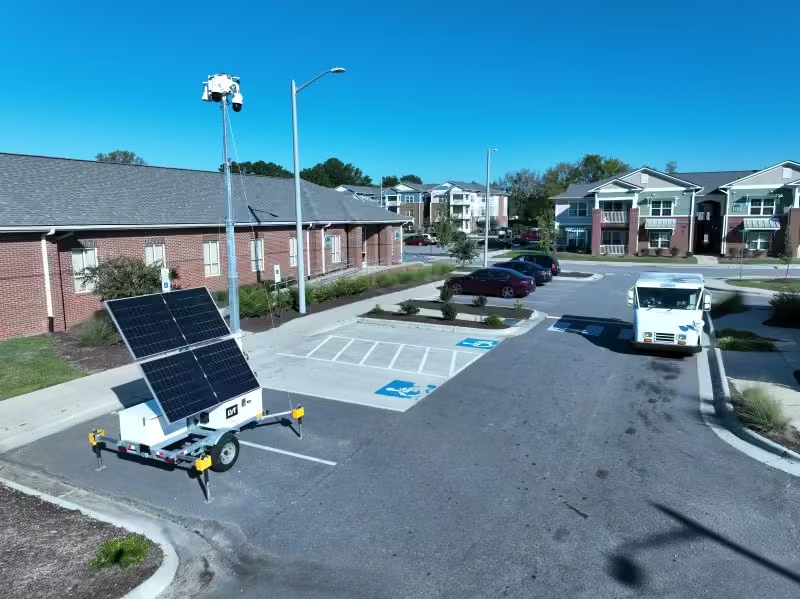
The average cost of mobile security units typically comes in at a few thousand dollars per month. Instead of outright purchasing, these units are usually rented on as-needed basis, often building the cost of high-quality monitoring software and other regular needs (such as cloud storage) right in. As they are self-contained and portable, no installation expenses or related hassles are needed for mobile security units, allowing the solution to move to each new project without incurring additional costs.
Flexibility
Flexibility is a nice bonus in most security situations, but it’s an absolute requirement for construction sites for a few reasons:
- Sites change as projects progress (especially at the beginning stages), leading to shifting sightlines that require adjustment.
- Permanent, unmovable solutions don’t make sense for temporary jobsites from a practical or a financial standpoint.
- Mobile solutions can move with you from site to site without extra hassle or expense.
Security guards are unquestionably the most flexible option available. People can move whenever, wherever without giving it a second thought. But as much flexibility as they give, they also require for themselves: vacation time, sick leave, and even resignation are all on the table at any given time. And no matter how good security experts may be at their jobs, they are still people, meaning they can be distracted or sidetracked—sometimes at the worst possible moments.
Fixed security cameras, on the other hand, have nothing flexible about them, highlighting their biggest drawback when considering them for construction site security. These cameras require infrastructure to place (which might not even be an option in the first project stages at a remote location) and are costly and time-consuming to reposition. For a profession reliant on being able to pack up and move on, the inflexibility of fixed cameras creates more problems than solutions.
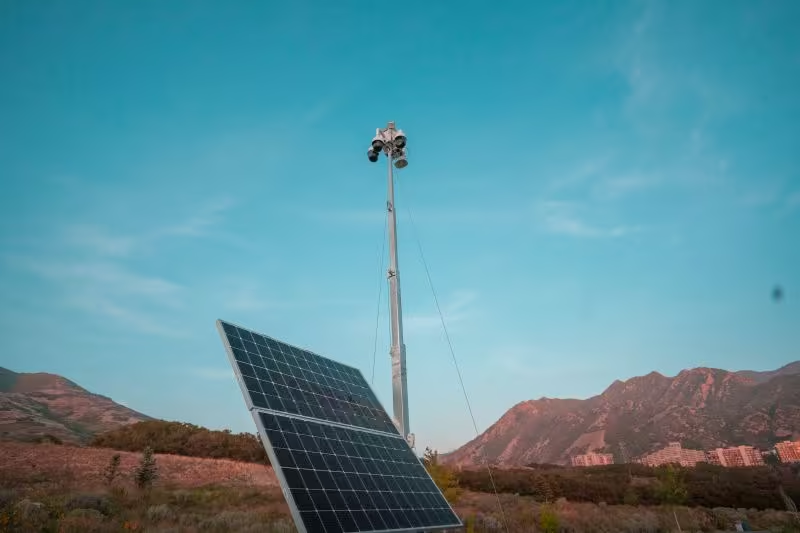
The flexibility of mobile security units is literally represented in its name. These mobile units can be deployed within minutes and repositioned easily to address any potential vulnerabilities. Equipped with solar panels and cellular connection capabilities, mobile security units require no infrastructure from jobsites and can be placed just about anywhere. They also have flexibility when it comes to camera configuration and other add-ons.
Effectiveness
At the end of the day, the best price point and the most flexibility isn’t going to matter if the system doesn’t actually keep your site secure.
When it comes to effective construction site security, deterrence is the name of the game (especially since construction site theft only has a recovery rate of about 7%). According to the Loss Prevention Research Council, effective deterrence happens when would-be perpetrators see the security measure, get that it’s there to catch them if they commit a crime, and fear the consequences of being caught. (This is known as the See-Get-Fear model.)
Proactive abilities rank right up there with deterrence: If a perpetrator isn’t deterred in the first place, the next best solution is to stop the incident before it escalates, making early detection and immediate action crucial.
Security guards are very effective as a deterrent—but that’s only if they’re in view of the would-be wrongdoer. If the construction site has any size to it, patrolling guards are only able to be in so many places at once—especially when walls start going up. Guards may be able to make a difference during peak working hours when workers are coming and going, but even that can be difficult as a guard can only track so much at a time. Outside of normal working hours, nighttime and extreme weather can also pose significant challenges for security guards.
Fixed security cameras are fairly effective as a deterrent—as long as people notice them. Their small, unassuming size can make them difficult to spot, dampening the deterrence effect. When paired with enhanced detection software, these cameras assist with notifying personnel of problems, but the cameras alone are unable to offer an immediate response to unfolding situations. Their fixed nature can also pose a challenge in the rapidly shifting construction site environment as sightlines don’t always add up and are difficult to adjust.
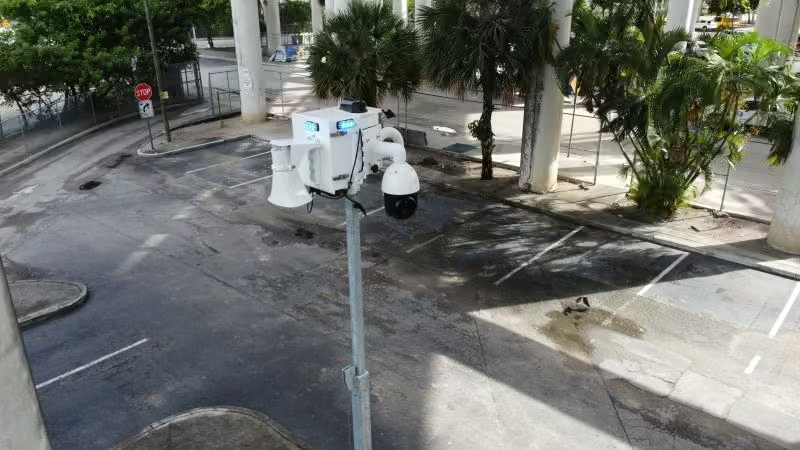
Mobile security units—with their towering camera mounts, solar panels, and flashing lights—are easy to spot and there’s little question as to their purpose, making them fit nicely in the See-Get-Fear deterrence theory. Paired with advanced detection software (especially when enhanced with AI), these units can alert personnel when suspicious behavior arises, but they aren’t limited to just alerts: Agentic AI and attached loudspeakers and lights allow mobile security units to autonomously initiate instant responses such as custom loudspeaker messages and targeted spotlights. These customized responses give the appearance that a person is actively monitoring the situation, further discouraging perpetrators.
The Verdict?
When evaluated across lifecycle cost, adaptability to changing site conditions, and visible deterrence, mobile security units are a clear winner in the construction space.
There’s no question that security guards and fixed security cameras have their place, but 24/7 construction site monitoring is not it.
The right solution protects your timeline, your budget, and your reputation. Connect with LVT for a personalized demo and explore how mobile security units can secure your next jobsite.