Advanced Total Security Measures: What Every Modern Building Needs
.avif)
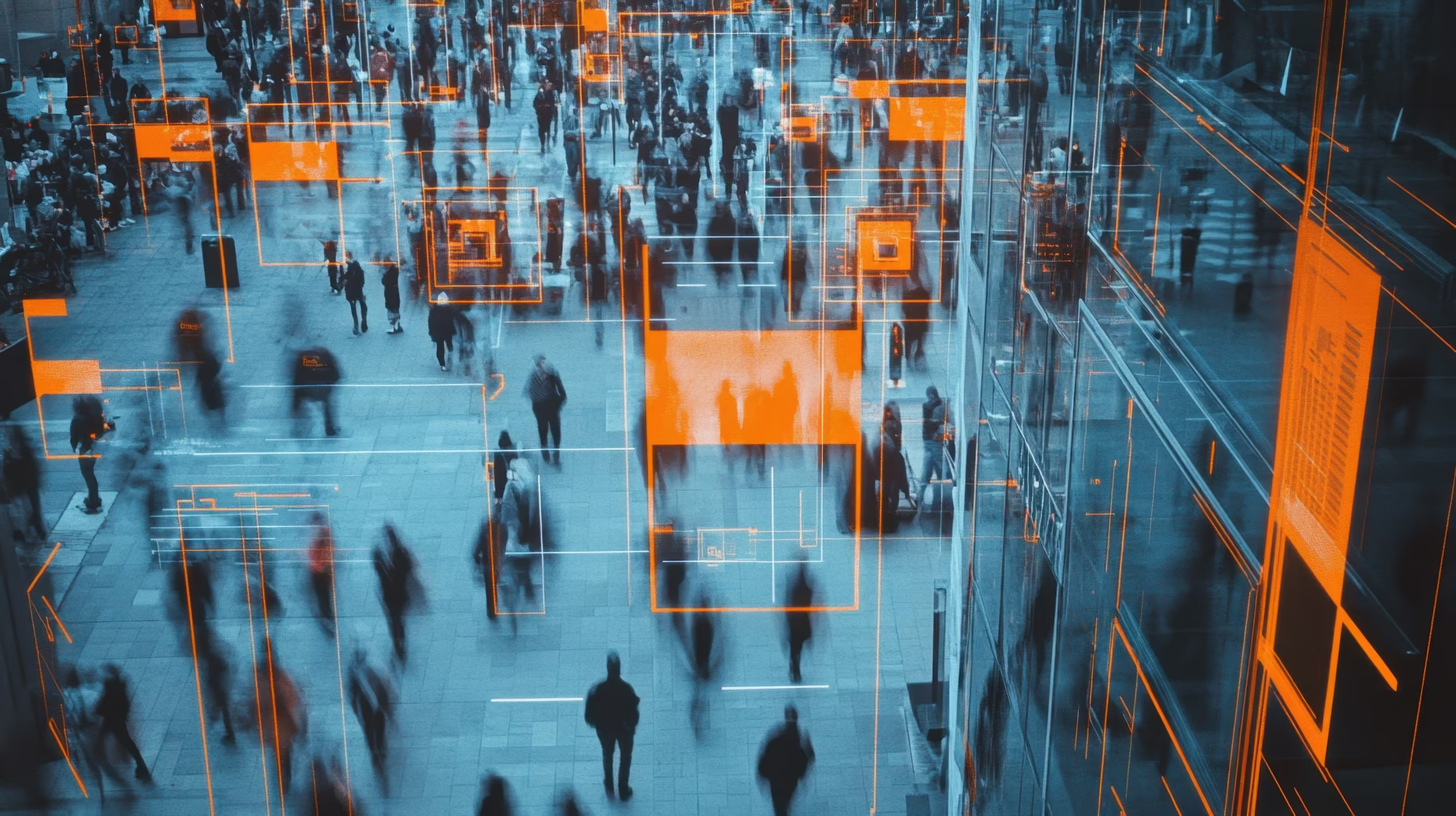
Modern buildings need more than cameras—total site security integrates surveillance, access control, and analytics to detect threats and respond in real time.
At first glance, the ocean can look completely calm. The surface is smooth. The waves move gently. From the outside, it feels predictable and peaceful. But when you put on your goggles and look beneath that surface, there’s constant movement. Currents shift. Marine life moves in every direction. Entire ecosystems just out of sight, layered and complex in ways we can’t immediately see.
Modern buildings function in much the same way.
On the surface, everything can appear orderly—employees moving through entrances, visitors checking in, deliveries arriving on schedule. But beneath that routine is a constant flow of activity: valuable assets, sensitive data, and people all moving through the same space at once. With all this complexity comes potential crime: theft, vandalism, unauthorized access, and safety concerns.
The challenge is that many organizations are still relying on security systems that only capture part of the picture. Security cameras, access control, and monitoring tools often operate independently, leaving critical blind spots beneath the surface.
To truly understand—and protect—what’s happening across a site, organizations are turning to total site security, an integrated approach that brings multiple technologies together into one intelligent, coordinated security ecosystem.
This guide breaks down six key security features every modern building should have in place to create a stronger, more connected approach.
What Is Total Site Security?
Total site security is the integration of multiple security technologies into one coordinated system that protects the entire property—from the perimeter to the interior.
Instead of operating in separate silos, it connects surveillance, access control, perimeter monitoring, real-time alerts, and remote monitoring into a single, unified approach. The goal isn’t just to record incidents—it’s to detect, verify, and respond to threats in real time. This information also allows businesses to make decisions in much more than just security—it optimizes project management, provides marketing content, and informs operational decisions to make your business more effective in every area.
The Essential Elements of Modern Building Security
1. Intelligent Video Surveillance
Traditional security cameras simply record footage. Modern systems go further, using AI-driven analytics to actively monitor activity in real time.
These systems are trained on your business, which means they learn the patterns and can quickly identify when something is out of norm. These cameras can watch 24/7 without getting tired and better identify loitering, trespassing, and unusual behavior to automatically alert security teams.
Instead of relying on constant human monitoring, organizations gain a more proactive approach to identifying risk, reducing fatigue, and helping teams focus on real threats.
2. Strong Perimeter Protection
Effective security starts before a threat ever enters the building.
Modern perimeter protection uses a combination of smart cameras, motion detection, intrusion alerts, and monitored exterior areas to create an early line of defense. Parking lots, loading docks, and entry points are often the most vulnerable parts of a property, making visibility across these spaces critical to preventing incidents before they escalate.
3. Secure and Intelligent Access Control
For a business to be truly secure, they need to control who can enter and where they can go. This can look different based on the needs of an organization and may include keycards or mobile credentials, biometric authentication, role-based permissions, and automated activity logs.
Together, these tools ensure that only authorized individuals can access sensitive areas while providing a clear record of movement throughout the facility.
4. Unified Security Platforms
One of the most significant advancements in security technology is the ability to bring systems together.
Unified platforms allow security teams to monitor video feeds, review alerts, manage access credentials, and investigate incidents—all from a single dashboard. This means security teams don’t need to switch between systems, improving both response time and prevention.
This integration between security tools allows faster decision-making. For example, a sensor set off on one corner of a perimeter can automatically trigger nearby camera footage, giving teams immediate visual context. The system can then accelerate the threat level and use talk-down speakers to talk to the trespasser or help teams contact local law enforcement. Alerts can be prioritized and verified more quickly, reducing false alarms and improving response accuracy.
Beyond day-to-day operations, unified platforms provide a more complete picture of site activity over time. By consolidating data across systems, organizations can identify patterns, uncover vulnerabilities, and make more informed security decisions.
5. Remote Monitoring and Cloud-Based Security
Modern security operations are no longer limited to a single location.
Cloud-based platforms enable teams to monitor facilities remotely and review incidents from anywhere. Online security hubs can also allow teams to manage security services across multiple sites and securely store video footage. This level of accessibility is especially valuable for organizations overseeing multiple buildings or large campuses.
6. Flexible and Scalable Security Infrastructure
Security needs don’t stay static—and neither should the systems supporting them.
Construction projects, tenant changes, and temporary vulnerabilities can all introduce new risks. Modern security strategies rely on flexible, scalable solutions that can be deployed quickly and adapted as conditions evolve, ensuring consistent coverage no matter how the environment changes.
Bringing It All Together
Each of these technologies plays an important role on its own—but their real strength comes from how they work together.
Total site security brings surveillance, access control, perimeter protection, and real-time monitoring into one coordinated system. Instead of operating in isolation, these tools share information to provide a connected view of what’s happening across a property.
When systems are integrated, it allows organizations to detect threats earlier, respond faster, and maintain full visibility across their entire site. For example, consider an incident late in the night at a commercial business. A traditional system might capture footage of someone loitering near vehicles, but no action is taken until the footage is reviewed later. By then, the damage may already be done.
In a total site security environment, that same situation looks very different. Intelligent video surveillance detects unusual behavior and flags it in real time. The system automatically alerts a team through the security app while pulling up relevant camera views. If the individual attempts to access the building, access control systems can restrict entry and log the activity. Security personnel can then assess the situation immediately and respond before it escalates. What would have been a delayed reaction becomes a proactive response.
By connecting systems and enabling them to work in sync, total site security transforms security from a passive function into an active, responsive strategy—one designed not just to document incidents, but to prevent them.
A Clear View of Your Security
Like the ocean, a building may appear calm on the surface, but underneath, there’s constant movement, complexity, and risk.
Total site security brings that hidden activity into focus, giving organizations the visibility and coordination they need to stay ahead of threats.
Ready to strengthen your site from the surface down? Visit lvt.com to learn how a more connected approach to security can protect what matters most.
%20(1).avif)