Parking Lot Safety and Security Checklist: 21 Items for a Safer Lot
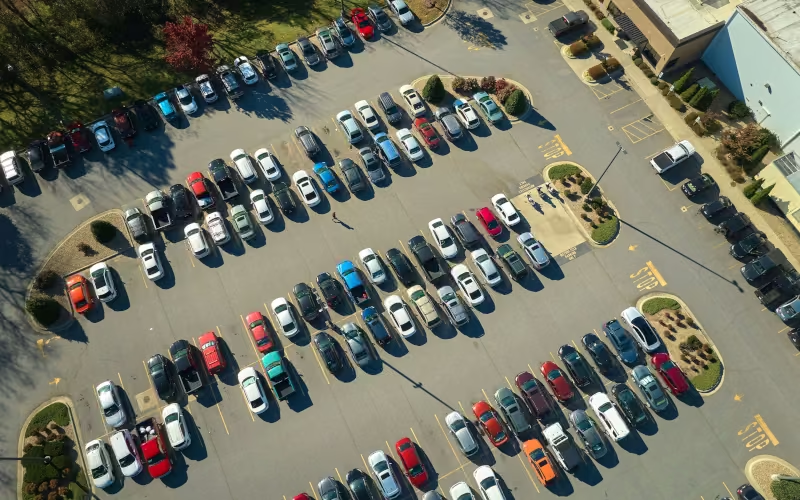
A parking lot safety and security checklist covers six areas: perimeter and access control, lighting and visibility, grounds maintenance, rules and signage, staffing and patrols, and surveillance with incident response. Walk the lot against the 21 items below at least once a quarter, after any incident, and before seasonal peaks. Garages get a short add-on list at the end.
If you ever built a fort as a kid, you know that security was a big concern—you had to keep your haven safe from neighborhood rivals, annoying siblings, and worst of all, parents. Maybe you had a secret password or coded knock to get past the sentry post (i.e., your best friend acting very seriously).
The same way those childhood forts demanded innovative strategies to protect against foes, businesses face the challenge of securing their parking lots from threats. While the risks are undoubtedly higher and the adversaries more sophisticated, the goals are the same: deterrence, protection, and rapid response.
In this post we go back to basics and revisit those childhood defense practices in the context of parking lots. The checklist below covers the physical, procedural, and technology items that make a lot safer, and it pairs with our complete guide to parking lot security if you want the full strategy behind each item.
What is Parking Lot Security?
Parking lot security is the set of measures, people, and technology used to prevent crime and keep vehicles and people safe in a parking facility. It includes security cameras and remote monitoring, deterrent lighting, physical barriers and access control, patrols, and the rules and incident procedures that tie them together.
Why Parking Lot Security Matters
The stakes of a breached fort were a bruised ego, a couple hours' work gone to waste, and maybe the temporary loss of a favorite toy or comic book. Parking lot security stakes are much higher—we're talking about the safety of people, the protection of valuable assets, and the reputation of businesses.
Parking lots are magnets for theft, vandalism and other crimes—they're easy targets. Most are public spaces, so anyone and everyone can access them, and they're filled with high-value assets (cars) that are relatively unprotected.
Consider the following statistics:
- Motor vehicle theft fell 27% in 2025 from 2024, but remains well above pre-2020 levels
- More than 137,000 catalytic converters were stolen in 2025, down from the 2023 peak but still a daily risk for any open lot
Beyond the direct financial and emotional toll of parking lot crime, the perception of safety in these spaces can influence customer decisions, employee morale, and ultimately, the bottom lines of businesses.
The Ultimate Parking Lot Security Checklist
The good news? The right security plan can dramatically reduce parking lot crime rates. Here's a checklist that will help you fortify your property.
LVT decreases parking lot crime and prevents incidents from escalating. See it in action.
Secure Perimeters and Establish Access Control
Establishing a secure perimeter with managed entry and exit points is the first line of defense. It allows you to control the flow of authorized vs. unauthorized personnel and vehicles.
- Inspect all barriers, fencing, gate entry systems, etc. for any signs of damage, disrepair, or potential breach points.
- Strategically restrict and funnel entry and exit points to establish controlled parking circulation patterns. Too many unregulated access options create vulnerabilities.
- Identify any potential climbing aids near perimeter fencing like trees, pallets, or equipment that could be used for breaching your perimeter. Eliminate or relocate them.
Ensure Optimal Lighting and Visibility
Eliminating blind spots is critical because it lets surveillance systems and staff monitor every part of the lot.
- Ensure parking lot cameras have coverage of your entire lot, especially higher-risk areas.
- Invest in thermal imaging cameras to detect threats even in total darkness.
- Guarantee optimal, continuous visibility with solar-powered cameras that keep running during grid outages.
Prioritize Grounds Maintenance
Regular and intentional maintenance enhances visibility and reduces hiding spots for potential criminals, making your lot a less attractive target for illicit activities. Well-kept landscapes signal to would-be offenders that your property is actively managed and monitored.
- Routinely inspect your lot and perimeter for any signs of disrepair like litter, damage, graffiti, vandalism, etc.
- Keep all vegetation like trees, bushes, flower beds neatly trimmed and manicured to prevent overgrowth obstructing visibility or providing concealment.
- Ensure exterior lighting fixtures, signage, fencing and any other parking equipment are fully operational and undamaged.
Establish Rules and Procedures
Ambiguity creates vulnerability. Even the most well-designed lot needs clear rules and protocols to control behavior and provide recourse when incidents occur.
- Post prominent signage stating all regulations, hours of operation/closure, towing policies, authority contacts and any prohibited activities. If it's not clear, it won't be followed.
- If attendants or security patrols are utilized, establish clear protocols for inspections, incident response, authority handoffs, reporting/documentation, etc.
- Maintain updated emergency contacts and procedures for responders: nearest police and fire stations, dispatch instructions, site maps, and utility shutoffs.
Staff the Lot: Patrols, Guards, and Remote Monitoring
People still matter. The question is how much of the coverage should be on foot, in a vehicle, or on a screen.
- Decide whether foot patrols, vehicle patrols, or a remote video monitoring service fit each lot. Guards deter well but cover one place at a time; remote monitoring covers every camera at once and can dispatch when it matters.
- If you contract security guards, confirm licensing, post orders, patrol routes, and how they escalate to law enforcement.
- Pair any staffed coverage with two-way audio on your cameras so an operator can issue a voice-down warning before an incident escalates.
Plan for Incidents and Emergencies
- Install emergency call stations or clearly posted emergency numbers in every zone, and test them monthly.
- Keep an incident report template and a video retention policy so that car break-ins, injuries, and disputes are documented the same way every time and footage is available when police or insurers ask.
- Add a seasonal pass: snow and ice removal routes, storm drainage, and holiday overflow coverage.
Leverage Surveillance Technology
Surveillance technology is the backbone of a comprehensive parking lot security strategy. By leveraging the latest advancements in cameras, monitoring systems, and analytics software, you can keep watch over your lot 24/7.
- Choose a solution that gives you remote monitoring capabilities so you can check on your lot from anywhere and at any time.
- Deploy AI-powered parking lot cameras that can analyze footage, detect crime patterns, and identify suspicious activities and behaviors.
- Make sure the solution you choose integrates with any existing security systems like alarms or access control systems.
Parking Garage Security Checklist
Garages add stairwells, elevators, ramps, and low ceilings to everything above. Add these five items:
- Camera coverage on every level, every stairwell, and every elevator lobby, with license plate recognition at entry and exit lanes.
- Uniform lighting on ramps and in corners; paint ceilings and walls light colors to raise visibility without adding fixtures.
- Mirrors or cameras at blind turns, and clear wayfinding so visitors do not wander.
- Emergency call stations on each level and a posted phone number at every stairwell door.
- A published closing routine: sweep every level, lock stairwell doors that lead outside, and confirm gates and cameras are live.
Hold Down Your Fort with LVT's Solar Surveillance Cameras
While the days of fort building may be behind us, by implementing the measures outlined in this checklist, you can turn your parking lot into a safe and secure fortress—detecting unwanted behavior, deterring criminal activity, and defending what matters most.
Our solar-powered surveillance units do more than improve visibility. Because they do not rely on the electrical grid, your coverage stays up when the power goes down. They are flexible and scalable, so as your lot or your business grows, your security keeps pace. And they take minutes to set up, with no trenching, drilling, or permanent installation.
Whether you need permanent monitoring for a remote lot, temporary coverage for events, or security that moves as your needs change, LVT can cover it. See the types of parking lot security cameras to match a camera to each checklist item, or contact our team.

%20(1).avif)
%20(1).avif)
