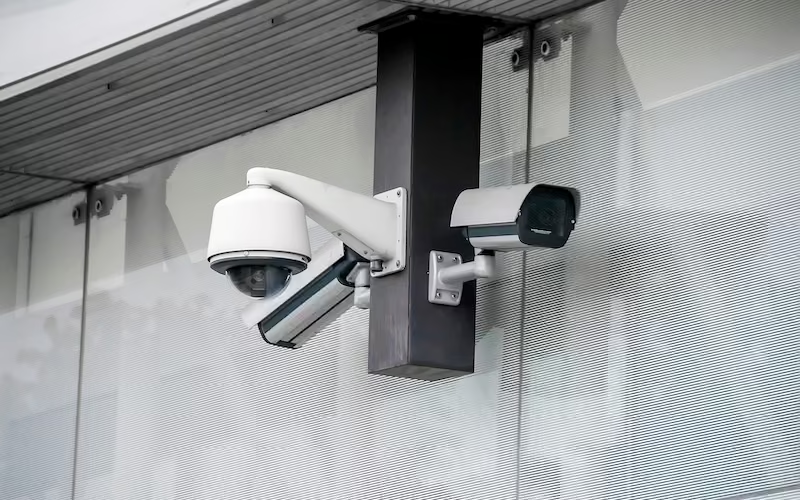
The Mechanics of Off-Grid Autonomous Security: How a Mobile Security Tower Works

LVT mobile security towers provide off-grid protection using solar power, battery backup, cellular connectivity, and edge AI. Built for harsh outdoor conditions, they detect threats, reduce false alarms, and deter intruders with lights, alarms, and live monitoring—without wired power or internet.
Most job sites, parking lots, and storage yards have no power poles and no network drop. Crime doesn't wait for the utility to show up. A mobile security tower solves that problem by carrying its own power, its own connection, and its own intelligence.
This post breaks down how mobile surveillance units from LVT (LiveView Technologies) work. We cover five systems: power, hardware, data transmission, edge AI, and deterrence.
Off-Grid Power: How Mobile Security Units Stay Running
Without power, a security system does you no good. But remote job sites, sprawling construction projects, and temporary work areas don't always have easy access to electricity. Luckily, mobile security units have self-contained power systems that allow them to operate without relying on a nearby electrical hookup.
Solar panels charge a battery bank during the day, and the bank runs the cameras, lights, speakers, and onboard computer through the night and through cloudy stretches. A smart generator tops off the batteries automatically when sunlight falls short, so the unit keeps running.
Power management matters as much as power generation. The system tracks battery level and adjusts its load so critical functions stay online when conditions get tough.
Built for Outdoor Conditions and Easy Deployment
The hardware has to survive the same conditions as the site itself, and depending on the location of the site, wind, dust, heat, freezing temperatures, rain, and more may all be on the menu. That's why mobile security units are designed with weather-resistant cameras, protective equipment enclosures, and sturdy mounting systems that help keep everything secure and operational in outdoor environments.
The mast elevates cameras above vehicles, equipment, and other obstructions to provide a clearer view of the property. Stabilizing supports and guy wires help keep the mast steady in windy conditions, while protective enclosures shield sensitive electronics from dust and moisture.
Mobility is another important part of the design. As the name implies, mobile units can be transported between locations and set up in minutes without trenching, permanent foundations, or electrical hookups. When a project ends or security needs shift, crews can relocate the unit to provide coverage somewhere else.
Data Transmission Without a Wired Connection
With mobile security units, you don't need a wired internet connection to keep an eye on your property. Instead, these units use onboard cellular modems to transmit data over carrier networks. Some systems can also use satellite connections in locations where cellular coverage is limited or unavailable.
Bandwidth is limited in remote places, so the unit doesn't stream everything all the time. It stores video onboard, sends alerts and short clips when something happens, and allows for livestreaming when a monitoring agent needs a live view. That approach keeps data use low and response times fast.
Edge AI Threat Detection
Mobile security units don't just record footage. They can also use AI to analyze what's happening on-site and identify potential threats in real time. This is where edge computing comes in.
Edge computing means the analysis happens on the unit itself instead of in a distant data center. The onboard processor reviews camera video in real time and classifies what it sees. People and vehicles in a defined zone trigger an alert. Animals, shadows, and blowing debris do not. A security system that constantly sends false alarms isn't doing anyone much good. By distinguishing potentially suspicious activity from harmless movement, edge AI helps reduce unnecessary alerts so security teams can focus on events that actually need attention.
Operators can also establish detection zones and schedules to customize what triggers an alert. For example, a delivery truck arriving at noon might be perfectly normal, but that same truck pulling into the lot at 2 AM could warrant a closer look.
Active Visual and Auditory Deterrence
Detection alone only records a crime. Deterrence stops one. That's why mobile security units are designed to be highly visible. Their elevated cameras and prominent presence can signal to would-be intruders that the property is being monitored.
These units can also use active deterrence features to make it clear that suspicious activity has been detected:
- Floodlights and strobe lights turn a dark lot into a lit scene.
- Loudspeakers play warnings automatically.
- A monitoring agent can talk down an intruder live, describing what the person is wearing and warning them that law enforcement will be contacted.
Intruders tend to leave once they know someone is watching.
How the Pieces Work Together
Picture a storage yard at 2 AM. A person climbs the fence, and the edge AI flags the movement within the detection zone. The unit sends a clip over cellular to a remote monitoring agent, who verifies the threat. The floodlights and strobe come on, and the agent speaks through the loudspeaker. The agent contacts law enforcement and shares the video as evidence when the person doesn't leave.
No one drove to the site, and no wire ran to it. Every step happened through the tower's own power, connection, and intelligence.
See LVT at Your Site
Every site has different power conditions, coverage gaps, and risks. Talk to an LVT specialist about what a mobile security tower can do for yours. Sign up for a demo and see if you qualify for a risk-free trial.