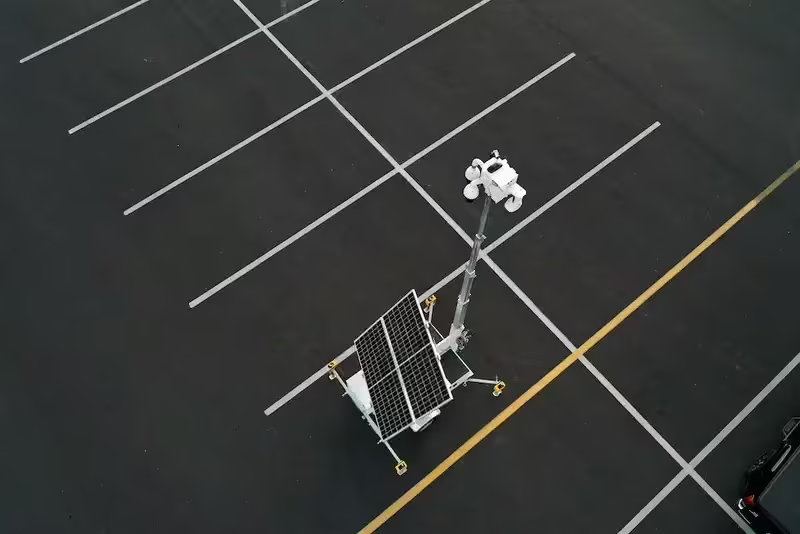
Security Camera Trailer Rental vs. Owning vs. Managed Service

Choosing between renting and buying a security camera trailer comes down to who handles maintenance. Buying offers long-term ownership, but you absorb all costs for repairs, cellular data, software, updates, and idle storage. Renting, especially via managed services like LVT, shifts all power, hardware, and connectivity upkeep to the lessor while providing flexible, hassle-free security.
Most companies compare renting versus buying a security camera trailer by price when needing coverage for events or construction sites. But that may not consider a cost that adds up over time—maintenence. Someone must ensure the batteries are functioning, the lenses are clear, the software is current, and the unit stays online even in extreme weather. Who that person is depends on the type of service selected.
Security Camera Trailer Rental vs. Owning vs. Managed Service
Most companies compare renting versus buying a security camera trailer by price when needing coverage for events or construction sites. But that may not consider a cost that adds up over time—maintenence. Someone must ensure the batteries are functioning, the lenses are clear, the software is current, and the unit stays online even in extreme weather. Who that person is depends on the type of service selected.
Security Camera Trailer Rental Puts Maintenance on the Lessor
A security trailer contains electronics that must withstand outdoor conditions including mud, wind, heat, and cold. As a result, maintaining the unit requires steady upkeep.
- Power. Solar panels and batteries need cleaning, testing, and eventual replacement.
- Cameras and lights. Lenses get dirty, cameras drift out of alignment, and floodlights and strobes fail.
- Mast and tow gear. Lifts, hitches, and tires need regular inspection.
- Connectivity. Cellular modems and data plans must be managed, and weak-signal sites will need troubleshooting.
- Software. Firmware and platform updates keep the system secure and working.
- Storage. Footage from commercial video surveillance must be archived and searchable.
- Damage. Storms, vandals, and site vehicles all take their toll over time.
When you rent, these action items belong to the lessor. No need to stock spare parts, schedule technician visits, or buy replacement batteries. Renting places repairs on someone else's clock.
LiveView Technologies (LVT) leases mobile security units, covering all upkeep, repairs, and updates. The subscription also includes data, so you don't have to buy or manage a cellular plan.
Owning a Security Trailer Means Owning Everything Else
Ownership has advantages. You hold an asset, you choose the components, and, over many years, continuous use across multiple sites can make the math work. But you also take on the full maintenance list mentioned above, plus:
- Total cost. Purchase price, replacement parts, connectivity, software, storage, and technician time.
- Idle time. A trailer parked between projects earns nothing, and it still needs storage and transport.
- Aging hardware. Cameras and software age, and you fund the upgrade.
- Downtime risk. When a unit fails, you must find the technician and the parts.
If you consider buying, ask the seller what the purchase price includes. Software, cellular data, and storage can be billed separately as “extras” meaning the actual cost is much higher.
Managed Service Adds People to the Equipment
Managed security camera trailer rentals combine equipment, software, and professional monitoring in one deployment. Trained operators review alerts and verify events before escalation, reducing false dispatches and supporting consistent response protocols.
With LVT, alert response partners pull up the livestream when a unit raises an alarm. They can warn trespassers through the unit's loudspeaker, contact you, and/or alert local law enforcement when appropriate.
Which Option is Best for Construction and Event Sites?
Construction. U.S. construction site theft costs the industry between $300 million and $1 billion annually, with over 11,000 pieces of equipment stolen each year. Sites change fast and expensive materials can be left out overnight and weekends. A rented mobile unit moves with the risk, day or night.
Events. Events can run for a single day or for weeks. Some only happen annually. Owning a security trailer for a festival that happens once a year means paying to store it for the other 11 months. Renting, on the other hand, gives you coverage in the areas you need (parking areas, gates, staging, etc.) when you need it. And when the event is over, the unit leaves too. It’s commercial building security made easy.
Questions to Ask Before You Sign
- What does the base rental include? Confirm cameras, cellular data, cloud storage, software, and maintenance in writing.
- How fast do repairs happen? Get response times in writing and ask whether the provider swaps the unit.
- Who pays for damage? Ask about weather, vandalism, and site accidents.
- How fast can I get a unit, and how fast can you move it? Confirm deployment times.
- What are the term and exit rules? Know the minimum term and what ending early costs.
- Who watches, and when? Ask about coverage hours and monitoring fees.
- Who owns the footage? Confirm who receives access to footage and data, and where it is stored long term.
The Most Cost Effective Solution
Choose the security camera trailer rental, add monitoring for the hours nobody is on site, and keep maintenance off your crew's plate. Contact LVT for a free demo and see how you can get the best of renting with customized managed service.