Public and Private Partnerships: Building Safer Communities Together
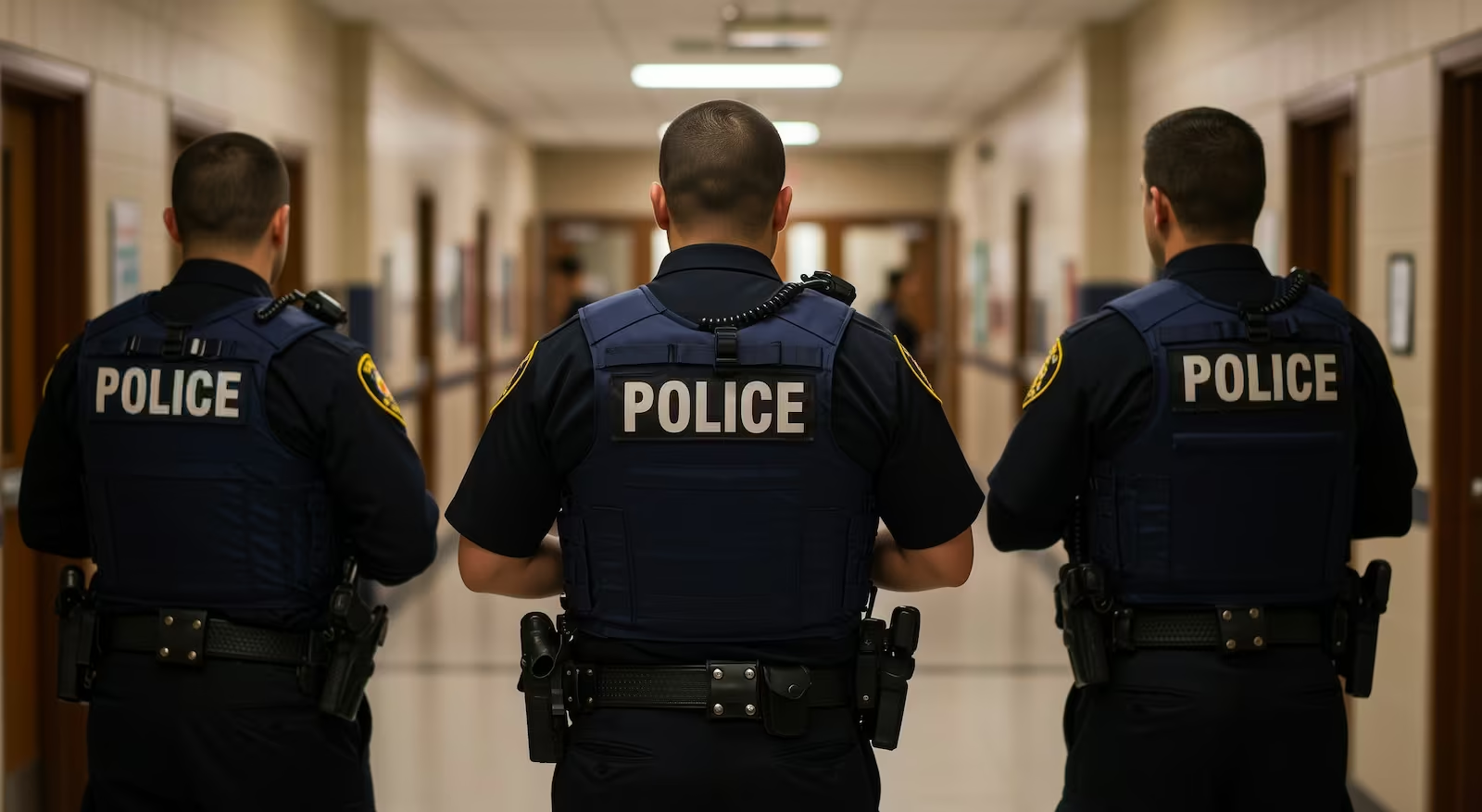
Learn how businesses, communities, and law enforcement agencies can work together proactively to improve safety and reduce crime.
The 2026 WNBA season is just starting. This season is somewhat unique because there have been so many trades leading up to it. Each team has almost a totally new composition. There is a lot to figure out: play strategies, defense, transitions, rookies, veteran leadership, new coaches, and new chemistry. One thing that keeps standing out to me is that the best teams rarely rely on just one high-scoring player to win games.
The strongest teams operate with a layered strategy. Some players score, some defend, others read the court and anticipate what’s coming next. Behind the scenes, there are coaches building game plans, assistants studying matchups, trainers keeping athletes healthy, and medical staff helping players recover before tipoff even begins. Winning is not usually the result of one person reacting in the moment. It is the result of preparation, coordination, communication, chemistry, and a team working toward the same goal long before the game starts.
Community safety works much the same way.
Today’s public safety challenges are too complex for any one organization to solve alone. Businesses, law enforcement agencies, property owners, schools, municipalities, and community leaders all see different parts of the bigger picture. Just like in the WNBA, when groups work independently, gaps form. But when they collaborate proactively by sharing information, aligning strategies, and coordinating responses, they create something stronger and safer together.
That is the foundation of effective public-private partnerships.
While technology can certainly support these efforts, the most successful partnerships are not built on cameras or equipment alone. They are built on relationships, communication, shared responsibility, and proactive planning before incidents occur. In this article, we will explore why collaboration between public and private organizations has become such an important part of modern community safety—and how these partnerships can help communities move from reactive response to proactive prevention.
→ Looking for a more technology-focused perspective on this topic? Check out this article.
Why Public Safety Requires a Collaborative Approach Today
Public safety challenges often cross locations, properties, and organizations. Crime does not respect property lines, and many of the issues communities face today exist within shared environments where public spaces and private spaces constantly overlap.
In any city, businesses, entertainment venues, construction zones, and schools all link to each other. Because these spaces are interconnected, the responsibility for keeping them safe is shared. It’s an effort that’s difficult for any single organization to tackle on its own.
Many law enforcement agencies are being asked to do more with fewer resources. Departments across the country face staffing shortages, growing service demands, and increasing pressure to improve response times while maintaining visibility throughout their communities. Even the most effective agencies can’t be everywhere at once.
Businesses and property owners may be able to improve lighting, install cameras, or hire private security, but they cannot fully address broader community-wide issues like organized retail crime, vehicle break-ins across neighboring properties, or recurring activity that moves between public and private areas.
That’s why collaboration is important. Public safety is no longer just about what happens within the boundaries of a single building or parking lot. It is about understanding how people move through shared environments and how organizations can work together to improve visibility, communication, and coordination across those spaces.
The most effective safety strategies happen when organizations stop operating independently and start viewing safety as a shared responsibility.
What Public and Private Partnerships Look Like in Practice
The most effective partnerships involve coordinated action, shared awareness, and ongoing collaboration between the people responsible for keeping communities safe. In practice, these partnerships often look less like isolated security efforts and more like connected procedures that help organizations communicate more effectively and proactively address recurring issues.
Shared Visibility
One of the most practical ways organizations collaborate is through shared visibility during incidents and investigations. Businesses, property managers, and security teams may provide law enforcement with access to live or recorded footage when incidents occur, helping officers gather information more quickly and understand what is happening in real time.
This type of coordination can improve situational awareness during active incidents while also helping investigators piece together timelines, identify vehicles or individuals, and respond more efficiently. In many cases, visibility across multiple properties or locations provides a much clearer picture than any one organization could gather independently.
The value is not just in the footage itself. It is in having established communication channels and trusted relationships already in place before an incident occurs.
Coordinated Response Strategies
Strong partnerships also allow organizations to identify and respond to recurring issues together rather than addressing problems in isolation.
For example, a retailer may notice repeated after-hours activity near loading docks, while nearby property managers report trespassing complaints and law enforcement identifies an increase in vehicle break-ins in the same area. Individually, these incidents may seem disconnected. Collectively, they can reveal patterns that help organizations respond more strategically.
Public-private partnerships can help stakeholders coordinate responses to challenges such as:
- Repeat trespassing
- Organized retail crime
- Illegal dumping
- After-hours activity
- Vandalism
- Crime hotspot areas across neighboring properties
By sharing observations, incident trends, and operational insights, organizations can move from reactive responses to more proactive prevention strategies.
Community Communication
Some of the most effective partnerships extend beyond businesses and law enforcement alone. Community safety often improves when communication includes a broader network of stakeholders who all experience different parts of the same environment.
Neighborhood associations, property managers, school districts, business improvement districts, and public works departments may each identify different concerns, patterns, or operational needs. When these groups communicate consistently, communities gain a more complete understanding of where challenges exist and how resources can be coordinated effectively.
Ultimately, successful public-private partnerships are not built solely around surveillance technology. They are built around communication, trust, and operational coordination.
The Business Benefits of Public-Private Partnerships
When organizations collaborate on community safety efforts, everyone wins. Cities see reduced theft and vandalism. Spaces become safer for citizens. Employees feel safer arriving at and leaving work. Businesses experience less downtime caused by security incidents.
Just as importantly, businesses that actively participate in community safety initiatives are often viewed differently by the communities around them. Rather than operating as isolated organizations focused only on their own property, they become recognized as long-term community partners invested in the safety and success of the broader area.
How Organizations Can Get Started
Building a successful public-private partnership does not always require a massive citywide initiative. In many cases, it starts with a few organizations identifying shared challenges and creating consistent ways to communicate and coordinate.
Businesses, property managers, law enforcement agencies, and community leaders can begin by asking a few practical questions:
- Where are recurring safety issues happening?
- Which organizations are experiencing similar challenges?
- How can information be shared more efficiently during incidents?
- Where are visibility gaps creating operational blind spots?
From there, develop more coordinated strategies around communication, incident response, and resource deployment.
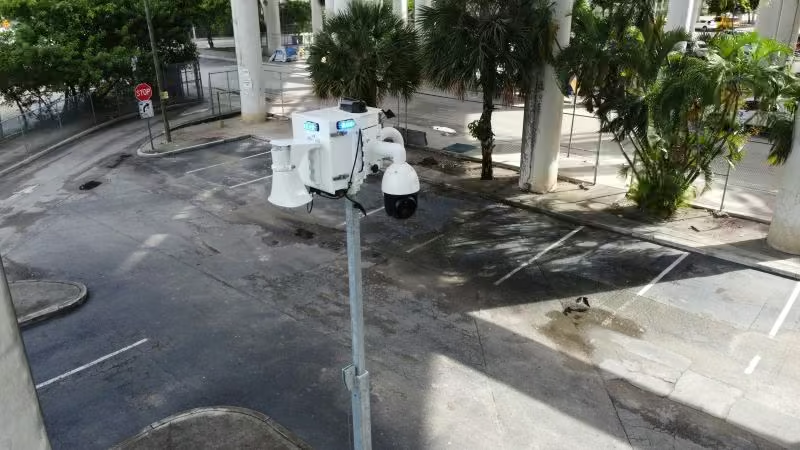
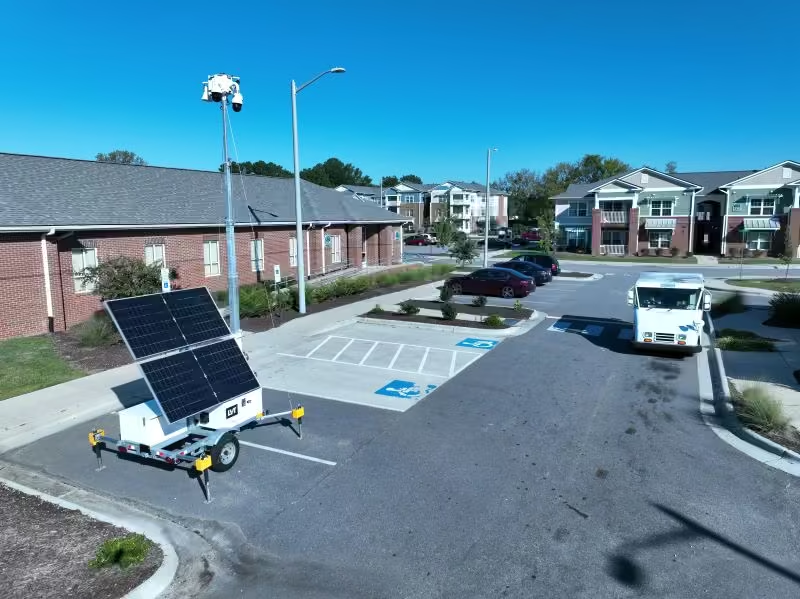
Flexible security solutions can help support collaboration. LVT’s solutions provide mobile, highly visible security coverage in areas where additional visibility or temporary security support may be needed.
More importantly, these systems help create a shared operational picture between businesses, security teams, and law enforcement agencies. LVT supports faster communication, better situational awareness, and more proactive responses when incidents occur.
The strongest public-private partnerships are rarely built overnight. They are built through consistent collaboration, shared goals, and a willingness to approach community safety as a collective effort rather than an individual responsibility.
To learn how LVT’s mobile security solutions can support stronger collaboration between businesses, law enforcement agencies, and communities, request a demo.