“I Won’t Go There”: Where Americans No Longer Feel Safe Without Security
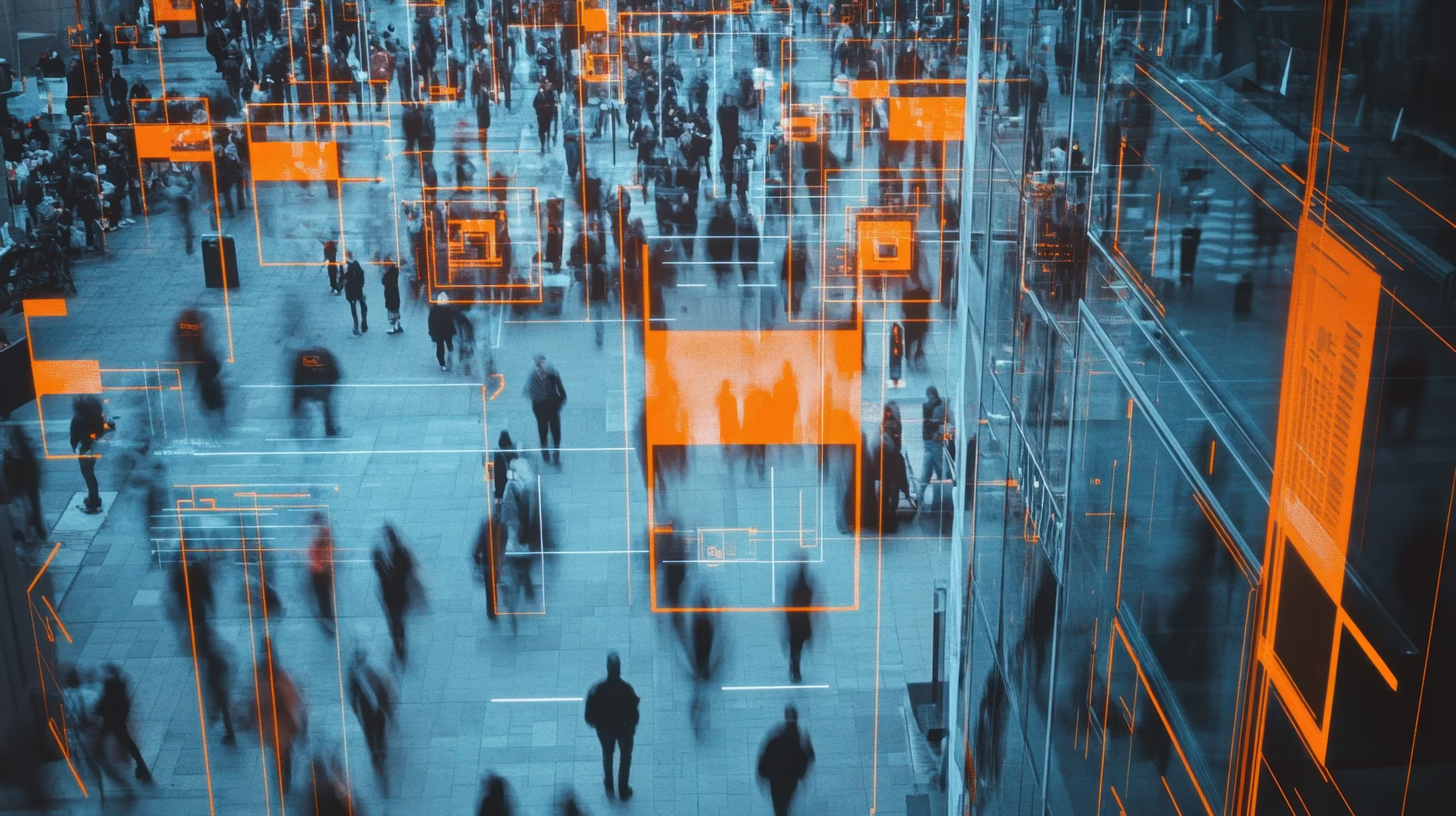
Americans want stronger security in public spaces like festivals, schools, parks, and stadiums, reflecting concern around safety in crowded environments. At the same time, most Americans appear comfortable with AI-powered security cameras that help detect suspicious behavior, locate missing children, and improve emergency response. The findings suggest public expectations around safety infrastructure are changing, with people prioritizing smarter, more proactive security systems that help spaces feel both protected and welcoming.
Nobody books tickets to a festival hoping to think about security the whole time. People want funnel cake, live music, overpriced beer, and maybe a slightly sweaty, sunburned family photo they’ll post on Facebook later. They want to walk through outdoor markets, attend concerts, visit parks, and take their kids to community events without having to constantly look over their shoulder or scan for danger. As a result, Americans are vocal about where they believe more protection is needed.
Can you guess the top location Americans say needs increased security?
Open-air public events like festivals, street fairs, and outdoor markets, with 44% of Americans citing this type of space as needing increase security at any time of day, according to a recent LVT/Harris Poll survey. The next most cited areas? School or university campuses (43% say need increased security), and cultural events, concerts, and sporting events at stadiums or arenas (38% say need more protection).
And who can blame them? Last year alone, our nation saw over 400 mass shootings (4+ people shot) along with high profile violence like the fatal shooting of Charlie Kirk at an outdoor speaking event at Utah Valley University. This year we’ve already had the attempted shooting at the annual White House Correspondents' Association dinner, and a recently thwarted mass shooting at the New Orleans Jazz & Heritage Festival.
The sad reality is the spaces Americans are most worried about aren’t hidden alleyways or abandoned buildings. They’re the places tied to everyday life, recreation, and community gathering. The places people are supposed to enjoy.
Public Spaces Feel Different Than They Used To
There’s been a noticeable shift in how Americans experience crowded public environments. Large events used to feel carefree. Now many people enter public spaces with low-level situational awareness running constantly in the background. While it sounds like paranoia, it’s really adaptation.
Years of high-profile incidents, viral videos, retail crime coverage, public violence, and emergency response failures have changed public expectations around safety. Even people who don’t actively think about security still notice when a location feels disorganized or poorly monitored—especially in open-air environments.
Festivals, fairs, outdoor markets, and public celebrations naturally create unique security challenges because they’re crowded, busy, highly accessible, and spread across large areas.
Unlike a controlled indoor environment, outdoor public events often have multiple entrances, inconsistent visibility, limited barriers, and large volumes of foot traffic. That complexity makes situational awareness incredibly important. And increasingly, Americans support technology that helps improve it.
Americans Are Comfortable With Public Security Cameras
One of the most interesting findings in the survey involved public parks. When asked what type of security cameras would make them feel most comfortable in public parks to help prevent crime, 40% of Americans selected cameras that record video and use AI to identify individuals against a police database. Only 7% said they wanted no cameras at all in public parks.
For years, conversations around public surveillance have often assumed widespread public resistance to cameras in shared spaces. But this survey paints a much more nuanced picture. Most Americans appear comfortable with some level of public security monitoring, especially when it’s connected to crime prevention and public safety.
That doesn’t mean people want invasive surveillance everywhere. But it does suggest many Americans view cameras as a normal part of modern public infrastructure, similar to lighting, emergency call stations, or security personnel.
This is especially true for places where families gather. Parks, trails, sports complexes, playgrounds, and public event spaces all create environments where fast response times matter. In addition to the potential for violent crime, people in these settings also may worry about:
- Missing children
- Harassment
- Theft
- Vandalism
- Medical emergencies
- Suspicious behavior
- Incidents happening without witnesses
And technology can help address those concerns faster than traditional monitoring alone.
The Practical Side of Security
One statistic from the survey in particular stands out. According to the data, 59% of Americans support using AI-powered security cameras in public spaces to assist in finding missing children or lost pets. Most discussions about surveillance technology immediately jump to law enforcement, but this shows people think about safety much more practically.
Parents may think: What if my child wanders off?
Pet owners may think: What if my dog slips out during a community event?
Event organizers may think: How quickly could we locate someone in a large crowd?
In large, crowded public spaces, time matters. The faster security teams can identify unusual behavior, locate vulnerable individuals, or respond to emergencies, the better the outcomes usually are. That’s one reason AI-powered security systems are gaining traction with stadiums, public parks, retail centers, school campuses, and public transportation.
Americans expect public spaces to have visible safety infrastructure. Not necessarily aggressive or military-style security or even constant confrontation, but something that gives reassurance that someone is actively monitoring. People can breathe a sigh of relief knowing suspicious behavior won’t go unnoticed and that emergencies can be addressed quickly.
Safety perception directly impacts attendance, foot traffic, reputation, and revenue. AI-powered security systems improve visibility (even across large areas), detect unusual activity patterns, support emergency response teams, and provide real-time awareness without requiring overwhelming physical security presence everywhere.
The Future of Public Safety Will Be Smarter, Not More Blatant
For businesses, municipalities, event organizers, and venue operators, security has become closely tied to public confidence. If people don’t feel comfortable somewhere, they stop going. People want to enjoy public life without feeling nervous and tense.
The challenge is finding ways to improve security without making environments feel hostile or over-policed. Accordingly, Americans increasingly support technology-driven approaches that prioritize prevention, visibility, and rapid response.
For years, security often focused on visible force (more guards, more barriers, etc.) But public spaces now require something more flexible. AI-assisted security tools can help identify unusual behavior patterns, improve situational awareness across large environments, and support security personnel without fundamentally changing the atmosphere of a public space.
Americans aren’t rejecting security technology in public spaces. In many cases, they’re actively asking for it, especially in the places where communities gather most. The places people care about protecting are also the places people care about enjoying.
Learn how you can keep your property more secure and more welcoming, contact LVT for a free demo today.
Survey Methodology:
This survey was conducted online within the United States by The Harris Poll on behalf of LVT from March 23–25, 2026, among 2,089 adults ages 18 and older, among whom 2,035 are citizens of the U.S. The sampling precision of Harris online polls is measured using a Bayesian credible interval. The sample data is accurate to within +/- 2.7 percentage points using a 95% confidence level.


%20(1).avif)
