The Infrastructure Gap: How Utilities are Managing 20th-Century Assets in a 21st-Century Economy
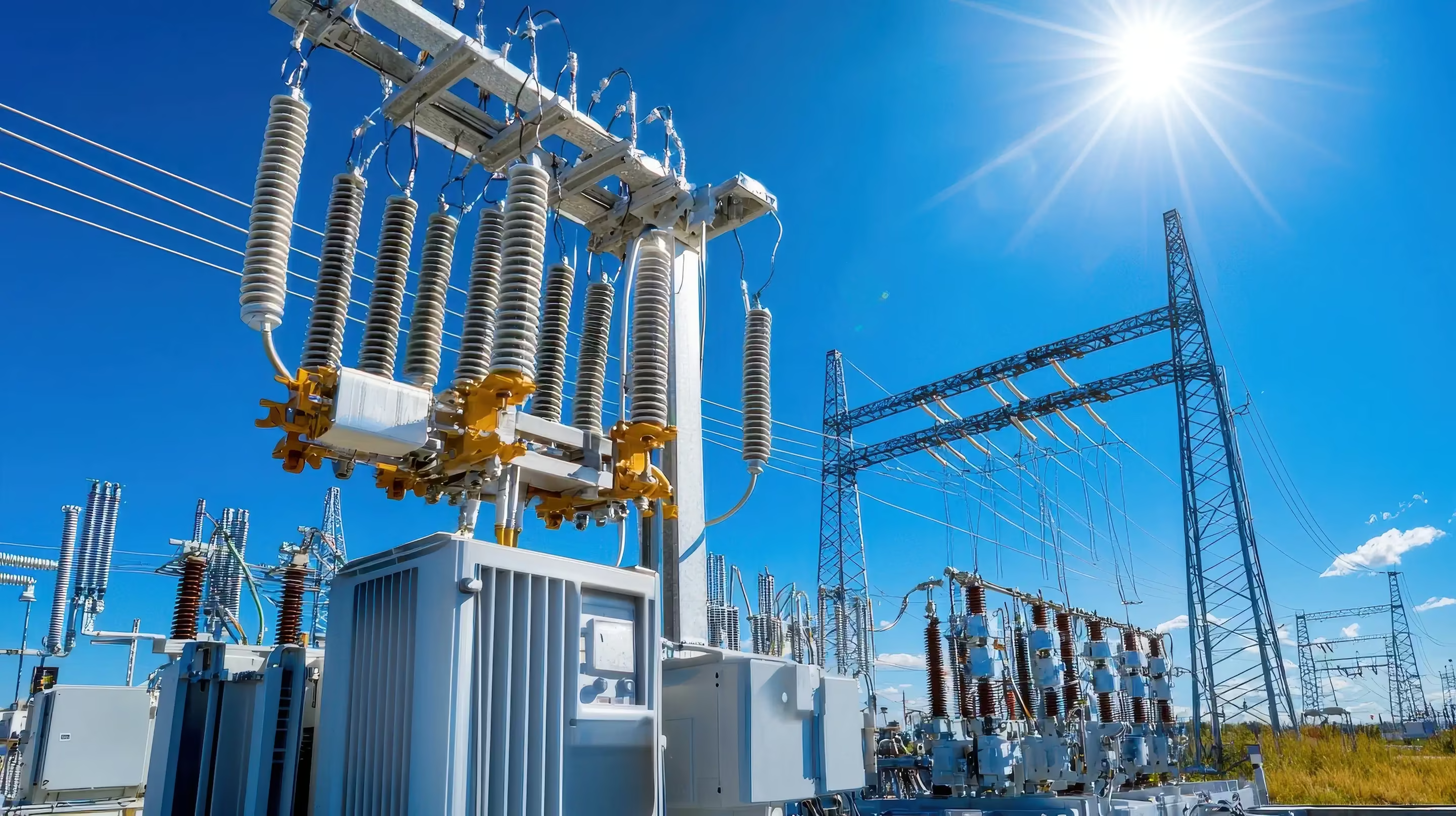
Driven by the explosive power demands of AI and manufacturing, the U.S. electrical utility sector in 2026 is undergoing a radical transformation characterized by rapid infrastructure expansion, the digitalization of aging grid assets, and a strategic shift toward data-driven efficiency.
2026 is the year that the American electrical utility sector is undergoing its most radical transformation since the post-war construction boom of the 1950s. What was once a steady and predictable industry, has now been jolted by a perfect storm of demand from AI data centers, a resurgent domestic manufacturing base, and the rapid electrification of transportation. This increasing demand is expected to put increasing strain on today’s grid, most of which is more than 25 years old—a problem that is expected to persist in the short-term.
Public comments from the nation’s top utility CEOs reveal a consistent set of strategic imperatives designed to prevent the grid from buckling under this newfound weight.
The Race to Power: Managing the AI Surge
In early 2026, the primary objective for utilities is speed. Traditionally, utilities planned in five to 10 year increments. However, AI developers are now demanding gigawatt-scale interconnections in as little as 12 to 24 months. Here are some examples:
- Xcel Energy CEO Bob Frenzel recently characterized expanding the grid to support the AI race as a "national imperative," noting that AI is an economic engine on the scale of electricity’s original invention.
- NextEra Energy targeted a staggering 15 GW of new generation specifically to power data center hubs, while Vistra Corp pivoted toward securing long-term power purchase agreements (PPAs) with tech giants like Meta, leveraging nuclear assets to provide the "firm," 24/7 power that AI requires.
- While optimistic, Exelon CEO Calvin Butler warned of "hiccups" in the transition. The sheer volume of projects is creating a bottleneck in the interconnection queue, leading to a shift toward "performance-based interconnection," where projects that offer grid flexibility move to the front of the line.
The Legacy Burden: Inefficiencies and Asset Risks
The 2026 grid is a patchwork of the old and the new. According to the Department of Energy, 70% of U.S. transmission lines are over 25 years old, and many are nearing the 50-year mark. This legacy technology creates significant strategic risks and costs businesses a lot of money.
The Challenge of Decommissioned Assets
As utilities retire older coal and gas plants to meet sustainability goals, they face a reliability gap. These decommissioned assets provide physical stability to the grid that intermittent renewables like wind and solar struggle to replicate.
- Stranded Asset Risk: CEOs are increasingly concerned about the financial and operational risks of stranded assets—infrastructure that is retired before its debt is paid off, potentially driving up consumer rates.
- Supply Chain Backlogs: Modernizing these legacy sites is hampered by a parts crisis. Lead times for high-voltage transformers and switchgear can now reach two years, forcing utilities to keep aging, which causes inefficient equipment to be in service longer than planned.
Data as the New Infrastructure
To bridge the gap between legacy hardware and modern demand, utilities are prioritizing digitalization and data analytics. The objective is no longer just to build more wires, but to make the existing wires smarter and more efficient.
Benefits of Enhanced Data Coverage:
- Predictive Maintenance: Using LiDAR and digital twins, utilities are moving away from reactive fixes. Instead of waiting for a 40-year-old substation to fail, AI-driven models predict failures before they happen, slashing outage costs by up to 40%.
- Dynamic Line Ratings: By placing sensors on transmission lines to provide real-time data on weather and temperature, utilities can safely push more electricity through existing lines, potentially increasing capacity by 10–30% without building a single new tower.
Telemetry and Flexibility: Utilities are increasingly treating data centers not just as customers, but as grid partners. With real-time telemetry, a data center can flex its load, turning down non-essential AI training during peak hours to help stabilize the grid.
The Path Forward: Integration and Execution
As the industry moves forward, the focus needs to shift from planning to execution. The strategic objectives are clear: aggressively integrate AI to manage the grid, lower risk from the retirement of legacy assets through modular technologies, and collaborate with regulators to ensure that the massive costs of this "Race to Power" don't fall unfairly on residential consumers.
The grid of 2026 is no longer just a utility; it is a high-tech, data-driven ecosystem that continues to power our economy and maintain the American AI advantage, which depends entirely on the stability of the electrical grid.
%20(1).avif)
%20(1).avif)
%20(1).avif)
