Closing the Infrastructure Gap: The Rise of Rapid Deployment and AI-Driven Autonomy
As the utility sector pivots from long-term planning to immediate execution, this shift toward rapid-response, AI-driven infrastructure is closing the execution gap by replacing slow, legacy systems with mobile, autonomous solutions.
As the industry pivots from long-term planning to immediate execution, a second shift is happening at the same time: the move toward rapid-response infrastructure. Utilities today are no longer willing to wait years for the infrastructure traditionally required to secure and monitor their expanding footprints. Instead, they are adopting infrastructure-as-a-service models that prioritize speed, agility, and AI-driven autonomy.
1. The Speed to Site Revolution: Rapid Deployment
The 24-month timeline for data center interconnections opened up new questions on how to protect and monitor these new high-value assets during the frantic construction and early-operational phases. Normally, security and monitoring systems were the last things installed, often hampered by the same grid-connection delays they were meant to oversee.
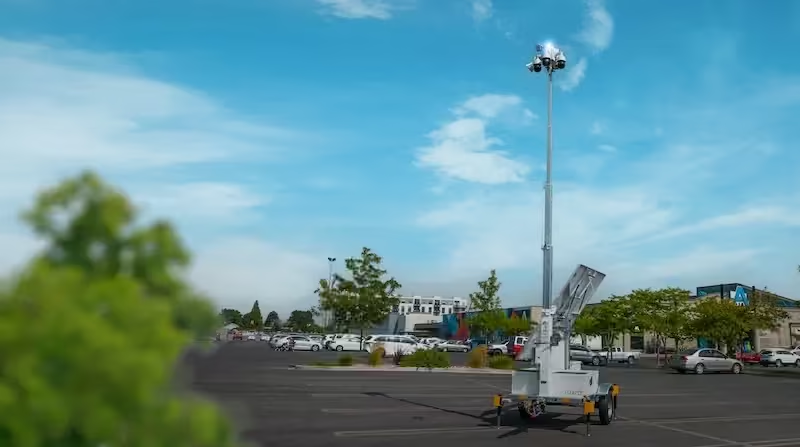
- Bypassing the Hurdles: Companies like LiveView Technologies (LVT) introduced a paradigm shift by offering units that are completely independent of the grid. By utilizing solar arrays and smart-generator backups, these units provide 24/7/365 coverage without needing a single drop of utility power.
- Coverage in Minutes: Utilities are now deploying mobile, cloud-based surveillance units that can be operational in minutes. This allows for immediate eyes on the ground at substations, laydown yards, etc., protecting millions of dollars in equipment including long-lead time equipment, like high-voltage transformers.
2. Proactive Coverage: AI as a Force Multiplier
The modern utility executive knows that passive monitoring is a relic of the past. In an era of increasing physical and cyber threats to the grid, the industry is shifting toward inclusion of agentic AI systems to cameras. These systems don’t just record events but interpret and act on them in real time. Sensors, like video surveillance systems, are quickly becoming operational assets as AI allows for both security and operational model processing on the edge.
- Intelligent Deterrence: Using AI-driven behavioral analytics, these systems can distinguish between a stray animal and a human intruder. When a threat is detected, the unit doesn't just send a notification; it initiates a talk down protocol, triggers high-intensity strobes, and alerts local law enforcement simultaneously. This proactive approach has led to a 40–70% reduction in incidents at remote utility sites.
As AI models, edge-processing, and sensor technology continue to improve, infrastructure-as-a-service models will continue to unlock operations efficiencies for electrical utilities. The race will be won by those that get coverage at critical assets quickly and efficiently.
3. The New Business Model: Flexibility Over Fixed Assets
The final pillar of the 2026 utility strategy is the transition from a model of ownership to a result driven investment model. The model provides fixed costs, measurable outcome, and rapid return on investment when comparing the total cost of ownership (TCO) against legacy coverage.
Conclusion: A Grid That Learns and Adapts
In 2026, the electrical utility sector is proving that it can move at the speed of the tech giants it serves. By integrating rapidly deployable, AI-powered solutions, utilities are closing the visibility gap that once plagued remote assets. The goal is no longer just a stable grid, but a resilient ecosystem where data moves faster than infrastructure, and protection is as mobile as the demand it supports.
As we look toward the end of the decade, the winners in this will be those who realized that in a high-voltage world, the most valuable asset isn't just the wire, it's the real-time intelligence that keeps the lights on.
%20(1).avif)