Guard Shacks and the Limits of Human Vigilance
.avif)
Guard shacks create the appearance of security, but long shifts, distraction, and limited visibility can leave properties exposed to real risks.
One afternoon last week, I drove my commute home from work. It's the route I always take—same turns, same stoplights, same stretch of road. Halfway there, a deer ran across the road, and I jolted to reality, realizing that I couldn’t remember the last five minutes of the drive.
My hands were on the wheel. I had stopped at the lights. I had followed the traffic rules. But my brain had quietly drifted somewhere else. I was thinking about work, my daughter, and what I needed to cook for dinner.
Psychologists call this “highway hypnosis.” When a task becomes repetitive enough, the brain starts to run it on autopilot. Most of the time, nothing goes wrong. But the moment something unexpected happens, the brain has to snap back into focus.
The same dynamic often plays out in security environments.
At the entrance of many commercial properties, a small structure sits beside a gate. Inside, a guard watches cars enter and exit for hours at a time. For long stretches, nothing happens. The work becomes repetitive: check credentials, log entries, raise the gate, repeat. Over time, the human brain does what it naturally does with repetitive tasks. It drifts.
The Economics of Staffing a Guard Shack
Before examining performance, it’s worth looking at the economics. Staffing a guard shack 24/7 requires multiple employees rotating through shifts. A single position typically requires at least four to five guards to maintain full coverage across nights, weekends, sick days, and vacations.
Once wages, overtime, benefits, and contract fees are factored in, the annual cost can climb quickly.
This financial reality forces many organizations into difficult tradeoffs. Some businesses might reduce overnight coverage. Others consolidate monitoring responsibilities into fewer guards.
But adjusting security staff to fit your budget doesn’t mean risk is decreasing. In fact, those budget limitations can increase pressure on the remaining personnel. They are required to cover larger areas and longer shifts.
When security effectiveness relies on continuous human vigilance, cost and performance become tightly linked.
Effectiveness: The Human Reality Inside the Shack
Cost is only half the equation. The more important question is whether a guard shack model can deliver the level of protection a site needs.
Properties often have dynamic needs, while a guard inside a shack is fixed to one location. Their visibility is limited to what can be seen through a set of windows or camera monitors. They are restricted to a single physical point—typically an entrance or gate. They cannot reposition as site risks shift.
If an incident happens outside their immediate line of sight, response depends on someone noticing it after the fact. This means this security model is largely reactive rather than proactive. A stationary solution struggles to address mobile threats.
Long Hours + Monotony = Distraction
Guard shack assignments often involve long shifts, especially overnight. For extended stretches, nothing happens. The job also becomes repetitive: check credentials, log entries, raise the gate, repeat.
In low-activity environments, fatigue and complacency naturally set in. It’s not a matter of discipline—it’s human behavior. When stimulation is minimal and hours are long, attention drifts.
One business shared that their contracted guards were playing video games during overnight shifts inside the shack. Not because they intended to ignore their responsibilities, but because hours can pass without anything happening. The environment encourages distraction.
Which means that when something does happen, guards aren’t watching.
Inconsistent Performance
We know that human performance can fluctuate. Even with the most committed and alert security guards, people have off days. They get tired. They get distracted. They call in sick. They resign. In physical security environments, turnover rates are often high, leading to frequent staffing changes.
In many guard shack setups, one person is responsible for monitoring multiple sources of information at once. Vehicles approaching the gate. Visitors asking questions. Radios or phones receiving calls. Logs that need to be updated. Camera feeds running across several monitors. Sometimes dozens of vantage points across the property are technically “visible,” but realistically impossible to watch all at once.
The volume of information becomes difficult to process consistently and continuously.
Security research has long shown that humans struggle with high levels of focus during long periods of low activity. When nothing happens for extended stretches of time, attention naturally fades. The brain shifts into a lower state of alertness. This also means that when an incident does occur, guards need to make quick decisions—their brains are in a low focus mode. Their brain must essentially restart to make clear decisions.
Outside of focus, with large properties and shift factors, even highly trained guards can miss subtle warning signs.
While a guard shack provides the appearance of continuous protection, the reality inside the structure can vary dramatically from shift to shift—and even hour to hour.
And when security effectiveness depends heavily on sustained human vigilance across long hours and large amounts of visual data, variability becomes a risk factor in itself.
Rethinking the Model: A More Flexible Approach to Site Security
Today’s security environments require a model that is designed to operate in real time, across the full property, 24/7.
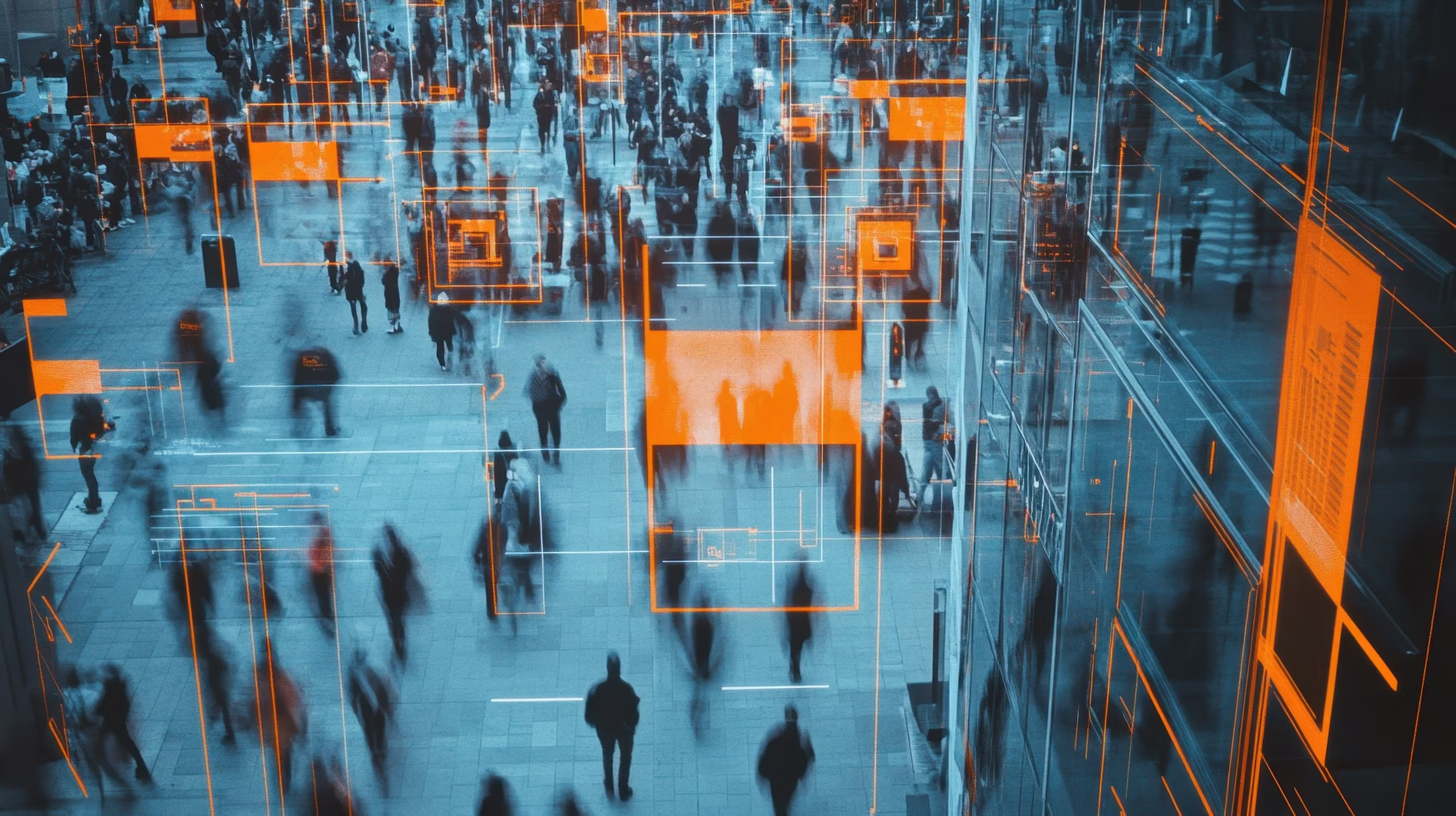
Mobile security solutions, like LiveView Technologies (LVT), shift the burden from constant human vigilance to intelligent detection. Instead of asking one guard to watch multiple camera feeds for hours at a time, LVT’s AI-driven analytics continuously scan for anomalies at your property.
With LVT on your side, guards are no longer responsible for staring at screens waiting for something to happen. They are alerted when something does happen. Attention becomes targeted instead of passive.
This creates a more responsive system. When a threat is detected, teams can intervene immediately using audio, established escalation protocols, and coordination with law enforcement when necessary.
It also creates consistency. AI doesn’t get tired. It doesn’t look at its phone. It doesn’t lose focus at 3:00 a.m. The system watches continuously every hour of every day.
And because LVT’s mobile units can be positioned throughout a property, coverage extends beyond a single entry gate. This means less blindspots and more visibility. As site layouts change, the security footprint can change with them.
Moving Beyond Static Security
It is for the mind to drift during repetitive tasks. Whether it’s driving a familiar route or folding laundry late at night, our brains naturally shift into autopilot when nothing new happens for long stretches of time. It’s simply how human attention works.
But inside a guard shack, that same human tendency can quietly create risk. Even the most committed guards are still human. Fatigue sets in and small warning signs can go unnoticed. The result is a security plan that looks consistent from the outside, but might be losing focus inside.
LVT is committed to supporting your security plan and helping you create the most effective system possible. By combining intelligent detection, 24/7 monitoring, and real-time alerts, organizations can move beyond static observation toward proactive protection. Instead of relying on one person to watch everything at once, technology can continuously scan for unusual activity and alert trained professionals when something requires attention.
If you’re evaluating whether traditional guard shack models still meet the needs of your property, exploring newer approaches to intelligent site security can be a valuable next step. Learn more here.
%20(1).avif)