Detroit Weighs In: ACCESS Taskforce 2.0
%20(4).avif)
A survey of 198 Detroit stakeholders found broad support for continuing the ACCESS Taskforce. Respondents said LVT Units deter crime, improve evidence sharing, and strengthen retailer-police collaboration. The findings also highlight privacy concerns and the need for trust and transparency.
When the ACCESS Taskforce concluded in Detroit, LiveView Technologies (LVT) wanted to look beyond internal success metrics. We needed to hear directly from the people interacting with the units every day—the shoppers, retail employees, business leaders, and responding law enforcement officers. To get a true measure of the program's impact, we surveyed 198 of these local stakeholders.
The feedback confirmed that mobile security units and structured retailer-police collaboration deliver real, practical value—leading to overwhelming community support for continuing the program.
The Number That Matters Most
Strip away every other finding in the report, and one number still stands—75.4% of Detroit community members said they want retailers to keep using LVT Units in their city. That support climbs among the people closest to the technology—88.2% of retail employees and 83.3% of retail leaders agreed.
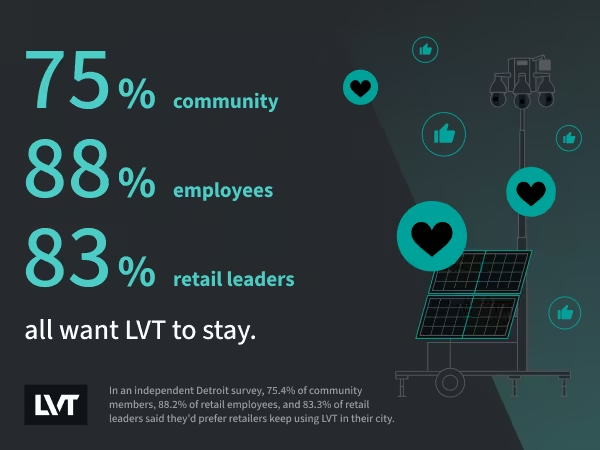
Opposition, by comparison, topped out at 9% among community members. Nearly 70% said they had a positive opinion of the ACCESS Taskforce overall, and every single retail leader who answered rated it positively.
→ Learn more about the impact of LVT in Detroit here.
Why People Think It Works: Deterrence, Not Just Evidence
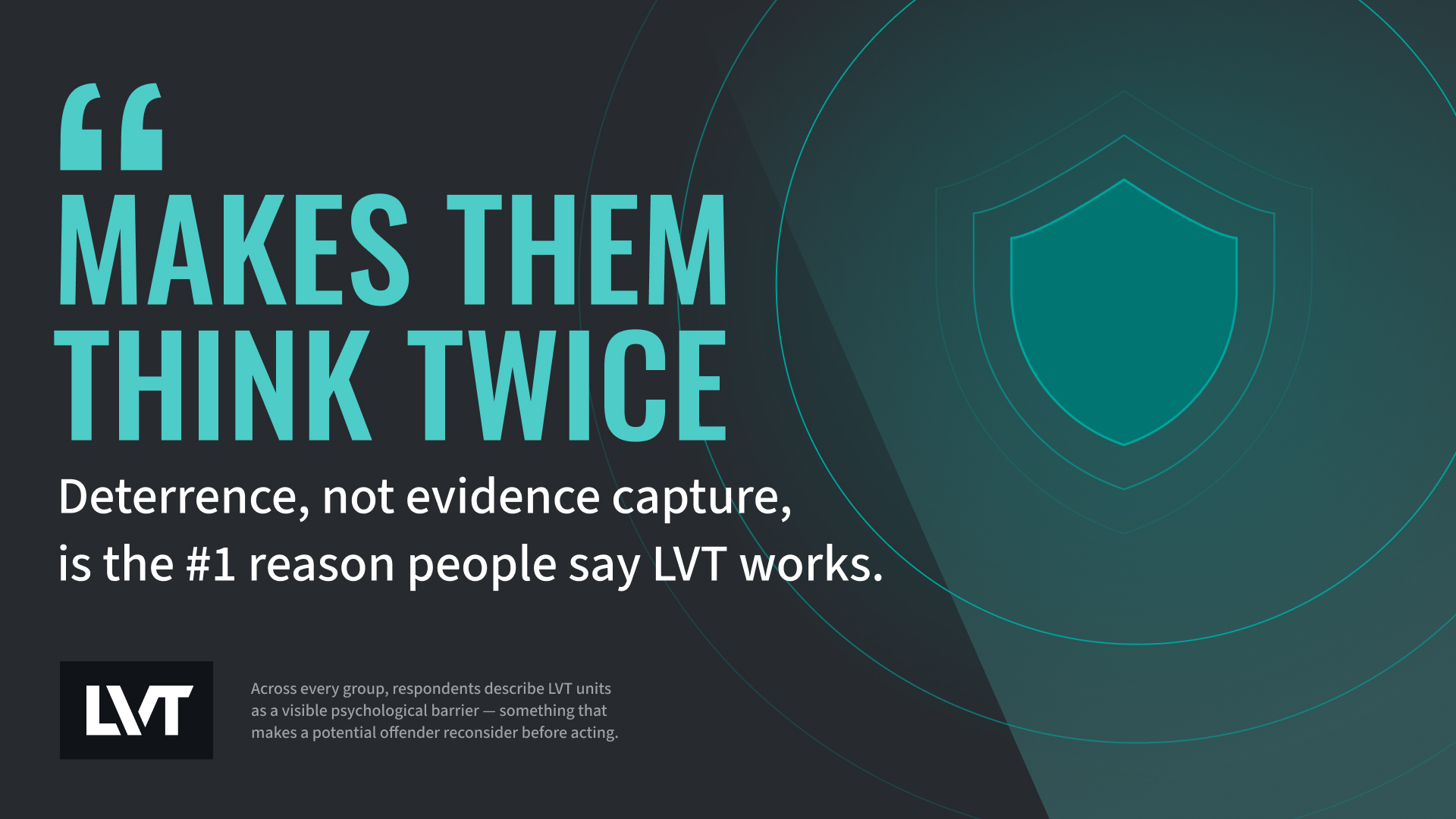
Ask people why they think LVT Units help, and the answer usually isn't about better footage for detectives. It's simpler than that. Respondents across every group described the units as a visible signal that stops trouble before it starts. One community member described how the units discourage "potential criminals from going through with their criminal actions."
That belief shows up in behavior, not just opinion. Given the choice, majorities in every respondent group said they'd rather park closer to an LVT Unit than farther away, day or night. Nighttime comfort scores were the strongest in the entire study—94.7% of retail leaders said they'd be comfortable with a loved one working a night shift at an LVT-equipped store.
People are reacting to a visible presence, and they consistently describe it as a psychological barrier between a would-be offender and the decision to act.
What Retailers and Police See on the Investigation Side
Deterrence gets the headlines, but the operational stakeholders—the people actually working cases—see real value on the evidence side too. Between 88.9% and 94.4% of retail leaders agreed that LVT Units speed up evidence transfer to law enforcement, improve evidence quality, and lead to better investigation outcomes.
Respondents kept coming back to one framing—LVT as "eyes without officers." Not a replacement for policing, but an extension of it. One retail leader credited the units with giving officers faster access to visual evidence, saying it "helped them respond faster and build stronger cases."
Professional stakeholders, 76.5% of employees and 77.8% of leaders, reported that collaboration between retailers and law enforcement improved since the ACCESS Taskforce began. Most of that group tied the improvement directly to less crime and disorder in the area.
Addressing Privacy Concerns
Almost 20% of community members expressed some concern that LVT Units invade privacy, and retail employees were the most split group of all, with 52.9% leaning toward "probably yes" that the units infringe on privacy.
The most substantive version of this concern linked surveillance to worries about over-policing and disproportionate impact on certain communities. Trust and transparency aren't optional extras in a public safety program—they're the thing that makes the deterrence and collaboration benefits possible in the first place. That's a big part of why LVT built a dedicated privacy commitment around how LVT collects, uses, and protects data.
What This Means Going Forward
These findings reflect what the people who live and work around the program perceived, not an independent audit of crime statistics. The data is consistent across every group surveyed—a real, multi-month deployment in a real city produced broad support, a deterrence effect people can describe, and a collaboration model retailers and law enforcement want to keep building on. Detroit is also the third city to run this model, following successful deployments in Opelika, AL, and Paducah, KY.
Want to see what an ACCESS Taskforce-style deployment could look like for your community or retail footprint? Talk to an LVT specialist about a demo.


%20(1).avif)
