Autonomous Systems and Agentic AI: The Future of Independent Operation
%20(1)%20(1)%20(1).avif)
Autonomous systems and agentic AI are converging to transform physical security from reactive monitoring to proactive, independent operations. Together, they enable systems that can detect threats, reason about risk, and take action in real time—reducing alert fatigue, improving response speed, and scaling security across sites. LVT combines self-sufficient hardware with intelligent software to deliver security that operates, decides, and acts with minimal human oversight.
In science fiction movies there is a piece that shows up often in a futuristic world. It typically takes the shape of a sleek AI assistant, sometimes it’s a quiet voice in the walls that omnisciently warns the characters of imminent danger before it happens. A door locks before the attacker gets through. The heroes are alerted to which corridors have been infiltrated. The system doesn’t panic. It doesn’t ask for permission. It just…handles it.
It is comforting to see a JARVIS-style assistant step in before a situation goes sideways. While it is still somewhat of a dream of the future, the idea behind it isn’t science fiction at all.
Across the industry, two powerful technologies are evolving in tandem. On one side are autonomous systems—these are self-managing systems that can deploy, monitor, and maintain themselves in the field. On the other is a new generation of intelligent software called agentic AI. These systems are able to detect events and then reason about them, decide what matters, and take action toward a goal.
Individually, each is a meaningful step forward. Together, they point to something bigger: security operations that don’t just assist humans but operate with a new level of independence.
This isn’t about replacing people or chasing science fiction. It’s about closing the gap between what’s happening on site and what happens next. When systems can see, think, and act in real time, security shifts from something that documents incidents to something that helps prevent them.
At LiveView Technologies (LVT), we’ve always believed security should be proactive, not passive. The convergence of autonomous systems and agentic AI is the next step in that evolution. It’s how physical security moves from a collection of tools to a truly independent, intelligent operation.
What Are Autonomous Systems in Physical Security?
In physical security, autonomous systems are ones that can operate on their own. They can deploy, monitor, and stay online without constant human oversight.
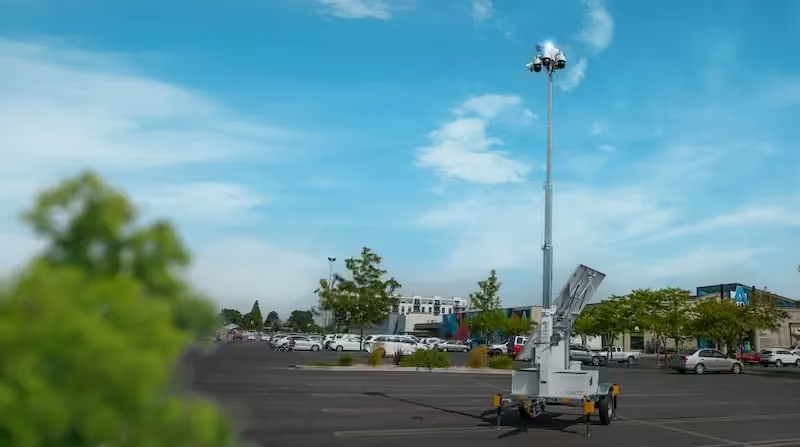
Think mobile security units that manage their own power and connectivity, run health checks, and report issues automatically. Instead of depending on manual setup and daily maintenance, these systems are designed to keep themselves running in the field.
The result is simpler operations, faster response when something goes wrong, and more consistent coverage across sites. This is the model behind LVT’s mobile security units: systems that work independently, so that teams can put their attention where it matters most.
What Is Agentic AI—and Why Is It Different from Traditional Analytics?
Most security AI today is built to detect and flag events. It’s good at spotting motion, identifying objects, and sending alerts— but it still depends on humans to decide what happens next.
Agentic AI goes a step further. “Agentic” simply means the system is goal-oriented: it can observe what’s happening, use complex reasoning to decide what matters, and take action. In a security context, that might mean prioritizing real threats over noise, choosing when to escalate an incident (and when not to), or coordinating responses across multiple systems.
The shift is subtle but important. Agentic AI is all about making better decisions, faster.
The Convergence: When Hardware and Intelligence Operate as One System
On their own, autonomous hardware and agentic AI are powerful. Together, they change what security systems are capable of. They become intelligent agents that can operate end-to-end without constant human direction. Intelligent software is embedded into self-sufficient infrastructure that continues to watch even when security teams need a break.
In practice, this looks like a system that doesn’t just record what happens for you to review after the fact— it runs through a full decision cycle on its own. Because agentic AI knows the specific patterns of your property, it can tell the difference between a typical delivery and an out-of-the-ordinary trespasser. When it detects a potential threat, it assesses how serious it is, then chooses the appropriate response and takes action. That might mean sending alerts, triggering deterrents, escalating to human teams, or coordinating with other on-site systems. And over time, it learns from outcomes, improving how it responds the next time a similar situation appears.
This is what true independence looks like in security operations. Instead of waiting for humans to connect the dots between cameras, alerts, and responses, the system does that work itself. The shift isn’t subtle: security moves from passive tools that support people to active systems that can operate, decide, and act in the real world.
What Fully Independent Security Operations Enable
When autonomous systems and agentic AI work together, they can meet complex tasks and change how security operations function day to day—from reactive and labor-intensive to proactive and scalable.
Faster, More Consistent Response
Independent systems don’t need to wait for a human to review every alert before acting. They can assess situations in real time and trigger the right response immediately. That shifts security from after-the-fact investigation to real-time intervention—and makes outcomes far more consistent across sites.
Smarter Use of Human Teams
When systems handle routine monitoring and first-level decisions, people can focus on what they do best: edge cases, strategy, and high-impact judgment calls. The result is less alert fatigue, fewer distractions, and more meaningful interventions when it actually matters.
Scalable Security Across Many Sites
This model is especially powerful for distributed, remote, or temporary locations. Independent operations make it possible to maintain consistent security standards across dozens or hundreds of sites.
Lower Risk, Lower Cost, Higher Uptime
With fewer blind spots and fewer missed incidents, risk goes down. With less manual overhead, costs become more predictable. And with systems that monitor and maintain themselves, uptime improves—so security stays reliable, even in challenging environments.
How LVT Fits Into This Future
LVT was built around the idea that security should be mobile, responsive, and able to operate in the real world without constant hands-on management.
Today, LVT’s systems are already autonomous by design. They are rapidly deployable, self-contained, and built to run in the field with minimal human intervention. They manage power, connectivity, and uptime so teams can focus on outcomes instead of upkeep. That autonomy is what makes it possible to secure remote, shifting, and hard-to-reach sites.
What’s accelerating now is the intelligence layer. With more capability at the edge, LVT systems can move beyond visibility into real-time understanding and action. They support faster intervention, smarter escalation, and better operational awareness across sites.
The future of security is already taking shape—and you don’t have to navigate it alone. Reach out to LVT for a consultation to talk through your sites, your challenges, and how independent security operations can work for you.
%20(1).avif)