Optimizing Security with Mounted Cameras
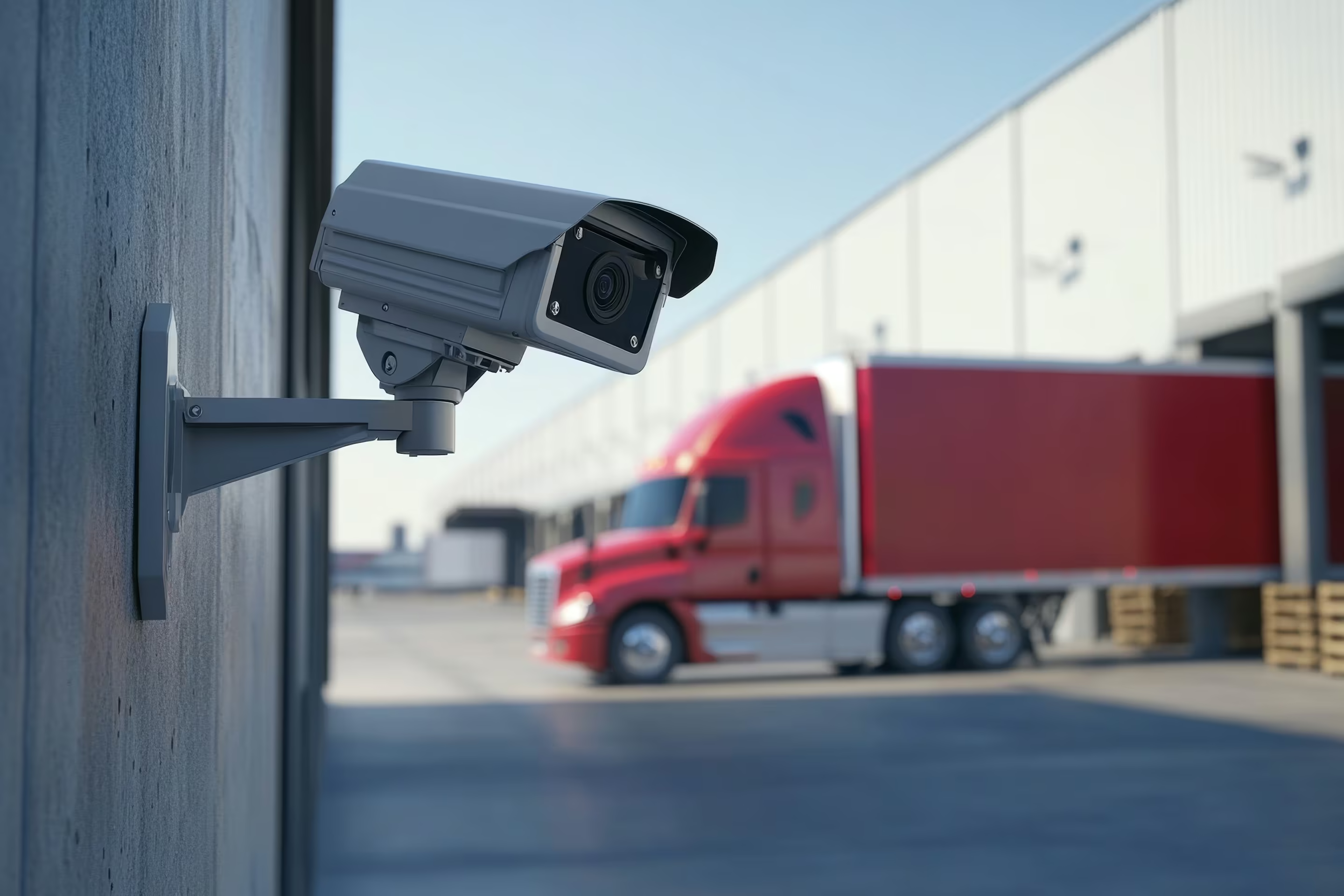
The right mounts will maximize the effectiveness of your building-mounted security cameras, so it’s essential to select the right ones for your site and position each camera with the right angle, height, and field of view to eliminate blind spots and ensure end-to-end coverage.
See All, Secure All: The Importance of Mounted Surveillance Cameras
The dreaded day has finally arrived, one you’ve been anticipating ever since your store opened its doors. There’s inventory missing and no witnesses to provide answers, so you consult the footage from your security cameras. To your dismay, you can’t see a thing! The cameras weren’t pointed at the proper points on the sales floor and weren’t mounted correctly.
Even the most crisp, clear, high-resolution footage won’t do you any good in an emergency if it’s taken from a bad angle. It’s essential to place your surveillance cameras strategically so you can catch every important detail. This is your guide to all the best practices you should follow when setting up your surveillance system, so you can enjoy optimal protection with zero blind spots.
Placement Matters
Some of the most important choices you can make when creating your security plan are the locations and angles at which you place your surveillance cameras. Your cameras’ placement decides their field of view, their effectiveness in helping you deter and investigate crime, and how quickly you can respond when incidents occur.
When surveillance cameras aren’t placed properly, it can lead to hazardous blind spots, ineffective security, and poor quality—or even unusable—footage. The right camera mounts, whether they’re mobile or attached to the wall, will allow you to monitor your site flexibly and effectively, and to get the information you need when you need it.
Scouting the Perfect Spot
Now you know just how crucial it is to put your security cameras in the right places. So, how do you get started?
To determine the correct spots for your cameras, you must first conduct an assessment of your property. Look at how your site is laid out, the way traffic flows through it, and which areas are poorly lit. Take note of any areas that are particularly vulnerable to suspicious activity, including points of entry, parking lots, and places where high-value goods are kept. Be sure that cameras are always positioned to monitor the following:
- Doors
- Windows
- Loading docks
- Gates
- Inventory yards
- Blind corners
- Cash registers
- Sensitive areas
Take into account the operational activities and environmental conditions that may affect your security, and ensure that factors such as extreme weather, seasonal changes in flora and fauna, and local events don’t interfere with your surveillance cameras’ effectiveness.
Getting the Right Angle
Setting up surveillance cameras is a game of precision, but it doesn’t have to be overwhelming. Here are some practical tips for getting the right height, angle, and field of view to maximize your security.
Height
Make sure that your cameras are set high enough to take in the whole scene and avoid being tampered with, but low enough to capture faces, license plates, and other key details. Interior wall cameras typically do best at about 8 to 12 feet off the ground, while exterior wall cameras tend to work best a little higher (around 12 to 14 feet up).
Angle
You’ll get the best results when you tilt your cameras downward; details will be clearer, and wide areas will be fully covered. You can also overlap multiple cameras, so there are no blind spots where one camera’s field of vision ends. Many modern cameras are enabled with PTZ (pan-tilt-zoom) features, which allow you to hone in on the area you need to see and enjoy more dynamic, effective security.
Field of View
There are different types of camera lenses you can choose from, and the type you select will depend on your security goal. Narrow lenses will zero in on a particular spot, while wide-angle lenses allow you to take in a large space, such as an inventory yard or parking lot. More complicated layouts may require several cameras to cover the whole space, and wide open spaces might be best covered by a pole-mounted camera.
Covering Every Inch: Eliminating Blind Spots
Blind spots are the dreaded scourge of business owners everywhere. A single security camera can only see so much, and any gaps between one camera’s field of vision and another’s create a haven for criminal activity and a major liability.
To eliminate blind spots, take test footage from your cameras at the vantage points you’ve chosen, and check to make sure that their fields of view meet. Try walking through your property and analyzing your cameras’ angles and positions as if you were looking to get away with something suspicious. Overlap your cameras’ coverage, utilize their PTZ capabilities, remove physical obstructions, and factor in changes in light conditions throughout the day.
Types of Camera Mounts
Your building-mounted security cameras can function in many capacities, depending on the needs of each section of your property. Different mounts change how the camera is positioned, what angles it can cover, and how much of the space it can see.
Wall Mount
A camera on a simple wall mount can offer surprisingly comprehensive coverage. From fixed dome wall mounts that keep your surveillance discreet to bullet camera wall mounts that provide visible deterrence to would-be criminals, these tried-and-true classics are perfect for securing permanent structures. You might use a wall-mounted camera to secure:
- Entry and exit points
- Alleys
- Loading docks
- Exterior walls and nearby paths
- Small or narrow spaces
Extended Wall Mount
An extended wall mount offers the same constant and stable protection as a wall mount, along with the ability to monitor a much larger area. These mounts allow you to connect multiple cameras as far as several hundred feet from the mount, so you can see around your large or complex site without deploying lots of extra units. They’re most effective when placed at least 60 cm from the wall, and are great for building facade cameras and exterior surveillance. Extended wall mounts are extra handy for securing:
- Building corners
- Extensive exterior walls
- Wide spaces with little room to place security units
Pole Mount
When you need good coverage but have limited structures or space, a pole mount can provide flexible, yet effective, deterrence and security. Whether attached to a mobile trailer or hoisting a roof-mounted security camera, pole mounts can fit in any space they’re needed and offer optimal coverage. Pole-mounted cameras are often used to secure:
- Parking lots
- Perimeter fences
- Construction sites
- Off-grid or remote properties
- Locations with seasonal needs
- Temporary sites
Capture It All with LVT
It’s important to place your building-mounted security cameras in strategic locations and at the right height and angle, so you can wipe out blind spots and enjoy complete, end-to-end security.
LiveView Technologies (LVT) leads the security industry with cutting-edge mounts and cameras that can adjust and adapt to your property’s every need. Our rapid deployment, reliable performance, AI-powered analytics, and independently powered, cloud-based systems are your security silver bullet, the answer to your most pressing surveillance needs.
Request a demo now, and start seeing your property more clearly with LVT.
%20(1)%20(5)%20(1).avif)