Command and Control: How to Manage Your Entire Camera Fleet with Ease
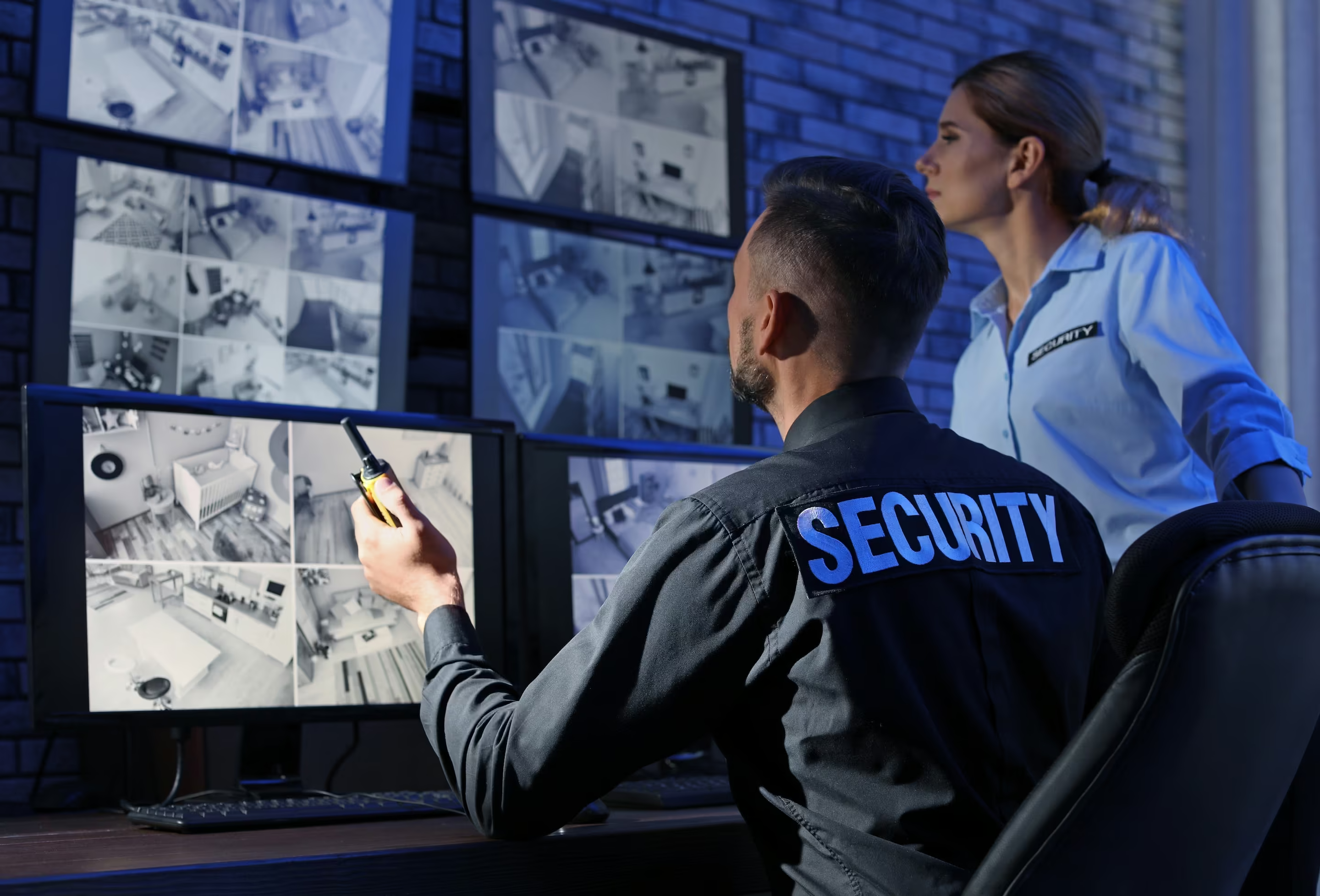
Security teams manage growing camera fleets across dispersed, dynamic sites, making visibility and response harder. A command-and-control approach centralizes oversight through a single platform, unifying cameras, data, and device health. This improves efficiency, consistency, and response speed, while simplifying video access and maintenance. Centralized camera management turns fragmented systems into a cohesive ecosystem, enabling faster decisions, proactive risk management, and more confident security operations at scale.
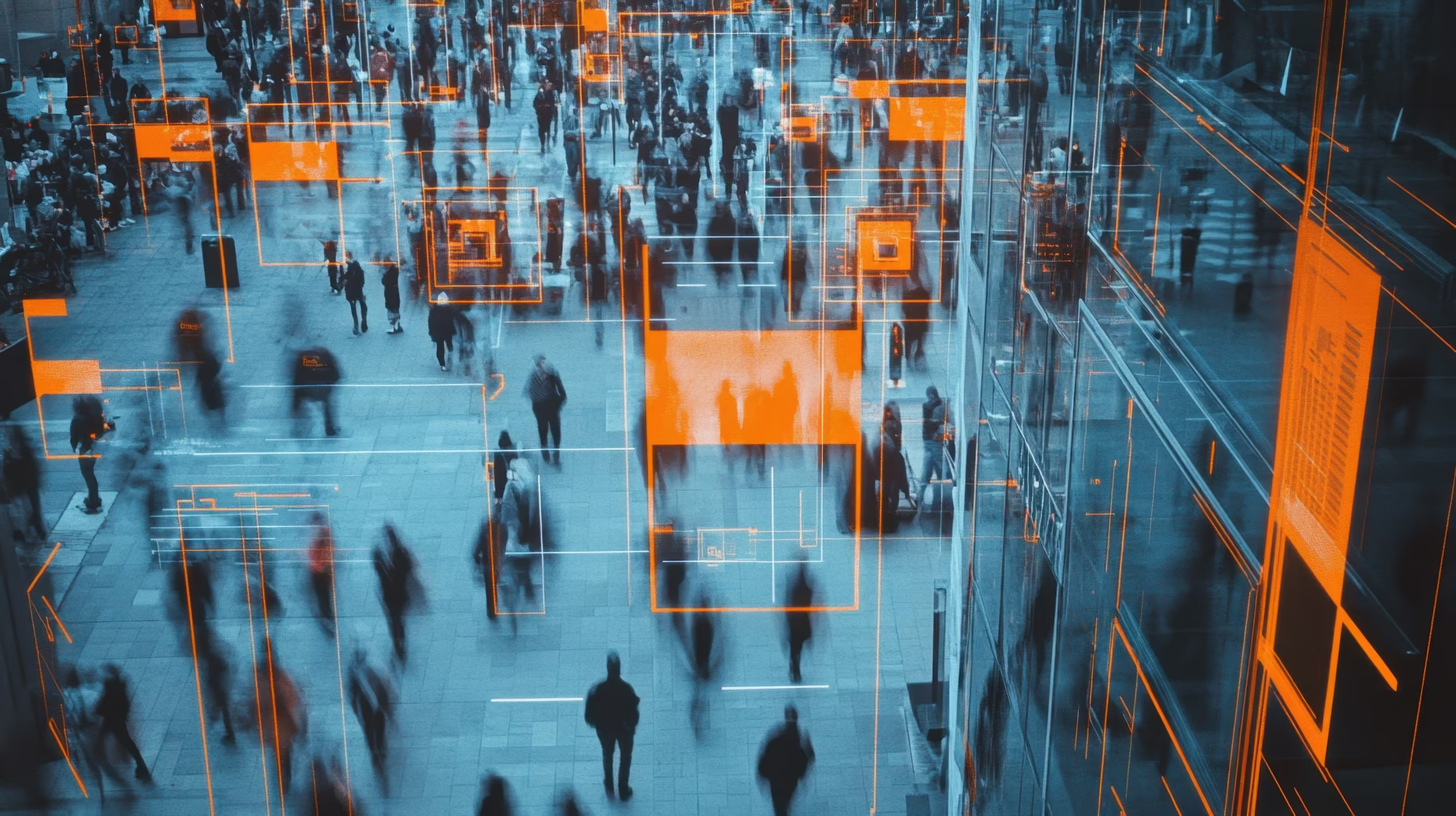
Security teams today are managing more cameras across more locations than ever before. These fleets are often in remote or rapidly changing environments. As these systems expand, maintaining visibility, consistency, and rapid response becomes increasingly complex, leaving teams stretched thin and systems fragmented.
Effective “command and control” solves this problem by centralizing oversight, simplifying decision-making, and giving teams a clear view of their entire camera ecosystem. In this post, we’ll explore what camera fleet management looks like and how the right platform can turn complexity into control—helping organizations operate smarter, faster, and more confidently.
What “Command and Control” Means in Physical Security
In physical security, command and control refers to a system’s ability to maintain oversight across assets and areas in a way that allows for informed action, coordinated response, and centralized information. Borrowed from military and emergency response models, it prioritizes real-time awareness, clear decision-making, and unified information. Today’s security cameras are no longer standalone tools; they operate as part of a connected ecosystem. To manage that complexity at scale, organizations need a centralized point of control that turns data into clarity and enables action when it matters most.
The Role of a Centralized Camera Management Platform
A centralized camera fleet management platform brings every device, site, and stream into a single interface. Historically, disconnected systems have slowed teams down by providing only isolated information. The patchwork of manual login and site-by-site troubleshooting only adds to the problem. When teams switch from managing cameras individually to a cohesive camera setup, security teams gain a unified view that enables better decision-making and overall stronger security.
Centralization immediately improves efficiency by reducing time spent switching between systems and tracking down issues. It also ensures greater consistency across sites, making it easier to apply standardized settings and policies regardless of location. When incidents or system issues arise, a centralized platform enables faster response by giving teams immediate visibility into what’s happening and where action is needed.
Imagine an alert triggers at a construction site after hours. Instead of scrambling between systems or calling a site supervisor to investigate, the security team opens a single fleet status dashboard and immediately sees the live feed from the affected camera, along with coverage from nearby units. Within moments, they can determine whether it’s a worker returning late, a delivery error, or a potential theft in progress, and respond accordingly. They can track movement across the dozens of cameras on their property to assess the threat instantly. That ability to assess and act quickly, from one centralized view, helps prevent losses, avoid unnecessary escalations, and keep projects on schedule.
At scale, capabilities like bulk device management become essential. Managing dozens—or hundreds—of cameras individually isn’t sustainable; centralized tools allow teams to make changes, monitor performance, and maintain control across the fleet without adding administrative overhead. By consolidating control into one system, organizations reduce human error, streamline daily operations, and free security teams to focus on proactive risk management rather than routine maintenance.
Data Access, Retention, and Retrieval Made Simple
When security teams need footage, they don’t have time to hunt for it. A centralized camera management platform streamlines access to recorded video and associated metadata by storing and organizing everything in one place. Instead of pulling files from individual devices or juggling different storage systems, teams can quickly locate, review, and export the exact footage they need.
Fast, reliable data retrieval is critical during incident investigations. When coordination with law enforcement or internal stakeholders is required, centralized access ensures accurate footage can be shared quickly and confidently, supporting clear communication and effective response.
Extending Visibility Beyond Security: Supporting Property Maintenance
A unified camera management platform doesn’t just strengthen security operations—it also becomes a powerful tool for property maintenance. With centralized access to live and recorded footage across all locations, facilities and operations teams can see the current condition of their properties without needing to be on site.
Cameras can help identify maintenance issues as they develop, such as damaged fencing, broken lighting, unauthorized dumping, or equipment left in unsafe areas. Instead of relying solely on scheduled inspections or reactive reports, teams can visually confirm issues in real time and dispatch maintenance crews with clear context.
Because all cameras are managed through a single platform, maintenance teams benefit from the same centralized access and consistency as security teams. Footage can be reviewed across multiple sites to spot recurring issues, track resolution progress, and verify that work has been completed. When unified camera ecosystems extend beyond security, organizations can maintain safer environments and keep properties operating smoothly—without adding complexity to day-to-day operations.
Keeping Your Security System in Top Condition
A unified camera platform helps ensure the security system itself stays reliable and effective. With device health monitoring, teams can spot cameras that are offline, losing connectivity, or experiencing performance issues before they become critical. Regular system checks and mass configuration updates allow security settings to stay consistent across all devices, reducing human error and preventing gaps in coverage. When teams proactively maintain camera ecosystems, organizations protect both their assets and their investment in security technology.
Real-World Command and Control: Caesars Palace
At Caesars Palace, one of the busiest and most complex properties on the Las Vegas Strip, centralized camera management is essential. Security leaders turned to LiveView Technologies (LVT) for a simple and effective unified camera ecosystem. The LVT Platform allowed them to view and manage all deployed cameras through a single, intuitive interface. Instead of navigating multiple systems or physically repositioning to assess different areas, teams can instantly access live video from across the property.
The platform’s map-based view allows security personnel to quickly orient themselves, see where cameras are located, and seamlessly switch between feeds as situations evolve. This real-time visibility helps teams maintain situational awareness during both routine operations and high-stakes incidents, enabling faster, more confident decision-making.
In an environment where seconds matter and crowds are constant, having command and control of the entire camera fleet from one platform significantly strengthens overall security operations. These LVT features have allowed the security team at Caesars Palace to apprehend violent criminals before things could escalate, provide quality evidence to law enforcement, and even arrest a homicide suspect.
From Complexity to Confidence
Managing a large camera fleet doesn’t have to be complicated. With the right command and control framework in place, organizations can move away from fragmented systems toward a unified approach that brings clarity, consistency, and confidence to security operations.
Centralized command and control empowers teams to act faster and smarter. When cameras, data, and controls live within a single platform, teams gain the visibility and responsiveness they need to stay ahead of risk rather than react to it.
LVT was built to support this shift. By combining mobile security units with a centralized, intuitive management platform, LVT enables organizations to create a unified security ecosystem that scales with their needs. As camera deployments continue to grow, ease of management will be just as critical as camera performance. Organizations that prioritize simplicity, control, and visibility will be best positioned for the future of physical security. Contact LVT today to unify your camera fleet management into one seamless, controlled system.