Live Unit Surround: More Coverage, Less Footprint

Not every site has room for a mobile security unit. Live Unit Surround delivers the same deterrence and intelligence from units mounted on the building itself, so you get more coverage without giving up parking spaces. In this on-demand webinar, Matt Kelley and Josh Davis of LVT (LiveView Technologies) explain how Surround works, where it fits alongside mobile security units, and how it prepares your site for the next level of intelligent site management.
What You'll Learn
- How one central hub and multiple head units extend coverage across a building
- Mounting options, including parapet clamps and wall mounts that can avoid drilling into the building
- How deterrence works, from LED lights and floodlights to AI talk down
- How Surround works with mobile security units and the video management system
- Why running AI on the edge matters for future-proofing your security plan
- What implementation looks like, from site assessment to installation
Featured Speakers

Matt Kelley
Matt joined LiveViewTechnologies (LVT), a leader in safety and security ecosystems, in 2022. Previously, he was Sr. Manager of Asset Protection Resources, Innovation, and Technology at The Home Depot, overseeing physical security, asset protection technology, security guards, cash logistics, alarms, and CCTV. He served on the Loss Prevention Research Council’s Advisory Board and led projects there. Matt holds a business degree from Georgia Southern and an MBA from Georgia State.
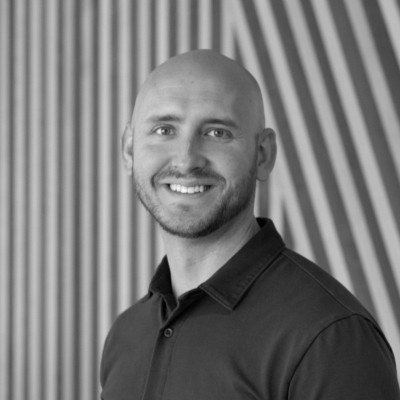
Josh Davis
Joshua Davis is a Principal Sales Engineer at LVT. He works with Sales to show customers how LVT products like Surround solve their challenges, and with Product on new releases. Before joining LVT, he worked at Qualtrics, Talkdesk, and Grow.com. He holds an MBA and is based in Utah.

Aaron Luna
Aaron Luna brings 14 years of journalism experience to his role as LVT’s webinar host and webinar marketing manager. As a former news anchor and PBS host, Aaron spent over a decade covering law enforcement, crime, and local government—gaining an inside look at the security challenges facing both public agencies and private organizations. An expert interviewer who has engaged with high-profile newsmakers, Aaron understands the art of asking the questions audiences want answered. Today, he channels that same curiosity and clarity into every LVT discussion.
Engineered for Site Awareness
Live Unit Surround is designed to eliminate blind spots. It can be deployed on the wall or roof of a building with support for 2 heads per deployment.
- Flexibility: Distribute heads up to 328 feet from the central power hub.
- Durability: Wind-speed tested up to 105 mph for extreme environments.
- Storage: 30+ days of onboard video storage.
- Versatility: Configure with 1 or 3 cameras per head, including multi-sensor panoramic option.
- Power: Simple hub-and-spoke system powered by a single 120 VAC source.
.png)
Full Transcript
Live Unit Surround: More Coverage, Less Footprint
In this webinar, Aaron Luna, marketing manager at LVT (LiveView Technologies), talks with Matt Kelley and Josh Davis about LVT Surround: what it is, what it does, how to use it, and how it prepares you for the next level of intelligent site management. Recorded September 24, 2026.
Panelists
Matt Kelley—Senior Vice President of Business and Market Development, LVT
Josh Davis—Principal Sales Engineer, LVT
Aaron Luna—Marketing Manager, LVT (host)
Introductions
Aaron Luna: Welcome. Thanks for joining us today. In this webinar, we're going to discuss LVT Surround: what it is, what it does, how to use it, and how it prepares you for the next level of intelligent site management.
My name is Aaron Luna, and I'm the webinar marketing manager at LVT. Joining us today are Matt Kelley and Josh Davis. Gentlemen, thanks for joining us. I appreciate your time. Would you each give a quick introduction, including who you are and what you do with LVT?
Matt Kelley: My name is Matt Kelley. I'm the Senior Vice President of Business and Market Development. Before LVT, I spent around a decade with Home Depot, where I was ultimately responsible for physical security and technology for their retail stores.
Josh Davis: I'm Josh Davis, LVT's Principal Sales Engineer. I mainly talk with customers and work with our sales team on our different product solutions, especially newer products like Surround. I also work closely with our product teams as we develop new products and release them to market.
What Is Intelligent Site Management?
Aaron Luna: Before we jump in, I was talking with George Bentinck, LVT's Chief Product Officer, about intelligent site management. His short description was "actionable intelligence for the physical world." It's a great way to describe it, and it made me stop and think about the concept.
Matt Kelley: When we think about actionable intelligence, what that really means is a broad application of the technology across multiple disciplines within a business. That could be operations, legal, or marketing, on top of safety. A number of cross-functional groups can use intelligent site management (ISM).
Aaron Luna: So one product doesn't have just one job. It has to function across several departments, with that cross-functionality built in to make it valuable. Am I getting that right?
Matt Kelley: Yes. For a long time, security's tech stack has been one tool for one job. Through AI advancements, the infrastructure that traditional security organizations have deployed has become more of a Swiss Army knife for their entire organization.
What Is LVT Surround?
Aaron Luna: Most people are familiar with our mobile security units, with the solar panels, the mounted cameras, and the mobility. It might help to briefly describe what we mean when we say Surround.
Matt Kelley: Josh, I'll let you take that one.
Josh Davis: The name is pretty spot-on. The goal of Surround is to give you more coverage and more visibility at a more economical rate than you would typically see with multiple mobile security units (MSUs) on a site.
As shown on screen, there's a central hub. On our MSU, all of the brains and compute typically sit in the head unit, or Live Unit. With Surround, we've put all of that intelligence, compute power, and cellular connectivity into the hub on the left. You can then distribute two to four head units across your building, so you get more coverage at a more economical rate than you would by putting multiple MSUs on your site.
Mounting Options
Aaron Luna: How are these typically mounted to a building or other structure?
Josh Davis: LVT is known for being adaptable, especially with our MSUs, which can go in a lot of locations. Surround continues that. Even though it's building-mounted, we have several options.
One is a parapet mount, which clamps onto a parapet wall on a roof. That's convenient because you would normally have to get permits to drill into a building. We can use the parapet clamp on either the straight edge of a wall or a corner. Other options include wall mounting, either on the face of a wall or on a corner, which does involve drilling into the building.
In the near future, we'll also have a sled option, where a ballast sits on the rooftop and the head hangs over the edge of the building. That's similar to the hub, which is typically on a weighted system sitting on the roof. It's non-penetrating, and we can also mount it on a wall if needed.
Aaron Luna: So it works in several different ways, especially if you don't own the building and can't make significant changes to the structure.
Josh Davis: Exactly.
Bringing AI Into the Physical World
Aaron Luna: Basically, this is the physical delivery system for our AI capabilities that drive intelligent site management, with the same capabilities as the MSU.
Matt Kelley: People think about the application of AI as ChatGPT and the other frontier models, which is the digital application of AI. We're moving to a world where we can get AI out into the physical world, but you have to have coverage first. Surround gives us that coverage, and then we come over the top with the intelligence layer we call ISM to deliver the actionable intelligence you alluded to in your conversation with George.
Aaron Luna: And you can apply this in areas where you typically can't place an MSU. Say you want to save a parking space, or you just don't have room for one of our mobile units. That's where this product comes in.
Matt Kelley: Absolutely. Think about convenience stores, gas stations, and small-footprint stores like discount stores. Parking spaces are at a premium, because if customers can't park, they can't come in and shop.
Surround is a way to deliver the technology with the same deterrence as a mobile security platform, and the same functionality, without taking up parking lot footprint.
Deterrence Features
Aaron Luna: Some of those deterrents are really high-tech and really cool. When you think about deterrence, what's the first thing that comes to mind?
Josh Davis: Deterrence on Surround is going to be very familiar to what customers are used to seeing on our mobile security unit. The LED lights can be always on, or you can set schedules or turn them off depending on the area. The loudspeaker can play AI talk down and general announcements, or operators can speak through it live. There's also a PT floodlight on top of the unit, which can activate when something is triggered to increase the deterrence.
Alerts and Response
Aaron Luna: When one of those alerts is triggered, who responds, and how is alert fatigue avoided with these types of systems?
Josh Davis: We have multiple options, so we can meet customers where they need us to. If a customer has operators, a global security operations center (GSOC), or guards they want alerts to go to, those can still go through our command center, and they can quickly get eyes on the site through Surround. Surround also gives you even more visibility, so they can determine what's going on and what level of action needs to take place. If needed, we can also use LVT® Alert Response.
Data Ownership and Integrations
Aaron Luna: So there's a lot of customization. And just like other LVT products, the client retains full ownership of their data, right?
Josh Davis: Correct.
Aaron Luna: How about integrating with other security measures you may already have on site?
Josh Davis: These units are compatible with our out-of-the-box integrations, and we have an open API if customers need to integrate with existing systems.
Surround also helps us expand full-site coverage for many of our customers. If a site has one or more MSUs and the customer adds Surround, you can still control all the units within our video management system (VMS). You can add cameras from different units, and you can even play an audio message across Surround and an MSU on the site.
It also works with other LVT products. Take SafeNow, for example. When an employee is leaving a building, they can activate SafeNow on one of the units, and it plays a deterrent announcement. If something happens, they can trigger an alarm. That works with Surround too. So we have a full suite that works well with our own platforms as well as others.
Covering the Front and Back of a Building
Aaron Luna: Say you have a guard gate at the front and an MSU in front of the building, and your alley is narrow and long. It sounds like that's where you might use Surround.
Josh Davis: Yes. Because of the form factor, we can get into locations that previously didn't make sense. It may not make sense to put an MSU back there, even if it could fit. I've had many conversations with customers who want the main deterrence at the front of their building but also have issues at the back.
With Surround, you can put a head on the front for full visibility and deterrence, and put one in the back for eyes and visibility, with deterrent zones set up there. You get the best of both worlds without having to buy multiple units to cover those areas.
Overt and Discreet Security
Aaron Luna: In my webinar with Captain Marty King from the University of South Florida Police Department, he told me his team uses LVT's MSUs for overt as well as covert operations, given the unit's PTZ (pan-tilt-zoom) capabilities. Surround is quite a bit smaller, so it seems built for a more discreet security plan, but some of the features could make it go either way.
Matt Kelley: It's definitely a choose-your-own-adventure. You can have an escalating profile, with AI talk down, all the way up to a human engaging. It has strobe lights. It has all the deterrent functionality of our traditional mobile security units, other than the mobile base.
Site Implementation
Aaron Luna: If I'm a business owner or the head of site security, and I tell you Surround is exactly what I need, walk me through the process. What does site implementation look like?
Josh Davis: Our team will work to understand the building, identify which areas are critical and where we would want to place Surround, and choose the best mounting option for the customer's situation. Once we're confident we have the visibility we need, we move forward to a scope of work. There, we identify what permitting, if any, is needed and lay out a timeline with the customer for installation.
Aaron Luna: I don't think anything gets onto your site faster than an MSU, but it doesn't sound like Surround has a long lead time either.
Josh Davis: Correct. Another benefit we haven't touched on yet is that it still runs on our cellular network, so we don't have to work with IT teams to get it on the network. The difference is really in two main areas: connecting it to power, and where to mount it. And we have flexible options for both, depending on the customer's needs and area.
Matt Kelley: Compared with a normal CCTV deployment, it's still much faster. You don't have to run Cat 5 cable, you don't have to run it back to a network video recorder (NVR), and you don't have to worry about connectors for a longer cable run. All told, deploying Surround is still faster than deploying a CCTV camera on the side of a building, and you get the added value of deterrence.
Aaron Luna: And if you want to add another unit, you put it down and plug it in.
Matt Kelley: Exactly.
Customizing Your Coverage
Aaron Luna: What if I need only one camera, or my site calls for multiple cameras covering multiple critical areas? What's the maximum capacity on one of those heads, and what's the minimum?
Josh Davis: With our MSU, we can still take the Live Unit and mount it on a structure. If a customer needs really just one point of visibility, that's likely still the best option. The next step up is, say, "I want two corners covered, but I don't need longer-range PTZ cameras. I just need coverage around that area."
With Surround, you can include the multi-sensor panoramic camera underneath. That gives you four lenses that we can position where needed to cover key areas and set up deterrent zones, and that can be on one head or both. If you have key areas farther away that you want to keep eyes on, or you want more flexibility, we can add PTZ cameras to give you even more coverage. And if you want three or four points instead of two, we can add more heads.
Future-Proofing With Edge AI
Aaron Luna: Matt, we talked about this earlier: AI is ever-developing. How does Surround future-proof a security professional's five-year plan, so they can bring in new programs as they become available?
Matt Kelley: That goes back to the coverage model. Make sure you have the right coverage in the right areas first. We've built our platform so we can continue to add AI models, whether on the edge or in the cloud. We can run some pretty sophisticated models on the edge itself, so you don't have to worry about compute power.
The cost of compute is the next thing coming with AI advancements that nobody's really talking about. It's starting to pop up here and there, but running more advanced models in the cloud is going to become costly, because you have to pump data out to it. Running these sophisticated models on the head unit itself is how we think about future-proofing, because you can choose which models to run.
How severe is the incident you're trying to run the model against? If it's not very severe and doesn't need an instantaneous response, maybe you run it in the cloud. If it needs immediate attention, you can't afford latency, and it happens on a fairly regular basis, maybe you run it on the edge to save on compute costs.
Aaron Luna: And when you say running it on the edge, you mean the unit itself does the computing.
Matt Kelley: Yes. There's a processor on the head unit that sees what the camera sees, pulls that data, runs the model, and reacts based on the model's output.
Aaron Luna: And when we talk about talk down using that edge computing to respond in real time for the most impact, those are customizable as well, right?
Matt Kelley: Yes. Users can come up with their own model or their own prompt, much like the way you interact with ChatGPT using user-defined prompts. You type in what you want it to watch for, such as someone lying down in the parking lot, and then you put that model on the edge.
Josh Davis: Especially with AI talk down, we can customize the intensity and when it runs. We can also have it play a more general announcement, so there's flexibility in the deterrent announcement as well.
Aaron Luna: Even a general announcement, like "Welcome to my business." It could serve multiple purposes.
Josh Davis: Exactly. Especially with a unit that's on the structure itself, that becomes more relevant and opens the door to new use cases.
Searching Video and Using Data
Aaron Luna: Just like our other products, the video management system makes it much easier to go back and find specific video using the common language you'd use with an employee: "Go back and find me a video of a guy wearing a red shirt, driving the pickup truck."
Josh Davis: Yes. Often MSUs sit a bit farther from the building. When a unit is on the building itself, you get a lot more action and foot traffic, so forensic search and historical footage can be even more important.
And as Matt mentioned, this is a key piece in setting our customers up with a future-proof system for AI. You're going to capture some incredibly useful data for teams that go beyond security and safety.
Scaling Across Multiple Buildings
Aaron Luna: What if I have multiple buildings? Two Surround setups, same kind of concept? I'd imagine the integration is seamless.
Josh Davis: Same concept. We can scale as high as needed. Similar to the MSU, where a very large site may need multiple MSUs, a large building or multiple buildings can be covered by adapting Surround to each area. Some areas might need only the multi-sensor panoramic camera underneath. Other areas might add PTZ cameras. One building might have four heads where another has two. It's very adaptable.
Within the VMS, you can add cameras from multiple systems, such as one from each building, and swap them around in your view as needed. Then you can comb through all that footage with forensic search.
Misconceptions and What Is Next
Aaron Luna: Is there anything coming up that you're excited about, or any misconceptions people might have about Surround?
Josh Davis: I think the likely misconception is price. Some customers look at this and think it's a more expensive option, or that it's going to be really difficult. I think they'll be pleasantly surprised when they talk to our team about the pricing model. That's one thing I'm very excited about.
And as we've been discussing, getting this infrastructure in place is important for the future of LVT and the future of AI. This is going to be a cornerstone product for us, and I'm really excited about it.
Next Steps
Aaron Luna: That's a great overview of what Surround can do on its own and as part of a larger LVT deployment. What's the best way for someone watching to take the next steps and find out more?
Matt Kelley: We have a website where you can engage with us and let us know you have a need. You can also call us, tell us the problems you're trying to solve, and we'll connect you with someone on our account teams, and maybe even Josh and me.
What we're trying to do is build a strategy. It's not just putting a camera on the side of a building or an MSU in the parking lot. Let's look at all the problems you're trying to solve and be prescriptive and strategic about building a program, instead of solving one problem at a time. Think about your overall company objectives and how we can tie everything together. The data points you get from video allow you to make critical business decisions, and that will become more true with the application of technology.
So be forward-thinking. Tell us where you want to go in the next three to five years, and let's talk about how we can build toward that strategy. Come to us with your use cases, but at the start, just engage with us by picking up the phone or visiting the website.
Aaron Luna: Great advice. You have to look at it differently than as barbed wire and fences to keep people out. Thank you both. I really appreciate your time and for sharing your knowledge with us.
Josh Davis: Thanks.
Matt Kelley: Thank you.

Test Out the Best Security Strategy
We offer a free consultation and a custom end-to-end security strategy for your unique situation. Connect with an LVT specialist to see if you qualify for a risk-free trial.
