The Blind Spot Between Rigs
Safety Risk at Fast-moving Workover Sites

Risk is High Where Infrastructure is Weakest
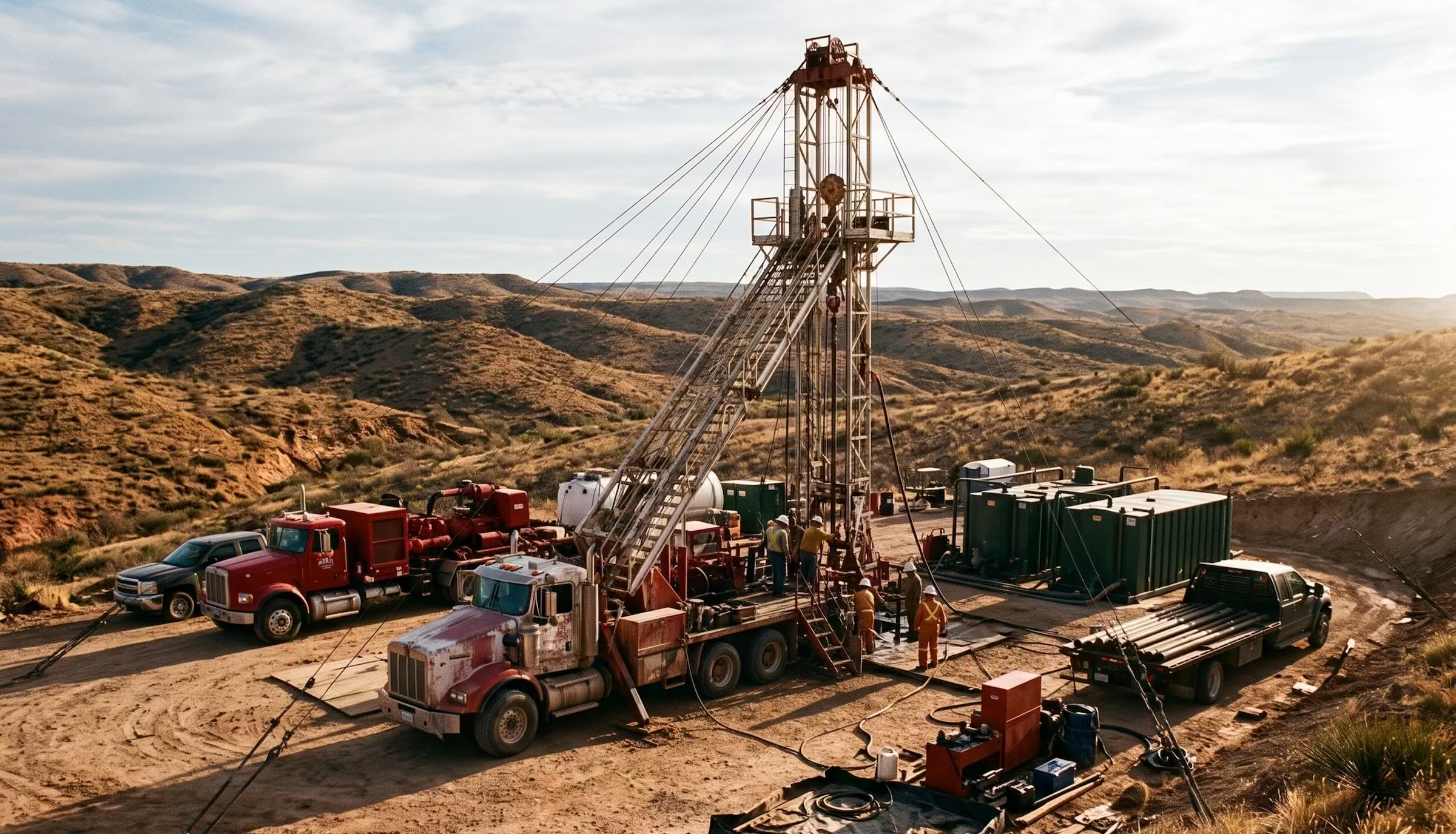
Well workover and well-servicing operations don’t sit still. A workover rig might be on a given location for anywhere from a few days to a couple of weeks. The moment work begins, risk exists; yet the work at each workover site is short enough that no operator could ever justify a “permanent” solution (fixed cameras, etc.). That mismatch is the core problem: the sites carrying some of the highest operational risk in the upstream lifecycle are also the sites with the least persistent oversight, simply because of how briefly work is done at each site.
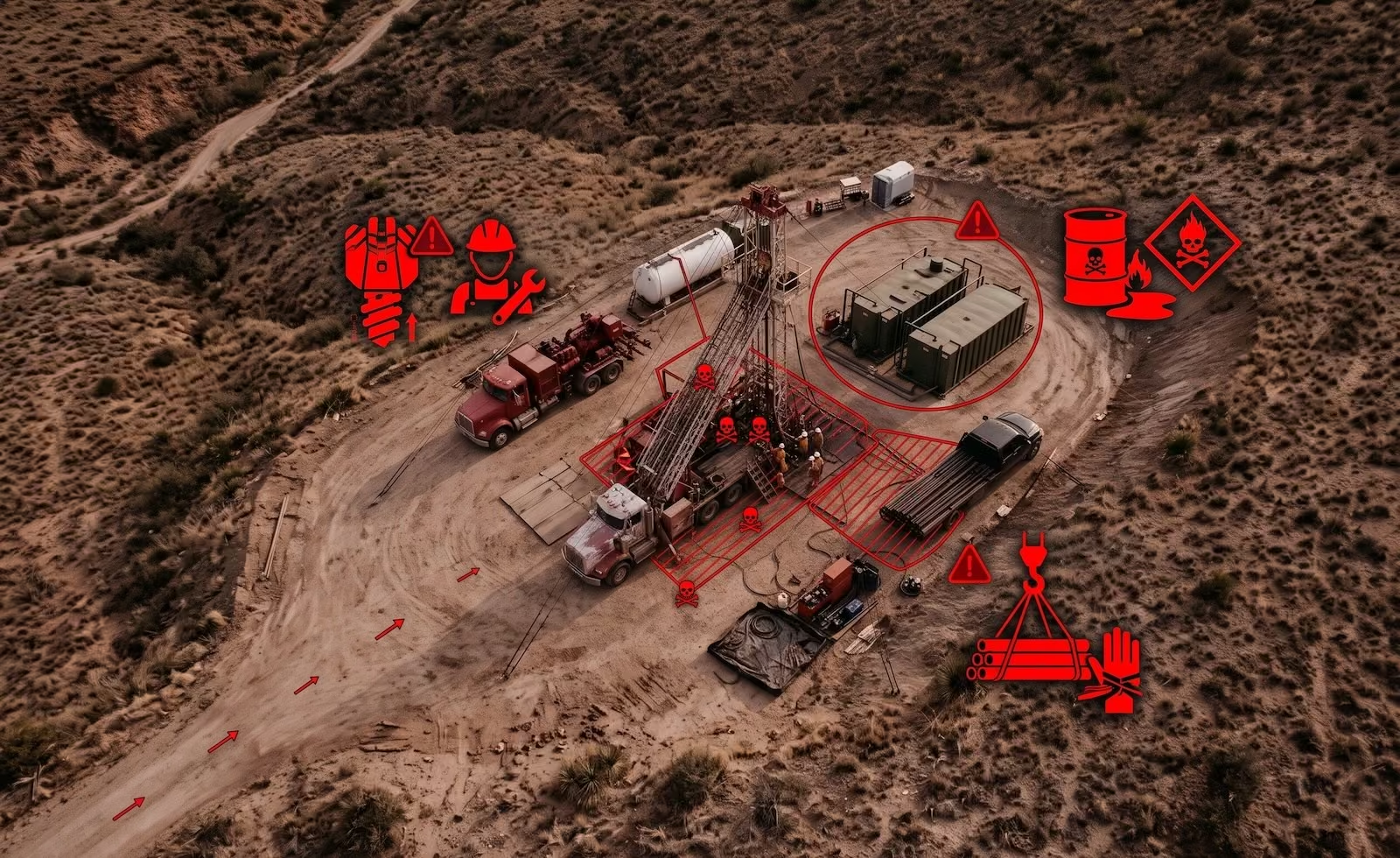
What makes a workover site risky in the first place:
- Well control exposure—reintervention on a live well carries pressure and blow-out risk that isn’t present in most routine production monitoring.
- Heavy lifting and rigging—workover rigs, tongs, and associated equipment involve overhead loads and pinch points in a compressed footprint.
- Contractor density—workover crews are generally third-party personnel (wire-line, well service companies, trucking, rental equipment techs) who rotate through sites the operator doesn’t fully control day to day.
- Remote, unattended hours—night work, single-person or skeleton-crew shifts, and long distances to the nearest supervisor or emergency responder.
- Vehicle and traffic risk—frequent mobilization/demobilization means heavy equipment transport in and out on short notice, often on unimproved roads.
Industry-wide safety reporting (IADC/IOGP-style annual data) consistently shows drilling, workover, and well-operations activities responsible for a disproportionate share of upstream fatalities each year, and contractors are involved in the large majority of those incidents. It’s a pattern we see with upstream customers often and is tied directly to how this type of work is staffed and how briefly each site exists.
By the Numbers
These figures point to the same root cause: risk is concentrated at remote, short duration, contractor-heavy sites across upstream operations. And, traditional behavioral-based safety programs, while extremely effective when implemented, have known limitations.
Meanwhile, operators’ own public safety commitments—reducing serious injury and fatality (SIF) exposure, driving down recordable incident rates, strengthening contractor engagement—are written at the enterprise level. The execution gap is at the site level, on exactly the kind of short-duration, contractor-heavy location activities like well workovers represent.
Human Observation—the Backbone of Personnel Safety and Its Known Limits
Most safety programs on workover and well-servicing sites still run on human observation: Job Safety Analyses before a task begins, toolbox/tailgate safety meetings, behavior-based safety (BBS) programs where trained observers watch crews and log safe versus at-risk behavior, supervisor walk-arounds, and Stop Work Authority that depends on someone physically seeing a problem in the moment. OSHA’s own guidance for drilling and well servicing describes this model directly: safety meetings, task-specific training, and Job Safety Analyses as the core tools for injury prevention.
That model works, I grew up in this model and have seen firsthand how people car-ing about others works. But we all knew there was still risk.
- It only covers the moments someone is actually watching. Observation-based programs are point-in-time by design. The window with the least oversight (e.g. night work, skeleton crews, the early hours before a full crew arrives on a rig move-in) is often the same window with the highest risk.
- Fatigue degrades the observer along with the observed. Workover and well-servicing crews commonly work long hours, on a schedule. Research cited in industry and legal literature puts fatigued workers at roughly 70% higher risk of being involved in an industrial accident than well-rested workers. A tired crew member is a less reliable observer of someone else’s safety, not just their own.
- Incentive structures built into observation programs can suppress reporting. Labor organizations and safety researchers have long raised concern that behavior-based safety programs tied to injury-free streaks or recognition incentives create pressure to under-report incidents rather than surface them — meaning the very data meant to drive improvement can understate the real risk.
- Reporting systems themselves are filtered. By nature, formal incident and near-miss reporting only captures events that clear a threshold of significance — quickly resolved close calls and momentary lapses often go unrecorded entirely, even in well-run programs.
Observation-based programs are point-in-time by design. The window with the least oversight is often the same window with the highest risk.
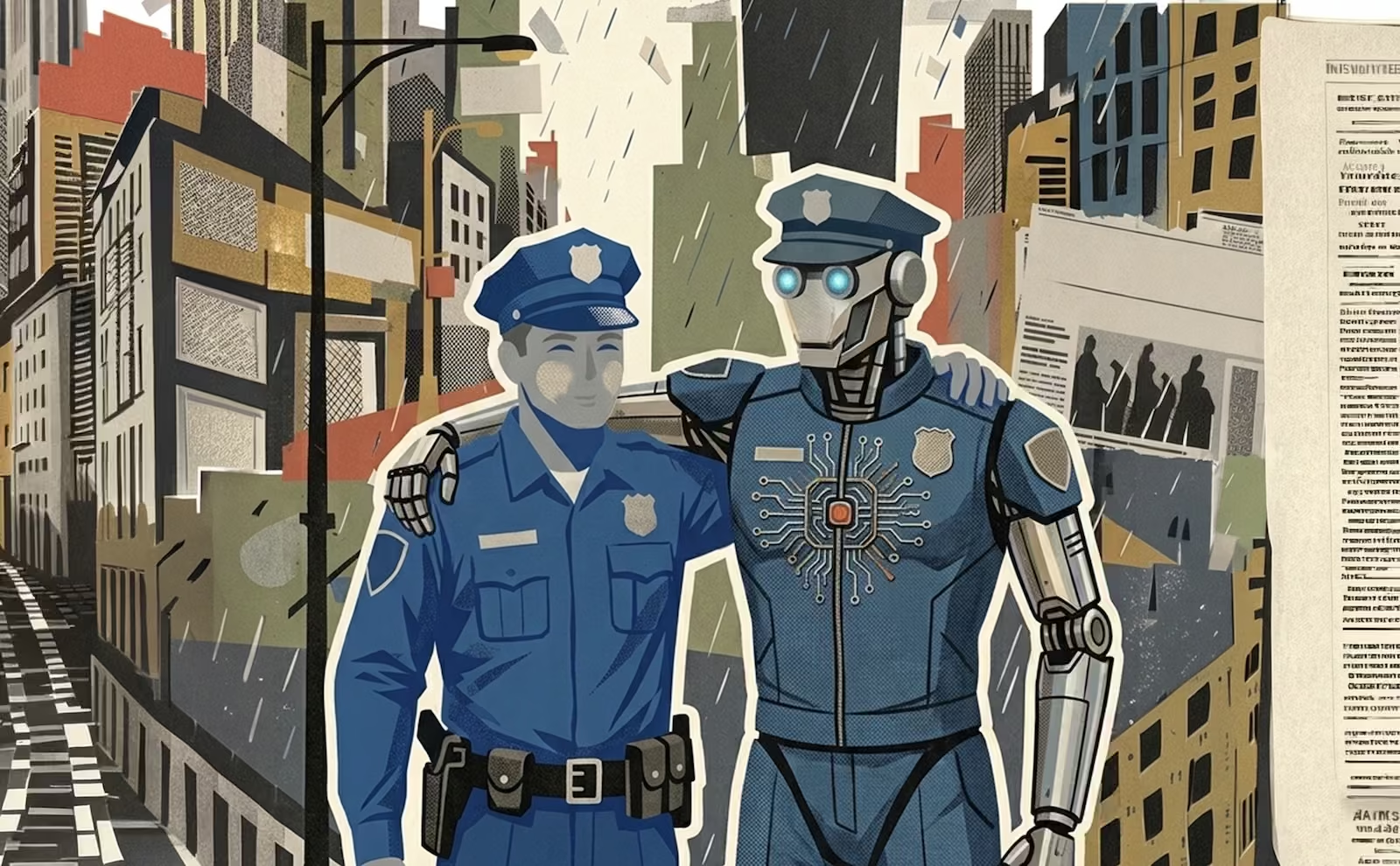
None of this means human observation should be replaced—a camera doesn’t run a JSA, exercise judgment, or make a stop-work call. What it means is that observation-based programs have a structural coverage gap: they protect the moments someone is present, alert, and willing to report. Continuous, always-on visibility doesn’t fix human judgment, but it does close the specific gap where no one is watching at all—the unsupervised hours, the fatigued shift, the site between sched-uled check-ins. That’s the complement, not the replacement.
How “Remote Visibility” Reduces Risk
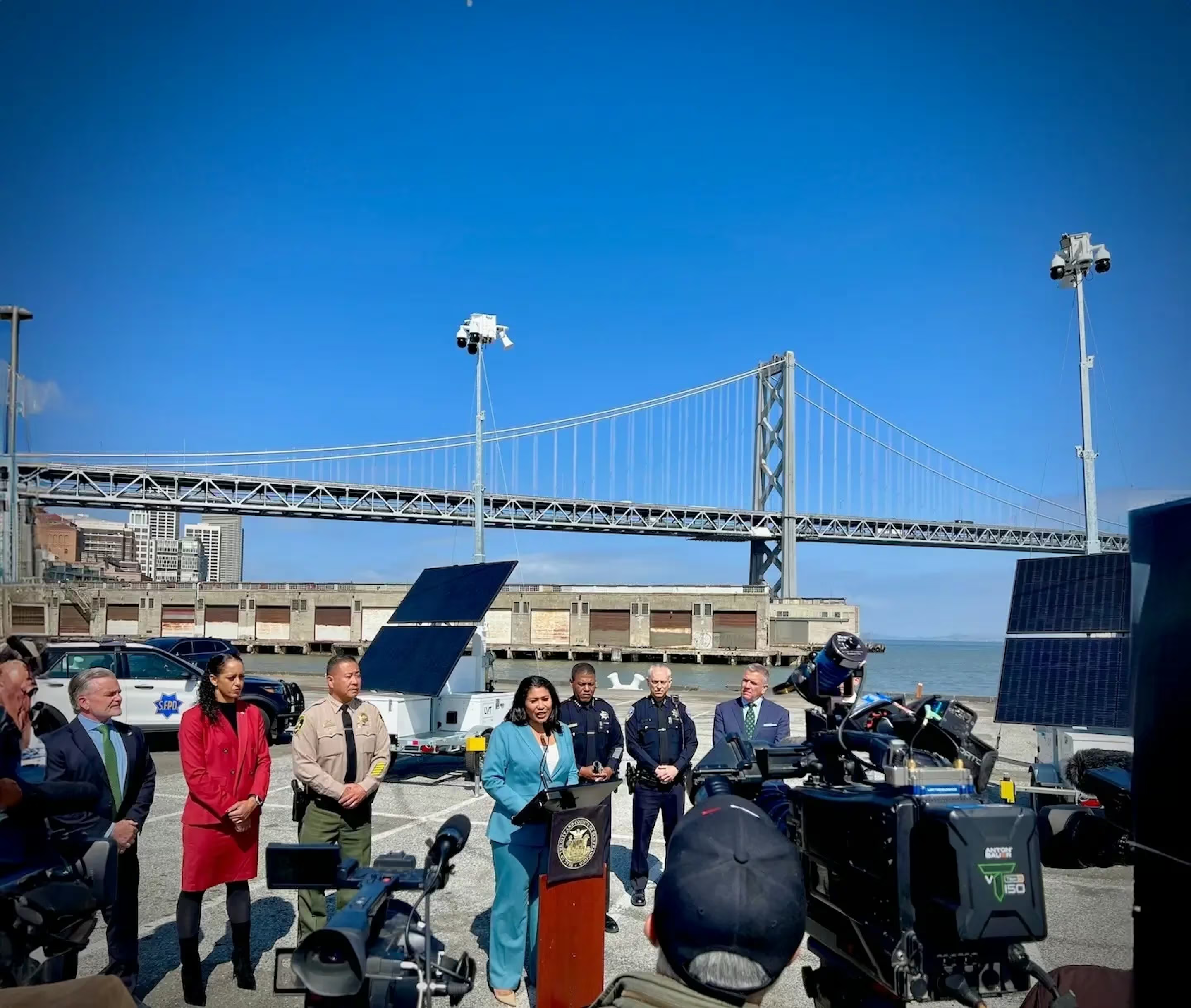
LiveView Technologies builds solar-powered, cellular-connected mobile security and monitoring units specifically designed to be deployed, relocated, and rede-ployed on the same timeline as the work they’re protecting—typically in hours, not days, with no trenching or fixed power required. That deployment speed is the actual differentiator for our upstream customers: it lets an operator put live visibility on a workover site for the exact window it’s active, then pick it up and move it to the next location when the rig moves to the next well.
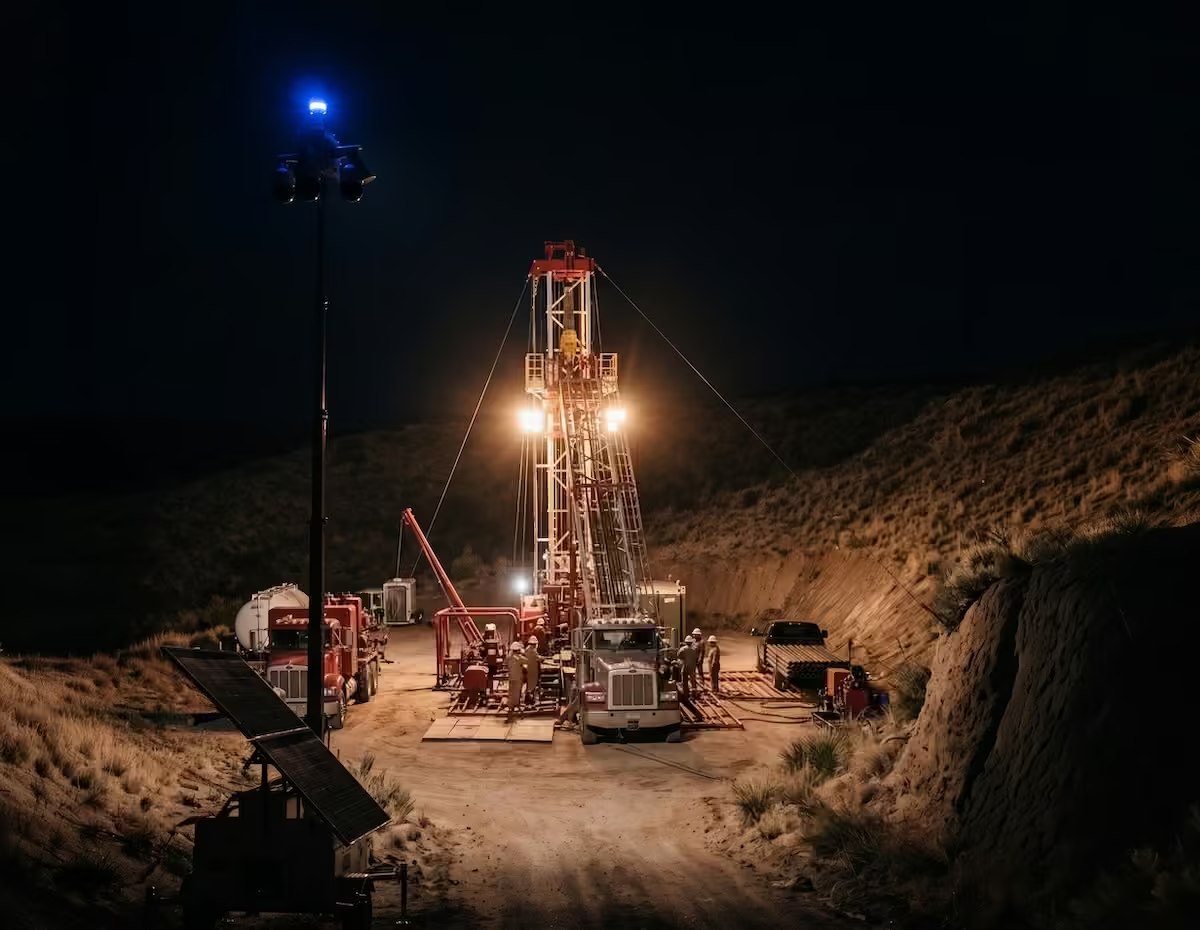
What that enables in practice:
- Coverage that matches the job, not the calendar. A unit can be on-site before the crew mobilizes and gone the same day the rig moves, so there’s no “not worth it yet” gap during the highest-risk early days of a job.
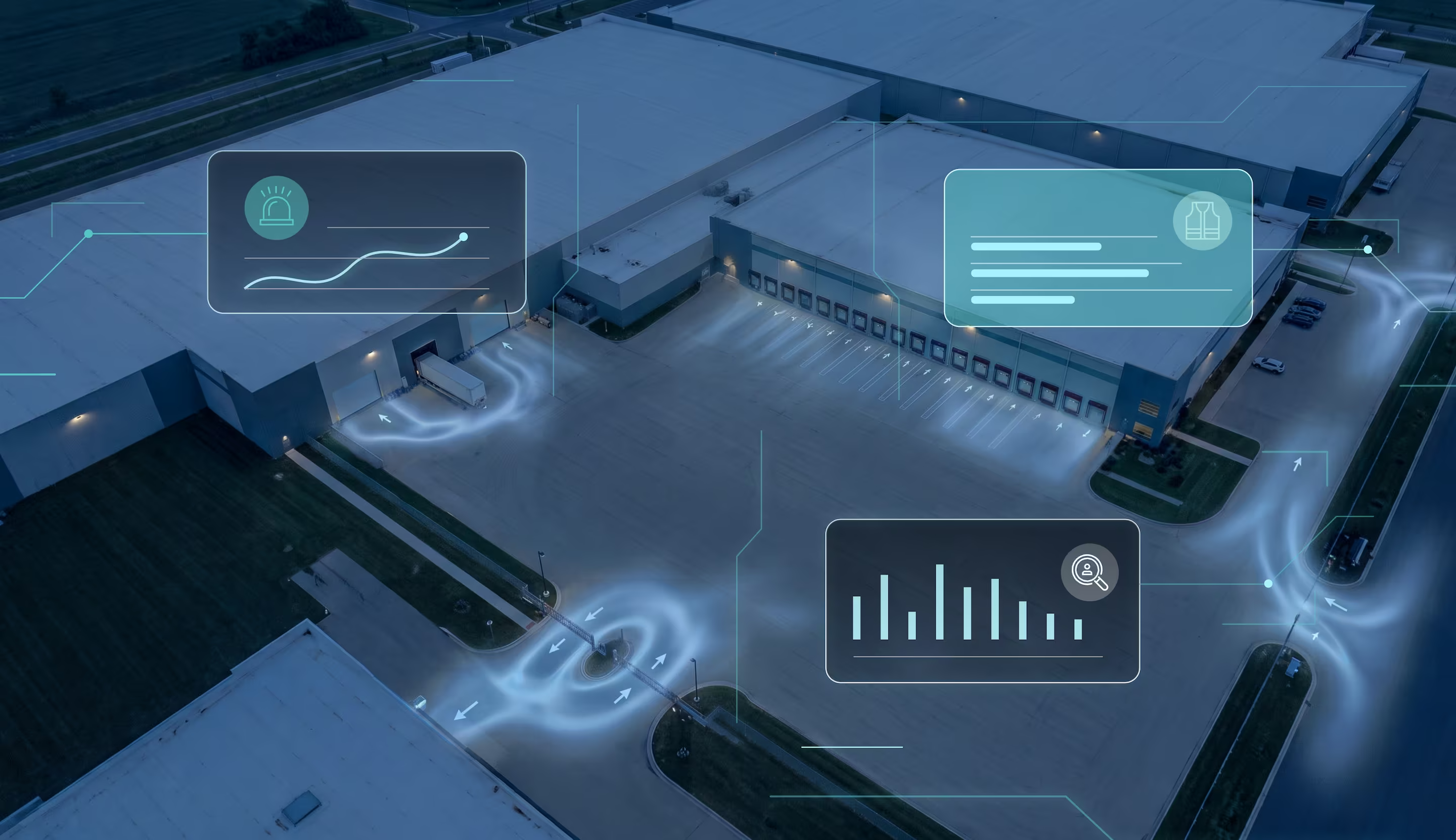
- Live video, analytics, and Agentic AI Models, not just recording. AI-based detection means a remote monitoring team can be alerted to someone entering a no-go zone, working outside a permitted area, or operating without required PPE in the moment, not during a post-incident review. As AI models advance, the flexibility in these models will allow for extremely specific models, customized to the work being done. Processing power on the edge will create significant value.
- Audio and remote intervention. Many deployments support live audio challenge or warning capability, giving those watching work remotely the ability to intervene before an incident occurs, not just documenting it afterward.
- Fewer physical check-ins. Supervisors and safety personnel can verify site status remotely instead of driving out, cutting a source of incidental vehicle and personnel exposure that shows up repeatedly in operators’ own incident data.
- Independent verification of contractor conduct. Because workover crews are largely third-party, a camera-based, operator-controlled record of PPE use, permit-to-work compliance, and site access provides accountability that doesn’t rely on the contractor self-reporting.
- Evidentiary record for investigation and claims. If an incident does occur, recorded footage supports faster, more accurate root-cause investigation and gives risk/legal teams a defensible record for insurance and liability purposes.
- Security and safety from the same footprint. The same unit that deters theft and vandalism of equipment left on an unattended site overnight is also generating the safety-relevant visibility described above—one deployment serving two budget lines.
The same unit that deters theft and vandalism of equipment is also generating the safety-relevant visibility—one deployment serving two budget lines.
The Connection Worth Making
Operators have already told the market what they’re optimizing for: fewer serious injuries, lower recordable incident rates, better contractor accountability. What’s missing isn’t the goal—it’s infrastructure that can show up and disappear as fast as the work does. That’s the specific problem rapid-deploy mobile monitoring is built to solve.
Get the Latest Articles
Unlock exclusive insights from the world of intelligent site management and proactive security. Subscribe to ELEVATE to get our latest featured articles, expert interviews, and tactical insights delivered right to your inbox.