How AI Reduces the Burden on Understaffed Security Teams
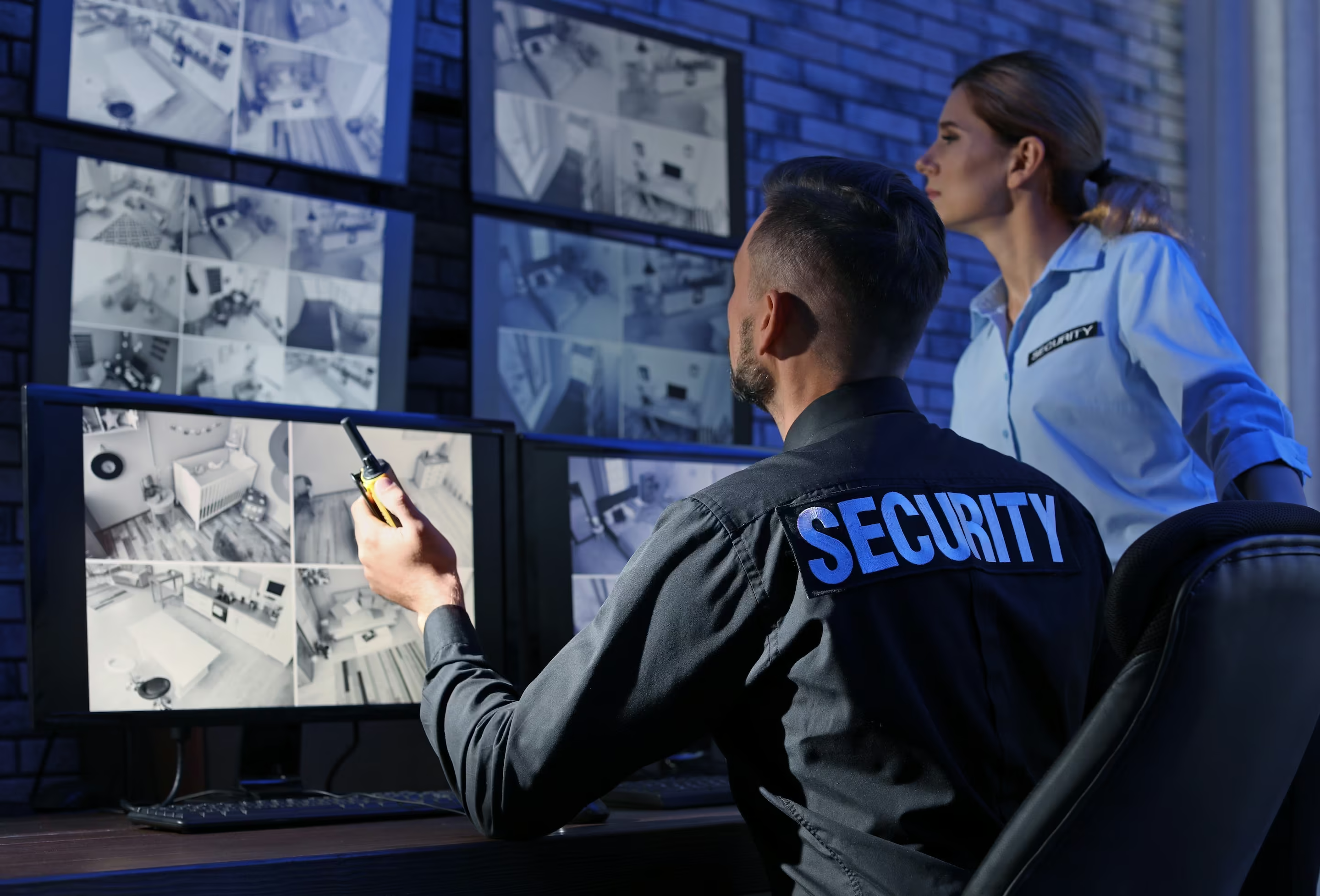
Understaffed security teams face more cameras, alerts, and footage than they can reasonably monitor. AI security reduces that burden by automating routine monitoring, filtering irrelevant alerts, deterring suspicious activity, and making footage easier to find. LVT combines AI-powered analytics, agentic AI, forensic search, and centralized controls, helping lean teams protect more ground at scale
Security teams are stretched thin. The industry’s annual turnover rate reached 89% in 2024, and the Bureau of Labor Statistics projects roughly 1% employment growth through 2035. The industry generates over 157,000 average annual job openings a year, which might sound like decent growth, but most of those openings are from people quitting.
On top of that, the median security officer earns about $17 an hour, a wage that's barely budged in fifteen years even as the cost of living has climbed. That combination makes both recruiting and retention difficult.
All of this amounts to fewer people covering more ground, looking for ways to stretch their efforts further without compromising safety. Adding more security cameras may seem like the obvious solution, but cameras can create their own workload.
Luckily AI is transforming the security industry in pretty incredible ways. In this blog, we’ll explain how AI-powered surveillance reduces alert fatigue, automates routine work, and helps understaffed security teams cover more ground.
Traditional Security Camera Systems Create More Work
More Cameras Mean More to Monitor
Understaffed teams often add security cameras to compensate for limited patrol coverage. That gives them more visibility, but it also multiplies the number of feeds competing for their attention. A team already struggling to monitor 20 cameras won’t find it any easier to watch 50.
Too Many Alerts
It’s not just about feeds to watch; with visibility of new areas comes an avalanche of new alerts. Traditional motion detection systems can’t tell the difference between a trespasser and an animal, between the harmless rustling of bushes and nefarious activity. Every motion, big or small, harmless or not, will trigger a notification for a guard to review. After reviewing dozens of false alarms, vigilance is bound to wane. Like in the story of the boy who cried wolf, guards will stop treating every alert like a priority and start assuming it’s just another paper bag blowing in the wind.
Too Much Footage
Recorded video is valuable during an investigation, but finding the right footage can be a painfully slow process. Someone has to identify the right camera, estimate when the incident happened, and scrub through hours of video until they find the moment in question. If an incident moved across several corners of the property, the team will need to repeat the process across multiple cameras. And while someone is searching yesterday’s footage, today’s alerts keep piling up.
5 Ways AI Reduces the Burden On Guards
AI security changes the way teams use their time. Instead of expecting guards to watch every feed, investigate every notification, and manually search every minute of footage, AI handles the first pass. It takes care of the busywork.
1. Automates Routine Monitoring
AI-powered analytics monitor camera feeds for specific people, vehicles, objects, and behaviors. Teams set the criteria, like loitering near a specific building, and the system notifies and directs guards to the relevant feed when it detects a match. Instead of watching empty parking lots for hours on end, guards only open a feed when something needs their attention. Watching feeds becomes the exception for uncommon circumstances rather than the 24/7 rule.
2. Reduces Alert Fatigue
AI can distinguish unwanted activity from everyday movement. Rather than sending a notification every time the local cat goes for a stroll along the edge of your property, AI-powered security camera systems can identify whether the object in view is a person, vehicle, or something harmless. Fewer irrelevant alerts mean guards spend less time investigating nothing and can give real threats the attention they require.
3. Agentic AI Takes the First Step
Traditional video analytics identify activity and send an alert. Agentic AI can evaluate the situation and take a preapproved action. If someone enters a restricted area after hours, AI-powered agents may activate lights, strobes, or a personalized audio message warning them that they’ve been detected. Security teams establish the rules, determine which responses are appropriate, and decide when an event should be escalated. Agentic AI handles detection and deterrence automatically after that, so guards only step in when a human touch is needed.
4. Find Footage Faster
AI also lightens the workload after an incident. Instead of identifying the right camera and scrubbing through hours of footage, teams can search video using descriptions of the activity they need to find. A search like “white truck near the loading dock after midnight” zeros in on the relevant footage in seconds. And if that white truck moved across the property, teams can follow it between cameras without restarting the search every time it leaves one frame.
5. Give Lean Teams Greater Reach
AI doesn’t magically turn one guard into five, but it can give one guard the visibility of five. Since AI monitors feeds and notifies guards when their attention is needed, they can oversee broader areas more easily. Their reach and bandwidth multiply. Instead of assigning a different person or group to each location, the same few people can easily keep an eye on activity across an entire—or multiple—sites.
Multiply Your Security Force With LVT
Your security team may be stretched thin, but its coverage doesn’t have to be. LVT (LiveView Technologies) helps lean security teams monitor more ground.
- AI-powered analytics distinguish people and vehicles from irrelevant movement and alert teams when activity truly needs their attention.
- Agentic AI can take immediate action by activating lights, strobes, spotlights, and personalized talk down messages when qualifying behavior is detected.
- Forensic search allows teams to find recorded footage using plain-language descriptions rather than manually reviewing hours of video.
- Through the LVT® Platform, authorized users can review footage, manage alerts, check unit status, and control cameras across multiple locations from one place.
Ready to see how AI security can lighten the load? Contact our team for a demo.

%20(1).avif)