Defending Against the Evolving Threat of Organized Retail Crime

Organized retail crime (ORC) has evolved into a sophisticated, multi-jurisdictional enterprise that demands more than just simple apprehension. Success now requires a strategic shift toward network disruption and enterprise-level prosecution. This webinar, co-hosted by Police1 and LVT, provides the blueprint for integrating proactive intelligence with seamless public-private partnerships.
Join experts from the LPRC and veteran law enforcement to move beyond theory and into tactical frameworks proven to dismantle criminal pipelines. You’ll gain a peer-to-peer analysis on transforming your operations to achieve high-impact results. Learn how to secure budget approval, increase investigative efficiency, and build ironclad cases that deliver meaningful consequences to criminal syndicates.
Featured Speakers

Cory Lowe, PhD
Dr. Cory Lowe, Director of Research at the Loss Prevention Research Council (LPRC), leads strategic initiatives in retail safety, security, and loss prevention. With a PhD in Criminology, he guides a team in conducting applied research, evaluating technologies, and developing evidence-based strategies for a vast network of retailers and solution providers. His work centers on areas like friction efficiency, real-time intelligence, and organized retail crime.
Steve Jensen
Steve Jensen is a senior program manager with over two decades of experience in law enforcement and public safety. He is a recognized expert in combating organized retail crime and has been honored for his strategic work in large-scale investigations. Currently, he serves as the Chair of the Board of Directors for the Utah Organized Retail Crime Association.
Working Strategies to Stop ORC
Gain a comprehensive framework for shifting from reactive apprehensions to the sophisticated disruption of organized retail crime (ORC) networks. Participants will learn how to leverage a strategic working model as a blueprint for success, discovering how to integrate intelligence and advanced technology into their current workflows to target the root of criminal enterprises rather than just individual shoplifters.
- Analyze the operational models and necessary jurisdictional agreements for creating a task force structured to achieve interstate network indictments rather than relying on lower-level, single-site charges.
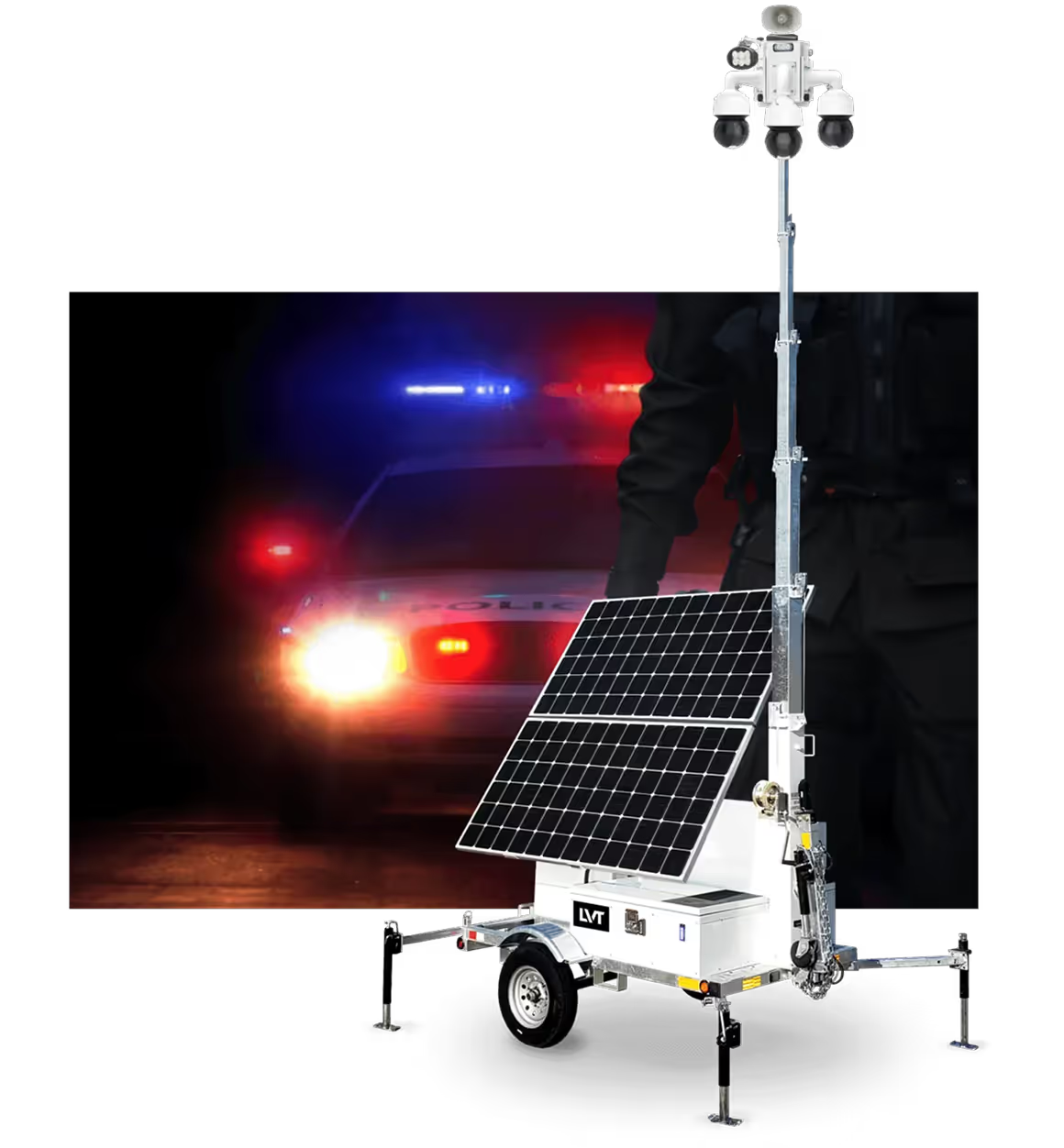
- Discover how rapidly deployable, high-definition surveillance platforms provide the real-time, verifiable digital evidence needed to bridge intelligence gaps, trace criminal activity across multiple locations and elevate case complexity to the enterprise level.
- Learn proven strategies for establishing resilient data-sharing protocols with retail partners, ensuring investigators receive timely, legally admissible evidence packages, significantly reduce investigative hours and boost prosecution success rates.
Full Transcript
LVT Ad (Video):
Shooting at the apartment complex. It's northwest of TJ Maxx, a double level.
Grocery stores to beauty stores, they hit everything. It's like playing chess. As law enforcement, we have to be watching what's happening with trends around the country. Organized retail crime, people are profiting off this stuff. Bouncing from store to store, going behind stores, just really up to no good. Ten arrests in one night, in nine hours. A huge message to anybody that's out shoplifting. We don't tolerate it.
Police1 Host:
All right. How you doing, everybody? Welcome to today's webinar, Defending Against the Evolving Threat of Organized Retail Crime. We're going to get started in just a minute or so here. I've got a great presentation for you today. Hey, we want to thank our sponsors for today's webinar, LiveView Technologies. It's been really great partnering with them on this presentation, so we want to send a big shout-out to LiveView Technologies for being our sponsor today. We really appreciate it.
All right. We've got a great panel here with us. I'm going to introduce them now at this point before we get into the discussion here. Dr. Cory Lowe leads strategic initiatives to enhance safety, security, and loss prevention practices. With a PhD in criminology, he directs a multidisciplinary team dedicated to analyzing factors that affect criminal choices, evaluating loss prevention technologies, and translating data-driven insights for over 110 of the world's largest retailers. His work focuses on ORC prevention, criminal intelligence, and leveraging technology to solve loss challenges.
Also with us today is Steve Jensen, and Steve is a senior program manager with over two decades of experience in law enforcement and public safety. He is a recognized expert in combating organized retail crime and has been honored for his strategic work in large scale investigations. Currently, he serves as the chair of the board of directors for the Utah Organized Retail Crime Association. So at this point, I want to welcome Steve and Cory. Thanks for being here today.
Cory Lowe:
Thank you for having us.
Steve Jensen:
Good to be here.
Police1 Host:
All right. Like we said, everybody, we've got a really great discussion for you here, and let's jump right into it. First of all, we're going to talk a little bit about the criminal network and some evolving trends and tactics. So talk a little bit about what some of the most significant trends in ORC are right now, and Cory, let's start with you.
Cory Lowe:
I'd be glad to do that. Thank you very much, Steve. So ORC continues to be a major obstacle for many of the retailers out there. We've done many surveys. We've collected incident data, and it's still one of the greatest challenges, that and violence. One of the things about ORC is that a lot of people treat it, lump it all together as one thing.
This is a table that kind of helps lay out all the different types of ORC that actually exists, and depending on what you're talking about, you're going to see very different trends. So you still have the very sophisticated criminal organizations, transnational, national level organizations that are engaged in all different types of organized crime. But they are sending out their boosters to go out and steal merchandise, and then they are doing it at such a scale that they can repalletize it and introduce it back into supply chains.
But then you have more localized groups as well who are going in and stealing merchandise and selling it locally, whether that's at a local fencing location or even to local groups online through Facebook Marketplace and other types of marketplaces.
And then you've got everything in between those local groups to those national groups. You also have groups that have a kind of transnational element, like the Romanians who continue to victimize a lot of retailers. But those are some of the trends. And I'll get into some of the numbers in a moment, but what are you seeing out there, Steve Jensen?
Steve Jensen:
Well, yeah, Cory, you're spot on with the data you're providing there in the law enforcement side of things, what we're seeing out west here. Just like you said, we've got those transnational groups, and I'm seeing those popping up across the country, and they specialize. So you've got the Romanian groups, and they're hitting these quick changes. That's a big one right now. And our officers are sometimes responding to these and they're finding out, "Hey, these aren't civil problems." And so that's something we're finding out real quick with this. All the sudden, when you arrest them, you're on the streets, they don't speak English. So that's another complication, another trend that we're seeing.
They specialize in different things. The South Americans specialize in different things than the Romanians do, and they're good at what they do and there's a lot of it.
Cory Lowe:
Yeah.
Steve Jensen:
You get them stopped, and all the sudden, the paperwork. New York driver's licenses of Washington State, those are pretty popular fraud ones right now. The passports that are fake. What happens when your officers get these things? They've got calls on the screens, they're ready to go. That's a trend that we're starting to see. It gets in the way of our work. When you get these guys arrested, all the sudden, nobody has keys to a car. Well, they don't want you to find that car. There's a reason they don't have those keys. Disguises. Those are some of the trends.
Cory Lowe:
Most definitely.
Steve Jensen:
And then also the tags, Cory, we're seeing them take those tags off those clothes real quick after they steal them. Why? There's more to it, right? They take those tags off for a reason, because when you get them stopped and the officer pops the trunk and finds all this clothing, they pretty quickly close it because that's a lot of space in an evidence room, and how are we going to identify it? Well, that's why they do it.
So that's one of the things we're seeing. And then finally, like you mentioned, cargo and the rail thefts. Boy, those are getting a lot, and they're doing it from in the middle of transport from point A to point B. As opposed to a start point and an endpoint, they're catching it en route now, and they're coming up with some different ways to do that.
Cory Lowe:
Most definitely. And one of the other things that I'd like to talk about, you touched on these different types of groups. One of the things that this chart, which this table was put out in the ACAMS report that was published by ACAMS, HSI, CLEAR, and others, one of the things that this points out, some of those national criminal organizations are purposefully nonviolent. So the violence associated with some of those groups is less. And those more disorganized groups or less organized groups tend to rely on national groups knowing that they will bring a lot of heat on themselves if they become violent because of the way law enforcement prioritizes those types of violent crimes.
Now, we've got some numbers on this. The LPRC, the Loss Prevention Research Council, partner with the National Retail Federation on an annual survey looking at the impact of theft and violence. And so we'd ask about current recorded events for the year and how they're trending, and you can see that some of the ones that are trending higher are things like phone scams, e-commerce or digital theft, shoplifting and merchandise theft. Some of the traditional stuff is still a huge problem. Those are trending higher. Cargo and supply chain theft, and then quick change schemes that you mentioned a moment ago.
One of the things I like to call out is some of those phone scams and the e-commerce or digital theft and fraud. Increasingly sophisticated, requiring greater coordination, greater technical savvy, and exploitation of some of those systems. And that's concerning, because as we move further into the AI age, that's only going to allow some of these fraudsters and criminals to scale up their operations.
We mentioned aggression. As we talked to retailers, organized retail crime and aggression are the two top things that come up constantly, and that remains a problem. So we did a survey of retail workers, over 1,000 retail workers, just over 1,000, and we asked about the types of things that they're concerned about. Theft, that's the thing they're most concerned about. But you look at the percent that are concerned about aggressive behaviors and threats, verbal harassment, and even robbery, those are pretty high concerns for people who are working in stores, right? This is something that we used to not see quite as much of. And it's to the extent that a lot of people are considering leaving their jobs because of the threats that they experience in their work.
So those are some of the trends. You have the organized retail crime that continues to be a problem, and there's an element of violence to that, depending on the nature of the groups involved. Steve, was there anything else that you want to say about that topic?
Steve Jensen:
Yeah. Those stats, it's interesting to see those, and then you put yourself on the other side of that. You having a son or a daughter that's going to work, you don't want to deal with the violence. And these are the gaps that we see with even just us in law enforcement to the retailers. We, as law enforcement, show up and go, "Why aren't we reporting this?" So all of these gaps and then these statistics kind of back up what we're talking about and how people feel with this violence and stuff and the policies that are set. So it's interesting to talk about this stuff moving forward, like you said, Cory.
Cory Lowe:
Yeah, and it has huge social implications. I mean, a lot of teenagers, their first job is at a retail store, or even maybe a fast food restaurant or something like that. No one wants their kids going off to be victimized at one of those locations. So it's an important element there, but thank you for that. Okay, back to you, Steve.
Police1 Host:
All right. All right, so let's move on to the next question here. The question is, what have you found effective in combating ORC? And Steve, let's start with you. Talk about the Utah blueprint.
Steve Jensen:
Well, yeah, here in Utah, gosh, there are so many layers to this ORC stuff, and so we've got to focus. We've got to come in somehow and start. And I think the key thing, because every state is different, you've got some states that have an attorney general's office. And the benefit of that is having those attorneys that cover that entire state, so you're aggregating much easier. And you've got a hub. Some states don't have that. What do you do? Can you find an ORC, so an organized retail crime, alliance or association in your state? And most states do have those. Your officers and your detectives, when you're working the streets in your cities and you talk to some of the retailers, some of the retailers don't know their neighbors right next door that have loss prevention people.
So these are the things to start thinking about that we want to start with in kind of bringing those together, and that's what we did here. And so alignment, number one, we're getting those retailers aligned with the officers in our cities. And then number two is that communication, because if you don't know what's going on in the retail world, you're already behind. You don't know the trends. You're not going to be educated on-
Cory Lowe:
Yeah. Those are huge things. There was a important concept in criminology called collective efficacy, right?
Steve Jensen:
... these things to... Where we start. In Utah, we also have the attorney general's office who does have a task force that will go after these folks, and we communicate and I'm part of that task force as well, representing my agency.
So bringing that education and then even further into some of our administrators and city council, a lot of them don't know that Target lost $1 million just last year, and also that sales tax and revenue that goes with it that affects a lot of things in our city. So these are the things that we start thinking about blueprint-wise. And then we take it a step further. Once we can kind of put that together is we start doing intel meetings, our monthly intel meetings, and we'll bounce from city to city just to introduce what we have and start making networks and connections with these cities as we start to put this together.
And then finally, your media, whether it's social media or getting it out. How many times have we gone out to these calls on an ORC event and the public goes, "I didn't even know that was going on here"? They have no idea. And so spotlighting some of this stuff is going to be helpful and educating.
So those are some of the blueprints, Cory, that we're seeing have been effective, and then along with that real-time alert system. And we can dig into that more later too, but knowing what's going on... You get these emails, and I hate going back through emails going, "I know I saw that guy. Who sent me that email?" No, we're getting a live feed, and that's been crucial.
Cory Lowe:
I know. Well, definitely going back to some of your points there, there's a important concept in criminology, collective efficacy, right? You mentioned retailers not knowing their neighbors. Same thing happens in neighborhood crime, right? When communities know each other, there's social cohesion, mutual trust, and a willingness to intervene on behalf of each other and act to solve a problem, those are areas where you see less crime. And the more we can create that with retailers, the better off we'll be.
The LPRC is also very interested in how do we leverage technology and how we make blitzes stronger. ORC blitzes are a important component of most agencies' programs. The way we approach things is we think about several different objectives that you may have during a blitz or during any operation or during an entire program for an entire program within your area. We think about things in terms of the six D's, divert, deter, detect, disrupt, document, and then data analysis. And so we think strategically like that. And the more of that that we can accomplish as we are conducting blitzes and things like that, the better off we'll be. So at the LPRC, we're mostly focused on that blitz refinement program.
Now, we could talk about deterrence, right? If we're trying to deter, we want to make sure that we're sending the right message to offenders in the area, that there are well-established programs in making sure that's being communicated. We can achieve specific deterrence by making sure that individual offenders are brought to justice, but we also want to make sure that the community understands what's being done, and that goes back to Steve's point about communication to the community about wins and what's going on there.
Detection. Once again, that communication is absolutely essential. If retailers are going to detect when these offenders are showing up in their stores, they have to know about it, which means they have to talk.
Disrupting individuals, patterns of offending, disrupting individual incidents, and then disrupting groups of offenders. Really taking those networks down is absolutely critical, and that could be local, regional, interstate groups, and all of that.
Documentation, recording incidents on the retail side, critically important. But also tracking folks and having the right crime analysts doing the work there is also critical through the data analysis piece.
But for all these operations, you have to align the problems with the objectives, be much more strategic than things have been. To give you an idea of the blitz work that we're doing at the LPRC, this is a map of Gainesville, Florida, and you can kind of see where the hotspots are. So we focus on those, but we go far beyond that. We deploy technologies to those areas where we're going to do blitzes. We use them very strategically with [inaudible 00:16:11] need. So we rely on a lot of different technologies, license plate readers for one. Put those out in very strategic places in areas where we're going to have travel to detect people. And I will just skip down a few slides to show you that.
There's this area. It's surrounded by LPRs, which are actually owned by this shopping center, the property owners here. Well, we put out additional LPRs based on where they were pointed. There was no coverage over here, so we put inbound, outbound on main thoroughfares during blitzes. And then we deployed additional mobile protective units, in this case, LVTs, and we set them up in a way that they're a little bit noticeable than they normally are.
Steve Jensen, I know that you also use technology pretty heavily. Is there anything that you wanted to say about how y'all are leveraging some of that?
Steve Jensen:
Well, that's a great point too with, you're talking about blitzing and moving into that. That's something we focus on is consistency. We're looking for those consistent blitzes, not the once-every-six-month things. This is where you're going to start making some impact once you've got your footprint together. But yeah, going with the technology is huge right now, whether it's a trailer, because a lot of these groups, they'll park way deep in the parking lots. They stagger their way in. They don't both come in at the same time.
So it's nice to have a visual. It's nice when you're doing a blitz to be able to see. Somebody administrative can be in their desk at the police department and watch everything go down on a stream, nice and easy. So LPR is obviously coming in and out. Some of these things you're talking about, absolutely critical in the fight against ORC.
Cory Lowe:
Most definitely. And that's how we think about blitzes. And that's one of the things that we're working to refine is, how do we strategically do these things? Instead of waiting for an offense to be in progress when you begin surveillance, if you can detect when they're showing up using LPRs, that gives you a pretty good lead, particularly if beforehand you come together and share the intelligence necessary to be aware. So blitzes are a key component of what's working out there.
And there's a lot of other technologies that we're also leveraging and working with. GPS has proved to be a extremely powerful technology. RFID, a lot of people don't understand that RFID is put on a lot of merchandise these days. And that can be used not only to identify the merchandise, but in some cases, it can be used to identify the origin of the merchandise, where retailers can say that that specific item came from my store, because they keep track of the EPCs on those RFID.
Signals intelligence is a huge opportunity. It's something we continue to work with, trying to track repeat offenders based on the different devices that they're carrying. And a lot of this has happened on the retail side, maybe not law enforcement for some of these things, but it's hugely important. And then, facial recognition on the retail side has been incredibly powerful as well for detecting when offenders show up.
So another area that we're continuing to work through is sharing pre-event indicators at a regional level. So if you've got a region south of you or an area south of you and they've just gotten hit, a retailer just got hit, well, they could be heading north, right? So you can be aware of that and be prepping for that. So those are some things to think about for those blitzes as well and just to remain aware of.
Steve Jensen:
Cory, you reminded me too, drones. Some of the smaller cities that have drone pilots, they don't get as much practice sometimes. We'll bring them in on these blitzes, network them that way as well, and fly the drone. We'll launch as somebody's getting ready to leave or target lock onto a car. We've seen good results with the drones as well.
Cory Lowe:
Yeah. And at the LPRC, we have a Skydio X2 and a Skydio X10, and some of those features are incredible and are very useful. It can be very useful for tactical operations during blitzes as well.
I want to go back to something you said as well, where you were talking about having the right camera coverage. The reason we put these where we put them is for very specific reasons, right? So this one is front of the shopping center because we wanted additional camera coverage here of the front of the store. It was a mobile protective unit. Here, we're just trying to get video on cars as they enter and exit. So if we pick up an offender down here with an LPR on any of these other entrances, we will have that footage in the core of the shopping center about where they're going and have some visibility there. But it's all very strategic and I think that's the point that I wanted to focus on the most. Back to you, Steve.
Police1 Host:
All right. All right, let's move on to the next question here. So what can retailers do to be better partners with law enforcement? And Cory, let's start with you this time.
Cory Lowe:
So a lot of it is what Steve said earlier. Seek out those organizations that are most involved. Pretty much, I think every state at this point has an organized retail crime association. That's a great place to start. You can begin sharing intelligence with law enforcement and with other retailers so there's greater awareness within that community of retailers. If you don't have an ORC program formalized, I would suggest you doing so and then regularly engaging with getting your ORC team members to regularly engage with law enforcement. Whether that's going and visiting them at shift changes or whatever it is, just making sure that you are well known in the area and that you are going to be a resource for law enforcement.
Make it easy. When law enforcement comes asking for information and evidence, make it easy. Unfortunately, there's still a lot of retailers that do not make that easy, and that's a huge problem. You shouldn't really expect a solid partnership with someone if you're going to make their lives harder than necessary, right? So those are some very important things for retailers to be thinking about.
All of the intelligence sharing is particularly important, but I think the most important thing, and we've seen this over and over again across jurisdictions, is show up to court. A lot of cases end up getting dropped because retailers do not show up to court, and we cannot do that. We cannot operate that way. The law enforcement and prosecutors need to know that retailers are going to show up for these cases and that their time is not ultimately going to be wasted because the cases get dropped. Steve Jensen, did you have anything else that you wanted to speak to on that? Those are some of the thoughts that came to my mind.
Steve Jensen:
Yeah, those are definitely good points too. You can almost take that question a little bit further and say, what also could law enforcement do on that side of the house to work better with retailers? So piggybacking off of what you're saying, I think partnerships is going to be a huge thing. We need a direct line into that store. That's going to be crucial for your officers too because many officers don't understand setup, where you might have a retail manager and you also might have a loss prevention manager. And that loss prevention manager might be in another state, and you're not going to get much help sometimes from the manager there, and the reason why is because they've got certain policies.
So these partnerships and having an open line into the store is going to be crucial as well. Somebody I can get on my phone and call directly if I've got a problem, or a frustration even.
"Why did I just get three cases today when these could have all been reported a couple days prior?"
Well, that store might have some policies that say, "Hey, due to low amount, we've got to wait. We don't want to waste police officer's time either. We need to wait."
Could be a policy in place, but we just need to open that line of communication up. That goes a long way, and we get those frustrations out.
Turnaround reporting. How long does it take to get a report in sometimes? We're ready to go. And especially after we take this initial report, when it does get assigned to a detective, he gets in a rhythm sometimes, he or she. They get into this rhythm, and all the sudden, we're missing video or we're missing a statement from a cashier that's not in the report. Now it throws me off my rhythm. I'm going to put this on the back burner and I'll get back to it later, but now it's three weeks to a month later before everything comes in. So it takes us out of the rhythm. So my thought there would be get that good turnaround time and then have them be thorough. Do our LPs know the kinds of things we want for our reports? And that all comes from these networks and partnerships that you just talked about. Those are some of the things that I can think of.
The other piece of that, I said on the law enforcement side, when law enforcement shows up to these calls, there's a lot of information right there. And sometimes we hold up and we don't give the information back to the retailer. Who is the victim here, by the way? Maybe a name, or sometimes they want to take a photo. The retailers have a gold mine of information on bad guys, and we don't get to tap into that very often. And so that's what I say when we very first started this is we combine, we have that alignment, we have that communication. You're going to get that communication of that arrest, which three other retailers just went, "Oh, my gosh, we had no idea who that was this whole time."
So that's another aspect of what law enforcement can even do better is communicate with our retailers and say, "What can I legally give you that will help you?"
Sometimes those loss prevention folks want to talk to these guys. They've got a bigger case going in another state. We just ran into that the other day where we made an arrest here in Utah, and because we had some loss prevention workers from a store that were out that were commercially specialized, they knew California was looking into this particular syndicate. And so that was huge for us and it helped California on their search warrant, which later happened. So just a couple things that I can think of off the top of my head.
Police1 Host:
Okay. Let's move on to the next topic here. So the question is, what practices set prosecutors up to successfully prosecute cases? And Steve, we're going to start with you this time.
Steve Jensen:
Well, yeah, sure. On this one, just like law enforcement, what tools do the prosecutors have? Do they have the laws in place? How are they set up when they're with their office? Are they generalized? And if they're generalized, we got to get the education out to how organized retail crime works because prosecutors get busy. They're overloaded as well. And some of these cases come across and it comes across to them as retail theft. We're not getting the word out about organized retail crime, so I think that's a tool, is education, even on your prosecutors, because they start picking up things and go, "Okay, somebody needs some attention here," or, "We've got to get this case through. It's hung up because they don't have a charge, a conviction on their criminal history."
That could be something that helps you on an arrest. These cases will sit here for, gosh, months sometimes, and we're now three arrests into this person without a conviction. So sometimes it's helping them understand some of the streamlined processes. Can they get specialized a little bit? Can we send all of those property cases, or organized crime cases, to a prosecutor who understands that? That would be a suggestion. I'm trying to think of what else.
Do these prosecutors know the loopholes of organized retail crime? These travelers come into our state and they're staying at a certain value because they can move to another county within your state and know it's not going to be a felony. So the risk is worth it to them to get a slap-on-the-wrist citation or a couple hours behind bars, knowing that they can come back into the city and it's going to be rinse and repeat because they just received a summons for a low value. Somebody figured out who they were in one city. We're going to issue them a summons. It falls off. In a couple years, they're not scared to come back, because who's going to take them to jail?
And that goes with some of the other tactics as well. They're using kids. They're using other things to go against us. They found the loopholes. Can you aggregate? That's something we got to start talking about. Can you aggregate in your county or your state? Let's see what our tools are there. So those are some of the things that come off to mind.
Police1 Host:
Okay. Well, I believe we lost Cory. Hopefully he'll get back on here in a moment too, but let's see. Let's move on to the next question here. And where should retailers and law enforcement prioritize resources in 2026? Is it technology, training, legislation, all the above? And Steve, what are your thoughts?
Steve Jensen:
Oh, yeah. Man, coming into 2026, well, everybody's talking about AI. And I'm seeing that with the grocery stores right now. The retailers, to me, in my view, they're sitting back on the sidelines a little bit watching this, but you're going to start seeing that come in, and it's been a good tool. I'm curious to see, though, where prosecution is going to go. Are they going to back this? Everybody's watching that right now, but I do see that movement coming with AI.
Resources, we talked about. You mentioned resources. Yeah. What do we have at our police departments for resources? We got to get strategic and creative. If we don't have the manpower, for instance, to run a retail blitz, can I tap into another city, borrow five guys for five hours to help me? And in return, we give a couple guys back on another day of another month. So can we strategically start thinking that way with resources? If we don't, then maybe we got to talk to city council. What resources funding do we have? Can we pay to have additional officers in my own department come in for that backing as well? That's something that comes to mind.
And then, yeah, of course legislation. We're always a little bit behind on the laws. I just don't think it's there. We're making some right moves there, but the loopholes are still pretty exposed. But, yeah, looking at 2026 now technology-wise too, how are you utilizing your LPRs, your drones? All the things that we talked about, that's the direction we're moving in 2026.
And then you get into this cargo stuff. I mean, they're spoofing GPSs to move a load to another state. How are we dealing with that? The railroad lines in California, they're setting fires on trains to stop it so that 10 miles down the road, the next train with all the product they want, they can jump on and loot it.
So 2026 is making some interesting moves so far. And then even with technology, we talked about the earbuds. Can we get into who was using those earbuds in that store? The Chinese are really hitting these gift cards right now, and they all come in with the earbuds. The ORC groups, a lot of them come in with the earbuds. They just leave it on so they can talk to the guy or girl in the car or let them know, "Hey, I'm ready to go. Move it up or get ready. I'll be coming out." A lot of different things in the tech world right now in 2026.
Police1 Host:
And you bring up some good points there, Steve. So 10, 15 years ago, we weren't talking about drones and LPRs and things like this. So what are you seeing coming down the line five, 10 years from now, combating this? Because it doesn't seem like ORC is really going away. It seems like it's becoming more entrenched and more of an issue. So what do you think might be coming down the line for technology that might be related to this?
Steve Jensen:
Yeah. Gosh, it's changing. They're getting so sophisticated, and you've got people doing radio jammers for our police stuff. They're cutting lines. All these different syndicates do different things. With ORC, they specialize and they practice in different things. You've got burglars going into houses of NFL, NBA people. That's what they specialize in. You've got the Romanian travelers that are specializing in the quick change. How about the pickpockets? The South Americans come and they do the pickpocket, the distraction. They get into a wallet, they leave. Return frauds.
So how are we combating that? I think another thing is going to be facial recognition. That's going to be a big one. Of course, we've got AI, but facial recognition, even for us, it covers some of our databases. It might just be a driver's license database. But even some of the tools on our belts, such as HSI/ICE, they've got a 30-second facial recognition. That's another tool on the belt to use, but can we get up to that speed as well where we can get this facial recognition? We've got the fingerprint readers. If you don't have those, you want those.
Specifically with the travel groups, their goal is not to give you a fingerprint because then it reveals their true identity. That's when they pull out the passports, the state IDs from New York and Washington. So being up on the latest tech is going to be a good thing, and kind of the things we talked about thus far.
Police1 Host:
Yeah. Steve, talk a little bit more about that too, because this isn't just a one and done type of thing. You just mentioned false documents. You probably got identity theft wrapped up in this. This isn't just people smash, grab, and take it and stuff like that. So how far out does this reach into other areas like identity theft and document falsification and things like that? License plate, stealing, car theft, et cetera.
Steve Jensen:
It's a lot of planning. They do this, even the vehicles they drive. We're seeing them move out into some of the other trends. We're seeing to move out into the Airbnbs as opposed to the hotels. Why? Because they're playing off our plate readers. They're doing things with their cars, swapping plates, trying to throw us off for the plate readers. They know some of the tactics we're using. So yeah, we're seeing that. What else? Part of your question, Steve, you mentioned...
Police1 Host:
Identity theft, car theft, document falsification, things like that.
Steve Jensen:
Yeah, thank you. And even with the cars they drive, they don't want that car to be tied to them. All of these things throw off your patrol officer who stops a traveler, who just happens to be coming through, wanting to go to the next hotel or motel in your state, and you've got them stopped. They usually travel in groups.
Steve Jensen:
But they've got them stopped, and the car doesn't come back to them. Or they've got kids when they're in the store and you've got them stopped. What are you going to do with the kids? And that's a distraction as well to the employees. It's not going to be them. They're not going to be the ones that still have the slit in the dress and they take the whole shelf. But they got kids with them, right? So they think about this stuff ahead of time. And that's what throws us off as law enforcement. We get in a jam. We've got calls on the screen. We're not educated enough. We have it in front of us. We're not teaching this in the academies.
And so back into the vehicles, it's registered to somebody else. They're using the Turo now. Rental cars are sometimes a giveaway for us. And then, also, we've been seeing them from back east. They fly in and then they load up. They drive their car. They get their rental car here, they load up, but they're shipping the product back, and that's what we're seeing a lot of now as well. When they get the product, they package it up, and then they're going to UPS or wherever, the postal, and they're shipping it back right away because they don't want to run the risk of getting stopped.
And so another smoke screen is when they take off those tags. What retailer did it come from? And you've got the manufacturer tag on, which is also more money for them than it shows because the tag is still on it when they sell it. But how do you find all this stuff? And that's frustrating for law enforcement enough, who has this in front of them. How do I find that? And so now you've networked, you know who your store representative is. You can make a call to them, or you've got your group together now, you're communicating, and you can take photos of those items. And these retailers are sharp. They know the product that they sell.
And it's the same for me. For instance, I've got a tracker on a car now. I know as soon as it goes to any store, major store in this area, I've got a direct line into that store, and we can build our case because of that and give them the heads-up. It's the tail wagging the dog. I'm letting them know when it's coming. So these are all the things that we're seeing right now.
Police1 Host:
Okay. Cory, let's jump back over to you. Can you hear us?
Cory Lowe:
I can. Can you hear me?
Police1 Host:
Yes. We're going to move over. We got the Fusion Platform slide up for you here, if you can see that, Cory. So just jump in. Again, we were talking about what should retailers and law enforcement prioritize in 2026. Is it technology, training, legislation, all the above, et cetera?
Cory Lowe:
So as you can tell, I had a little bit of a technical difficulty. So I've moved computers after mine won't come back to life. So one of the things that we've been working on for the last several years was building out cases that prosecutors would take that were strong enough and had all the evidence and intelligence necessary for prosecutors to win. Ultimately, we wanted to drive action that way but the thing that also matters just as much as driving, law enforcement response.
So one of the things we're focusing on a lot is the real-time crime centers and making sure that retailers are providing the information necessary for law enforcement agencies to add the necessary situational awareness and know what they're going into and know that what they're responding to is in fact an active crime, a crime in progress, that they'll be able to do something more than just write a report on. So we're working with the real-time crime centers.
So there's different platforms that we're working with, different technologies, CommandCentral Aware being one of them. There's a few others like Axon Fusus that we have in our labs and that we're trying to leverage during ORC blitzes, and then things like 3Si's DirectToDispatch platform. And there's many others, right? There's plenty of other platforms. We're working with all of them, but the point is making sure that we are providing law enforcement the real-time intelligence that they need when they need it so they can respond [inaudible 00:39:25] more efficiently. And I'm sorry that we had this technical problem, but was there any other questions that came up during that?
Police1 Host:
This... very fine. Everything's smooth. Thanks for jumping back on. Let's see. Shall we transition to the Q&A portion at this point? Any last minute thoughts before we put up our poll and then go into Q&A?
Cory Lowe:
There is one thing else that I'd like to say about training and legislation there. There's a lot of work that still needs to be done in the legislative space. This is something that Steve had mentioned earlier. Some of the jurisdictions are still behind others in terms of their aggregation laws and penalties. There's a big move right now to change the way that gift cards are treated, for example. There's a ton of gift card crimes, and so there may be pending legislation in your state. You should look into that. One of the challenges with gift cards is that the schemes involve them before they've been activated, and so they have no value, technically. So states are working to change some of that legislation.
Also, just need resources, and oftentimes that does require legislation to be passed to support fusion centers and task forces and all of that. Training still remains a huge opportunity for a lot of agencies and a lot of retailers. There's a lot of really great conferences out there, whether that's state ORCA conferences or regional ones like the Western States ORC Association and the Coalition of Law Enforcement and Retail. Great conferences to learn a lot more about ORC and what your organization can do about it. But those are some of the key points. And if you wanted to, we can jump into Q&A now.
Police1 Host:
Yeah. Let's start with our poll here, everybody. You can see a poll up on the screen. I got a question there, and if you just make a selection there on the screen, you can select more than one. And if you have something that you want to put in the other category, you can just put that down there in the attendee chat that you can see right there. And so, yeah, while we're waiting for people to get this poll going together, let's move into a couple questions here.
And let's see. First question is, when it comes to stopping ORC long-term, where should we be pushing our agencies or state leaders to focus? Is it technology, funding, laws, or training, or some combination thereof?
Cory Lowe:
Well, what do y'all think?
Police1 Host:
Jump on-
Cory Lowe:
Go ahead and enter these, and we can go over it in just a moment.
Police1 Host:
Okay. Should I repeat that question for you, gentlemen?
Steve Jensen:
Yes, please.
Police1 Host:
Okay. When it comes to stopping ORC in the long term, where should we be pushing our agencies or state leaders to focus? Is it technology, funding, laws, or training, or some combination thereof?
Steve Jensen:
Yeah. For me, boy, that's a good question, and that's all encompassing because you need all of that. For the most part, I think it's that alignment and communication is where I'd go. And then once you have that established, I think funding, because you're going to want that consistency. When you've brought your group together, what is your consistency, whether it's monthly or every couple months? But you want that consistency, and that could be a retail blitz or that could be resources that go towards your retail blitz. So the funding gets you the technology. The funding could get you some manpower. I think that would be the first direction I'd start looking as you start to bring people together. Thoughts on that, Cory?
Cory Lowe:
Yeah, I think all of those are critical. I couldn't agree with those more. I had already covered some of those. Might've got a little ahead of us a little bit, but all absolutely critical there.
Police1 Host:
Okay. Okay, so the next question here, do you have an OPS plan that you've used before and that hasn't been questioned in court?
Steve Jensen:
And I guess I would follow up to it. So an OPS plan, would that be for a retail blitz?
Police1 Host:
I'm not really sure, so if the person who sent that question could clarify, that would be helpful. And whilst we're waiting on that one, let's move on to another one. We'll circle back to that.
So the next question. You started today's talk about ORC with the different types. So how do the different types require different strategies, and what types of intelligence are more important for the different types of offenders? I know that's a lot, so if you need me to repeat any of it, I'm happy to do so.
Steve Jensen:
Go ahead, Cory.
Cory Lowe:
Yeah. So with the more sophisticated organizations, you're going to have to have more stakeholders. In a lot of cases, if it's a cross jurisdiction case that involves many jurisdictions in one state, you're going to have to escalate that to the state level and begin working with some of your partners there in a lot of cases, just to bring that case together at all.
But there's also the types of intelligence that you're gathering, right? So you might move into relying more on RFID solutions if you have access to those to be able to identify where that merchandise is coming to and where it's flown to. GPS devices, also absolutely critical, facial recognition, if you can have that. With those localized groups, all of that also applies, but a lot of the times these are kind of known quantities at the local level. It's just building the intelligence for them to take down a national organization. There's going to be mobile surveillance that goes into it and just a lot more work. Steve, did you have anything on that?
Steve Jensen:
Yeah. And I'm going to have you repeat that question for me. I had a little bit of low volume.
Police1 Host:
Yeah. So the question was, earlier in the presentation, we were talking about ORC and the different types. So how do different types require different strategies? What types of intelligence are more important for the different types of offenders?
Steve Jensen:
That's a good question too, because with the Romanians, you've got to focus. You're going to interview somebody different, a different type of group. You're exactly right. A different kind of syndicate is going to be targeted, per se, in a different way. I meet with one of the heads of the Romanians here, so I would say informants. And sometimes I run into a jam where one of their scammers are sitting out there on the side of the street with the signs, and they'll have the kids with them and they're asking for money. It's a complete scam. They'll put the females out there, and then the males will wait around the corner in a car somewhere, and they're kind of on the lookout.
So I'll call him and sometimes have him give them the speech for me as far as that goes because they're very skittish. And so you need to learn, how do they operate? Like I say, Romanians are skittish and they love to travel a lot, and they're going to leave. As soon as they see a marked police officer, they're gone. So learning that, learning how they work, number one, I think is important, and then how you deal with them. And then number two, what tools do you have to use as leverage? And that's going to be a way to do it too.
Everybody's different. And not to get political here, a tool on tool belt could be ICE. You might not have any infractions for them right in front of you, but somebody else could, and that's a tool on your tool belt. So knowing what the tools are at your fingertips is going to be something else as well. Yeah, just learning their tactics, I think, is a good thing.
And then when you start to build out your network, so you start with your state and your local jurisdiction, as your tentacles start to stretch a little bit, you can get into contacts in other states as well. And you can ask them, "What are you doing with this? Or what are you seeing here?" because crime trends are going to be a little bit different on some of the ports in California, Texas, and back east, as opposed to in the middle where people are traveling through. So I would ask on that as well, what are they doing as well?
Police1 Host:
Okay.
Cory Lowe:
Most definitely. And coordinating with those agencies is going to be critical. When you start talking about supply chain and these more sophisticated groups that are engaged in some of those things, you're going to have to have the right contacts with the right stakeholders. And that's a lot of what some of these different retail organizations can help with is identifying who those stakeholders are to build out those cases.
Steve Jensen:
And something you mentioned with even knowing your retailers. Did you know that some of these retailers have national task force folks that will fly into your state and help you? And that's beneficial too, working together. Not having them as your agent, but sometimes they'll run a parallel investigation and they'll share that information with you, or they'll come out on surveillance. They've been surveilling somebody, and they'll give you a call and say, "Hey, this group just hit our LPRs. They arrived in town," and they'll give you the football. It's ready to go.
Knowing your resources, because one time we had a retailer out with us and they realized our trackers weren't doing so well. They were getting hung up a lot on the system, they were delaying. Well, they stepped in and said, "Hey, we use this brand. You got to give this a try." And not only did they suggest that, but they helped us fund it. And some of these retailers also have grants and funding. You can use it for police bicycles, get extra patrols in that area, or for drones. A lot of the retailers got grants that are very helpful for police departments.
Cory Lowe:
And they have tools, right? If we go back to those, just in terms of using resources, this is a bit of a different subject, but talking about resources, the retailers have resources. So they might have mobile protective units like the LVTs or they might have portable LPRs that can be mounted. I mean, that's what we leverage for our blitzes is we'll go out and put up these portable LPRs and use those for blitzes. Those mobile protective units are mobile. They don't have to stay where they're at, so you can tow them over and make sure you have the camera coverage you need.
Now, if you want to make sure that you have takedowns on camera, put an NPU there, one of these LVT-type devices. If you don't have adequate LPR coverage, put that out there. And a lot of the retailers have some of those resources. They also have things like additional GPS devices and things like that. That's a bigger discussion probably.
Police1 Host:
Okay. Steve and Cory, we got the results of our poll up here on the screen. Any surprises, any insights?
Cory Lowe:
I'm a bit surprised by the prosecution and advocacy. I mean, well, departments, maybe that's not as big of a issue for departments. I know for retailers, that's oftentimes a big focus, but it is key, it is critical. Everything rolls downhill, so if prosecutors aren't taking the cases, then law enforcement can't prioritize them effectively either. So that prosecution and advocacy piece is important.
Everything else, not super surprising. There's been an ongoing move to rely more on technology than personnel, so that's not as surprising. Back to a really great educational opportunity, we partnered with the National Real Time Crime Center Association last year, and that was a fantastic event, learned a lot about how the role that real-time crime centers can play. So if you get the chance to go to events like that, I would highly suggest that.
Police1 Host:
Okay, Steve, did you have any thoughts on those questions and the answers?
Steve Jensen:
Yeah. I'm with you on that, Cory, as well. And remember, too, with resources that I'd add is some of these investigations don't happen overnight, and your average one that's clipping along good can be three to four months. So resource is a big thing and having the manpower to do those investigations. This is the new trend. It's not shoplifting anymore. This is it. It's kind of like fentanyl, you know? When I was in patrol, I never saw that, wouldn't know how to deal with it, but it came in hard and fast, and that's what this is doing right now. We're not going to rest our way out of it, so how do we combat it and try to stay ahead of it? This is it right here.
Police1 Host:
Okay. So we're going to circle back to that question here. Do you have an OPS plan that you have used before that hasn't been questioned in court? And this was yes for the blitz.
Steve Jensen:
Okay. Yeah, good question.
Police1 Host:
Yeah.
Steve Jensen:
Yeah, I do have an OPS plan, and I'm happy to get with you offline on that. And we tailor those from city to city to where we go because each city's going to have different policies. We're not going to pursue anybody. For example, I think everybody's in agreeance with us with those parking lots. And you're going to have a command in different cities, maybe, and some might want a medical portion in the OPS plan. But to answer your question, no, we haven't run into any issues with those at all. And they do come together quite smooth, working with retail and with law enforcement, as far as the communication, the arrest plan. You bring in your technology, everything all comes together. And that's, like I said, a webinar in and of itself, just a setup and the fun that those can be.
Cory Lowe:
Yeah. And that's actually a big part of what we're working on with our ORC blitz program. We do a lot of other things. A lot of our research focuses on product protection and fraud and preventing all these different types of crime. But a big initiative we have right now is on ORC blitzes and building out some guidance around how to do those and develop those obstacles, how to do a structured briefing and debriefing so you're continuously improving the process. And so we'll be releasing more of those materials over time as well. But I think it's important to go back to what Steve Jensen said. There are jurisdictional differences that you're going to need to pay attention to, and one size may not fit all, right? It does not fit all.
Steve Jensen:
They've been a good thing for us. It brings the community together. Your loss prevention folks sharpen their skills on what they're looking for and who they're looking for. Your officers that don't get to do this stuff as much sometimes get rewarded to come out and participate. They get to learn the trends a little bit. It opens their eyes a little bit to what this problem is.
And then, community. We'll run blitzes right out of a hotel, and then we'll have a sandwich shop or somebody else provide lunch so that everybody stays on scene. It brings everybody together. And then the people, the community, sees it, and they know your department's doing stuff about it. And then you can get onto social media and say, "Hey, this is what we're doing. This is the success we had." So that's been a good thing on the blitz side of things.
Police1 Host:
Okay. Time for another question here. So before we wrap up, what has your experience been getting retailers to share live video with law enforcement, especially among the larger retailers?
Cory Lowe:
Yeah, I'll take that one. It hasn't been great. We're working through that and trying to get retailers to share more of that. I think it's currently kind of an understanding issue, right? When law enforcement agencies have these video-sharing programs, the retailers sometimes misunderstand what that entails. They think that's going to be sharing all the time in some cases, and it's not. So it's very important that when law enforcement agencies engage with the retailers, that they engage them and they explain that it's not sharing live video all the time. It can be under set conditions in some agencies. But it is a challenge and it's going to remain a challenge. But there's some systems out there that are working and that retailers are looking into more.
Steve Jensen:
And even taking that a step further, when it starts coming to AI, it'll be interesting to see. I know there are some grocery retail outlets here that will allow agencies to contribute to their load-in. So some of the bad guys we're looking for, they shop on Sundays too in the grocery stores. We could get an alert on that. We haven't tapped into that yet, but I know that that's in talks right now. How can we use that to our advantage as well to benefit the community?
Cory Lowe:
Yeah. And you mentioned vendors, they need food. They also need gas. So if you're putting out LPRs, everyone's got to get gas. It's just a necessity there, but those are important strategic partnerships you can have with members of your community.
Police1 Host:
Okay. Well, Steve and Cory, I want to thank you for a great presentation. Unfortunately, we're out of time, but thank you so much for being here today, and thanks so much.
Steve Jensen:
Great topic. Thanks for having us.
Cory Lowe:
Thank you.
Police1 Host:
A special thanks to our sponsors as well, LiveView Technologies. We want to send a big shout-out to them, so thank you very much for LiveView Technologies for being our sponsors here today. Unfortunately, we're out of time, everybody, and we got to wrap up, but stay safe and have a great rest of your day. Take care now.

Test Out the Best Security Strategy
We offer a free consultation and a custom end-to-end security strategy for your unique situation. Connect with an LVT specialist to see if you qualify for a risk-free trial.
