The Ultimate Guide to Outdoor Security Cameras: Features That Matter
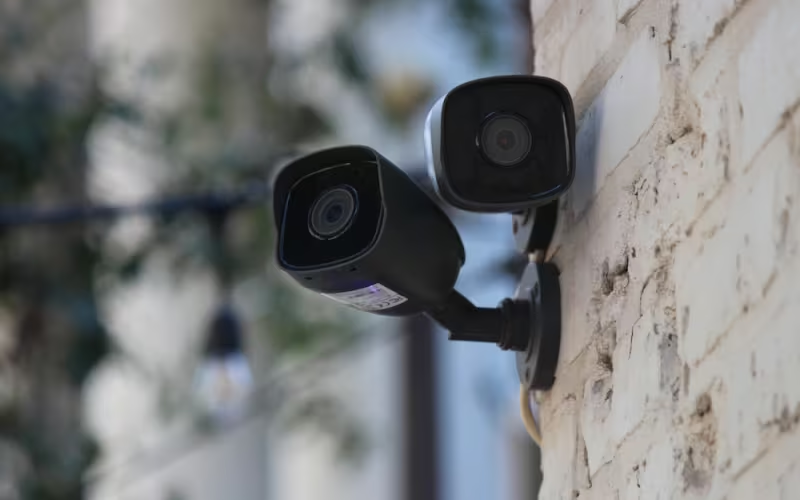
Discover the essential features to look for in outdoor security cameras to ensure comprehensive protection and peace of mind for your business.
Five specifications decide whether an outdoor camera does its job: resolution, field of view, ingress protection rating, operating temperature range, and power source. For most commercial sites that means 2K or 4K resolution, a field of view of 100 degrees or wider, an IP66 rating or better, a rated range that covers the site's actual winter and summer extremes, and a power plan that does not depend on trenching. Everything else, including analytics, storage and integrations, is chosen after those five are settled, because none of it compensates for a camera that cannot see the scene or survive the weather.
Outdoor Security Camera Needs Quick Check Guide:
- Clarity and Coverage: Choose 2K/4K with the right field of view (≥100°) to minimize camera count.
- Weather and Power: IP66+ and -20–120°F rating; use solar and LTE where power/Internet aren’t reliable.
- Smart Detection: People/vehicle detection, activity zones, and false‑alert controls reduce noise.
- Compliance and Interop: Favor NDAA‑compliant hardware and ONVIF support for VMS flexibility. (Standards: IEC 60529, NDAA §889, ONVIF).
As the demand for security continues to rise, outdoor security cameras have become a crucial component in protecting businesses, construction sites, school campuses, healthcare facilities, and more. CCTV Security Pros shared a study published in the Journal of Electronic Security and Digital Forensics; the study shows that retail theft decreased by 25% thanks to visible camera installations. With technological advancements, reliable outdoor cameras offer more than just surveillance; they provide peace of mind and act as a deterrent to potential intruders, thieves, and trespassers. Still, with an overwhelming array of options available, choosing the right outdoor security camera can be daunting. This guide aims to simplify your decision-making process by highlighting the features that truly matter.
Consider the following features when deciding on a reliable security camera setup for your business or any other location in need of protection.
What Matters in an Outdoor Camera
Outdoor deployments now hinge on image clarity (2K/4K), AI‑assisted detection that filters people/vehicles, and resilient power and backhaul (PoE where available; solar and LTE/5G for remote or temporary sites). Favor open standards (ONVIF) and plan retention (30/60/90 days) from the start to avoid re‑work later.
Interoperability (ONVIF)
ONVIF profiles enable cross‑vendor compatibility between cameras and video management systems. At minimum, look for Profile S (streaming). Profiles T (advanced video) and G (edge storage) preserve flexibility as you expand or mix systems over time.
Outdoor Security Location and Needs Table
Weather Resistance and Durability
Outdoor security cameras must withstand various weather conditions, from scorching heat to freezing cold, and everything in between. Weatherized hardware is essential for perimeter security for sites, ensuring complete site protection through storms, dust, and extreme temps. When selecting a camera, look for the following specifications:
- IP Rating: The Ingress Protection (IP) rating indicates how well the camera is protected against dust and water. A rating of IP65 or higher is recommended for outdoor use.
IP Ratings—Quick Explainer
An IP code has two digits for dust (0–6) and water (0–9). For outdoor cameras, pick IP66 or higher for dust‑tight protection and strong water‑jet resistance; IP67 adds short‑term submersion resistance. Pair the rating with the operating temperature required at your site.
- Material Quality: Cameras made from high-quality materials such as metal or heavy-duty plastic are more likely to withstand harsh weather conditions.
- Operating Temperature Range: Ensure the camera can function effectively in the temperature extremes of your location.
Video Quality
The clarity of the video captured by your security camera is paramount. High‑resolution sensors reduce the camera count required for full site coverage cameras and improve evidence quality across enterprise site security deployments. Key factors to consider include:
- Resolution: Higher resolution cameras (1080p, 2K, 4K) offer clearer and more detailed images, making it easier to identify faces and license plates.
- Frame Rate: A higher frame rate (measured in frames per second, or fps) ensures smoother video playback. A minimum of 15-30 fps is recommended.
- Lens Quality: Cameras with a wide-angle lens (100° or more) can cover a larger area, reducing the number of cameras needed.
Night Vision
Most crimes occur under the cover of darkness, making night vision capabilities essential for outdoor security cameras. Look for:
- Infrared (IR) LEDs: These enable the camera to see in total darkness. The number and quality of IR LEDs determine the effectiveness of night vision.
- Color Night Vision: Some advanced cameras use low-light sensors and artificial illumination to provide color images even at night.
- Range: Ensure the night vision range is sufficient for your needs, typically ranging from 30 to 100 feet.
Motion Detection
Effective motion detection minimizes unnecessary alerts and focuses on real threats. Pair analytics with perimeter intrusion detection to escalate only verified human/vehicle events as part of site security management. Features to consider:
- Sensitivity Settings: Adjustable sensitivity helps reduce false alarms caused by animals or weather.
- Human Detection: Advanced cameras can differentiate between humans and other objects, reducing false positives.
- Activity Zones: Define specific areas within the camera's field of view to monitor, ignoring irrelevant regions.
Loudspeaker Audio
Loudspeaker audio allows you to communicate with visitors or intruders through the camera. This feature is useful for:
- Deterrence: Speaking to a potential intruder can scare them off.
- Convenience: Communicate with delivery personnel or visitors without opening the door.
- Monitoring: Check in on employees, sites, or special events.
Power Source
Outdoor security cameras can be powered in several ways, each with its pros and cons:
- Wired: Reliable and constant power supply, but requires professional installation and limits placement options.
- Wireless: Easier to install and more flexible in placement, but may need battery replacements or recharging.
- Solar-Powered: Eco-friendly and cost-effective, but dependent on adequate sunlight exposure.
When to Choose Solar + LTE/5G
Select solar + LTE/5G when trenching power/ethernet is costly or when timelines are tight (construction, events, pop‑up retail, remote lots). You’ll gain rapid deployment, flexible placement, and connectivity resilience even during local network outages.
Storage Options
The method of storing video footage is critical for reviewing and sharing important events. Consider the following:
- Local Storage: Uses SD cards or hard drives. Offers privacy and avoids subscription fees but may have limited capacity.
- Cloud Storage: Provides secure, remote access to footage. Often requires a subscription but offers larger storage capacity and better security.
- Hybrid Storage: Combines local and cloud storage for redundancy and reliability.
Retention & Storage—Quick Policy Examples
- 30 days: retail lots, quick‑turn operations
- 60 days: construction progress, incident review cycles
- 90+ days: regulated environments, higher risk tolerance
Use hybrid storage (edge/NVR + cloud) to keep evidence local while maintaining off‑site redundancy.
Mobile App and User Interface
An intuitive and responsive mobile app is essential for managing your security system. Features to look for include:
- Live Streaming: View real-time footage from your camera anytime, anywhere.
- Alerts and Notifications: Receive instant alerts on your smartphone when motion is detected.
- Playback and Sharing: Easily access, review, and share recorded footage.
From Cameras to Total Site Security
Outdoor cameras are the foundation of a site security program, but the real value comes when they’re orchestrated into site‑wide video surveillance that delivers full site visibility. With LVT’s platform, organizations can standardize policies across locations for multi‑location site security and move beyond point tools to end‑to‑end site protection with complete site coverage.
Privacy and Security
As with any internet-connected device, security cameras are susceptible to hacking. Ensure your camera has robust security features:
- Encryption: End-to-end encryption protects your footage from unauthorized access.
- Authentication: Two-factor authentication (2FA) adds an extra layer of security.
- Regular Firmware Updates: Ensure the camera manufacturer provides regular updates to patch vulnerabilities.
Designing Full Site Security
A piecemeal approach might seem tempting, but a comprehensive security plan can save you money in the long run. Consider:
- Standardized Policies: Ensure consistent security across all buildings and lots.
- Virtual Perimeter Monitoring: Use analytics for virtual perimeter monitoring and site perimeter surveillance.
- Complete Camera Coverage: Confirm site‑wide camera coverage across blind spots to achieve complete site coverage.
- Centralized Alerting: Centralize alerting for multi‑site security management and full site visibility.
Deployment Checklist
- Coverage map with blind‑spot list
- Mounting heights: 10–14 ft typical; higher for overview, lower for IDs
- Lighting audit: verify night illumination for IR/color NV
- Power plan: PoE vs. solar + battery; surge protection
- Connectivity: primary + LTE/5G fallback where needed
- Analytics tuning: zones/sensitivity to cut false alerts
- Retention policy: 30/60/90 days; privacy zones where required
Cost and Warranty
While it's tempting to opt for the cheapest option, investing in a quality camera can save you money in the long run. Consider:
- Initial Cost: Balance features with your budget, ensuring you get the essential functionalities.
- Subscription Fees: Be aware of any ongoing costs for cloud storage or advanced features.
- Warranty: A longer warranty period reflects the manufacturer’s confidence in their product and provides peace of mind.
Choosing the Right Outdoor Camera
Choosing the right outdoor security camera involves balancing various features to meet your specific needs. From weather resistance and video quality to smart integration and privacy concerns, each aspect plays a crucial role in the effectiveness of your security system. By understanding these key features, you can make an informed decision and ensure your property remains protected.
Remember, the best outdoor security camera is one that not only fits your budget but also provides the reliability and functionality you need to keep your business and personnel safe. Take the time to research, compare options, and read reviews to find the perfect camera for your unique situation. With the right choice, you’ll enhance your security and enjoy greater peace of mind.
A camera shows you one place. A program tells you what is happening across all of them. That means one alerting path, one retention policy and one set of analytics covering a remote lot on a solar unit and a loading dock on PoE alike, so a team responds to verified events rather than triaging notifications from six systems.
LVT Offers a Reliable Security Camera with Continuous Uptime
LVT units are built for the sites where none of the above is straightforward: no power at the mounting point, no network drop, and weather that a building-mounted camera never has to face. Solar panels and a battery bank carry the unit, cellular backhaul moves the footage, and the whole thing deploys in under an hour and relocates when the work does.
To learn more about LVT security cameras, schedule a demo here.
Outdoor Security Camera FAQs
What are the benefits of having outdoor security cameras for my business?
Outdoor security cameras provide several benefits for businesses, including deterrence of criminal activity, monitoring of entrances and exits, protection of valuable assets, and enhanced employee and customer safety.
Are wired or wireless security cameras better for outdoor use?
Both wired and wireless security cameras have their advantages. Wired cameras offer a more reliable connection and eliminate the need for battery recharging. On the other hand, wireless cameras are easier to install and provide flexibility in camera placement.
What is the recommended video resolution for outdoor security cameras?
For reliable outdoor security camera footage, it is recommended to choose cameras with high video resolution, preferably 1080p or higher, to capture clear and detailed images.
Do outdoor security cameras have night vision capability?
Yes, many outdoor security cameras are equipped with night vision technology, allowing them to capture clear footage even in low-light or dark conditions. Look for cameras with infrared (IR) LEDs for optimal night vision performance.
Can outdoor security cameras withstand harsh weather conditions?
Yes, it is important to select outdoor security cameras that are specifically designed to withstand various weather conditions. Look for cameras with weatherproof or IP65/IP66-rated housing to ensure durability and protection against rain, snow, dust, and extreme temperatures.
How can I access the footage from my outdoor security cameras remotely?
Most outdoor security cameras offer remote viewing capabilities through smartphone apps or web browsers. Ensure that the cameras you choose are compatible with the necessary software or platforms for remote access.
Are there any additional features or integrations that I should consider for my outdoor security cameras?
Depending on your business's specific needs, you may want to consider cameras with features such as motion detection, person detection, two-way audio, and integration with other security systems or smart home devices. These additional features can enhance the overall functionality and effectiveness of your outdoor security camera system.
How long do outdoor security camera recordings typically last?
The length of time that outdoor security camera recordings can be stored will depend on the storage capacity of the camera or the chosen storage solution. Some cameras offer local storage options (such as SD cards or external hard drives), while others may require cloud storage subscriptions for extended storage periods.
What’s the difference between full site security and a traditional camera setup?
Full site security combines site‑wide camera coverage, analytics, and site security management to deliver end‑to‑end site protection and full site visibility across single or multi‑location properties.
How do I plan perimeter security solutions for a campus or facility?
Start with perimeter cameras and a perimeter surveillance system that supports exterior perimeter monitoring and perimeter intrusion detection, then extend to interior zones for complete site coverage.
What specs matter most for an outdoor camera in a warehouse or industrial yard?
Resolution and mounting height do the most work, because the distances are longer than they look and a camera that only detects movement across a yard is not worth much. Beyond that: an IP66 rating for dust as much as for water, a temperature range that covers an unconditioned space in both seasons, and vehicle classification rather than generic motion detection, since forklift and truck traffic will otherwise generate alerts continuously.
What does an outdoor camera need to handle rain, heat and freezing temperatures?
Three separate specifications, and they are often confused. The IP rating covers dust and water, and IP66 is the practical floor outdoors. The operating temperature range is stated separately and is the one most often overlooked, because a camera rated to 14 degrees F will fail in a climate that reaches -10. Housing material matters for sustained heat and UV exposure: metal and heavy-duty polymer hold up where cheaper plastics do not.
What power setup does an outdoor camera need to record continuously?
Continuous recording draws far more power than motion-triggered recording, which rules out battery-only cameras for anything beyond short deployments. Power over Ethernet is the reliable choice where a switch is within reach, ideally behind a UPS so a utility outage does not end the recording. Where power is not available, continuous recording needs solar sized against the site's worst month rather than its average one, with enough battery reserve to carry several days without sun.

%20(1).avif)